

If you have spent time on a touchline, in a gym, or in a treatment room, you have seen an adhesive sports bandage doing quiet work. It may hold a dressing, support a tired ankle, or keep a pad in place during a match. At its simplest, an adhesive sports bandage is a stretchable strip of fabric or nonwoven material coated with a skin-friendly adhesive. It is designed to conform to the body, move with it, and stay put through sweat. But products under that broad description behave differently. Base material, stretch, adhesive, and application all change the result. This guide covers the main options, how to apply them, and what to check before buying in bulk.
Content
The terms “sports bandage” and “athletic tape” are often used interchangeably, but they do different jobs. An adhesive sports bandage usually has some stretch and is meant to stick to the skin. It can secure a dressing, hold a pad, or provide light compression. Athletic tape is often more rigid cotton tape used for firm strapping. Cohesive wrap, also called self-adhesive bandage, sticks mainly to itself rather than to skin. Kinesiology tape is another elastic adhesive product, but it is applied with different tension and for different purposes.
The practical question is not “which one is best?” but “which one fits this job?”
| Type | Stretch | Adhesion | Typical use | Watch point |
|---|---|---|---|---|
| Light elastic adhesive bandage | Moderate | Sticks to skin | Mild compression, dressing fixation, joint support | Breathable and conformable; avoid over-tensioning |
| Heavy elastic adhesive bandage | High | Sticks to skin | Firmer support for ankles, knees, and wrists | Check circulation; use padding where needed |
| Self-adhesive or cohesive bandage | High | Sticks to itself | Wrapping over padding, securing equipment, quick changes | No skin adhesive; not a substitute for a sterile dressing |
| Rigid strapping tape | Low | Strong skin adhesion | Firm joint strapping and immobilization | Needs skill and under-wrap; not for general compression |
That table is a starting point. The right choice depends on the body area, the sport, sweat, and wear time. A light elastic bandage may suit a training session; a heavier bandage may suit match-day strapping; a cohesive wrap may be better for quick changes.
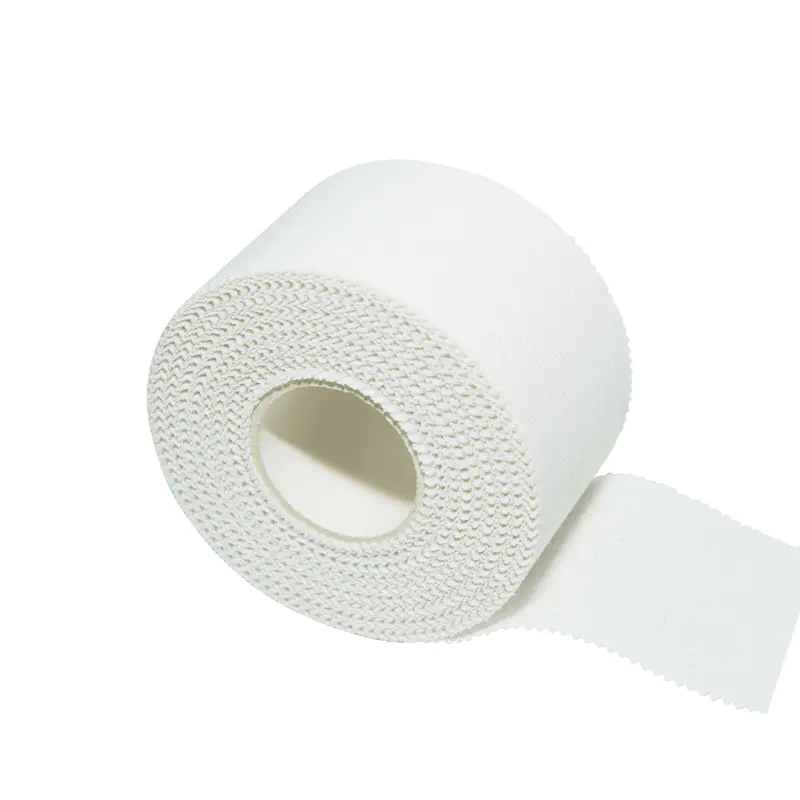
Light elastic adhesive bandages are what most people picture when they hear “adhesive sports bandage.” They are stretchable, relatively thin, and conform to curved areas such as the ankle, wrist, elbow, or knee. The adhesive holds the bandage on the skin, while the fabric provides mild compression and support. They are also used to secure dressings and keep padding in place.
 Light Elastic Adhesive Bandage for Sports SupportBreathable cotton bandage with latex-free adhesive conforms to ankles, wrists, and knees for mild compression and dressing fixation.View Product →
The best light elastic bandages are the ones you forget you are wearing. Breathability matters in hot conditions, and a dense bandage can trap moisture. Conformability matters too: a bandage that wrinkles or lifts at the edges will not stay put through running or repeated bending. Apply with smooth, even overlap and enough tension to support the area without restricting movement. If the skin changes colour, feels cold, or starts to throb, the bandage is too tight.
For stockists, light elastic adhesive bandages are a useful core line. Colour range, roll size, and packaging can matter as much as the tape itself, especially for retail and e-commerce sellers.
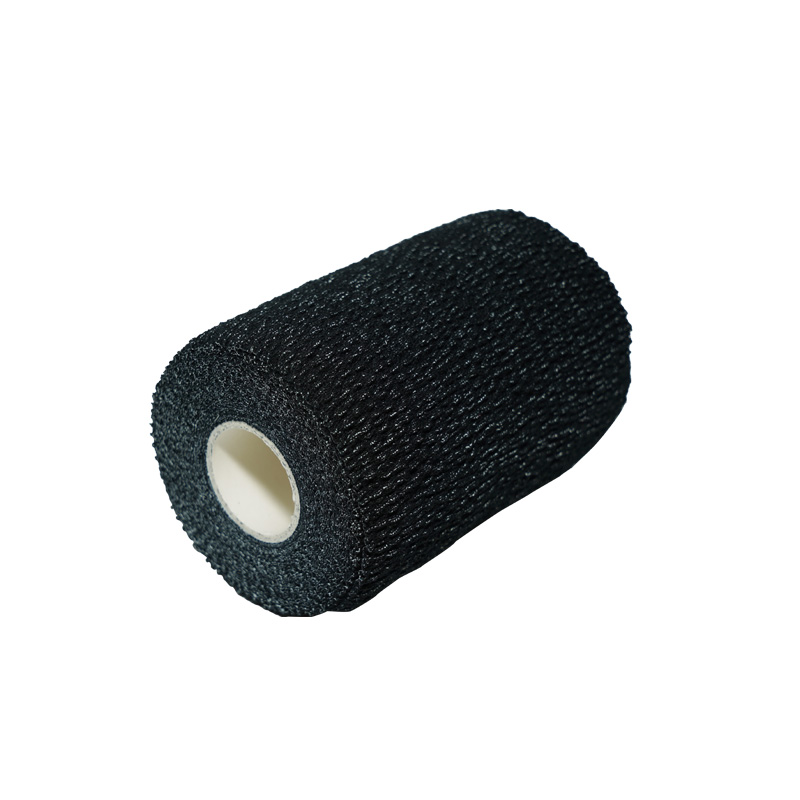
A cohesive bandage is often grouped with adhesive sports bandages, but its behaviour is different. It is an elastic wrap that sticks to itself, not to the skin. That makes it comfortable for sensitive skin, easy to adjust, and quick to remove. It is widely used over foam under-wrap, over padding, or as a light compression wrap during sport.
 Self-Adhesive Cohesive Bandage for Sport and Medical UseNon-woven self-adhesive wrap sticks to itself, not skin, for adjustable compression and support; hand-tearable and comfortable for sensitive skin.View Product →
Because it does not bond to skin, a cohesive bandage should not hold a dressing directly over an open wound unless it is used over a proper primary dressing. It also needs a little tension to lock onto itself; if applied too loosely, it can slip. For athletes who tape often, cohesive wrap can reduce adhesive residue and skin irritation. It is a practical option for sideline kits and physio rooms.
Self-adhesive bandages come in many colours, widths, and pack formats. That variety appeals to Amazon sellers and retail buyers, but spec sheets need to be clear about stretch, length, and adhesive performance.
Heavy elastic adhesive bandages are built for firmer compression and stronger support. They are often used on ankles, knees, and wrists where a light bandage may not feel secure enough. The fabric is typically thicker or more strongly elastic, and the adhesive is designed to hold through movement. These bandages can be useful for strapping a joint during sport or for holding padding under a more structured taping job.
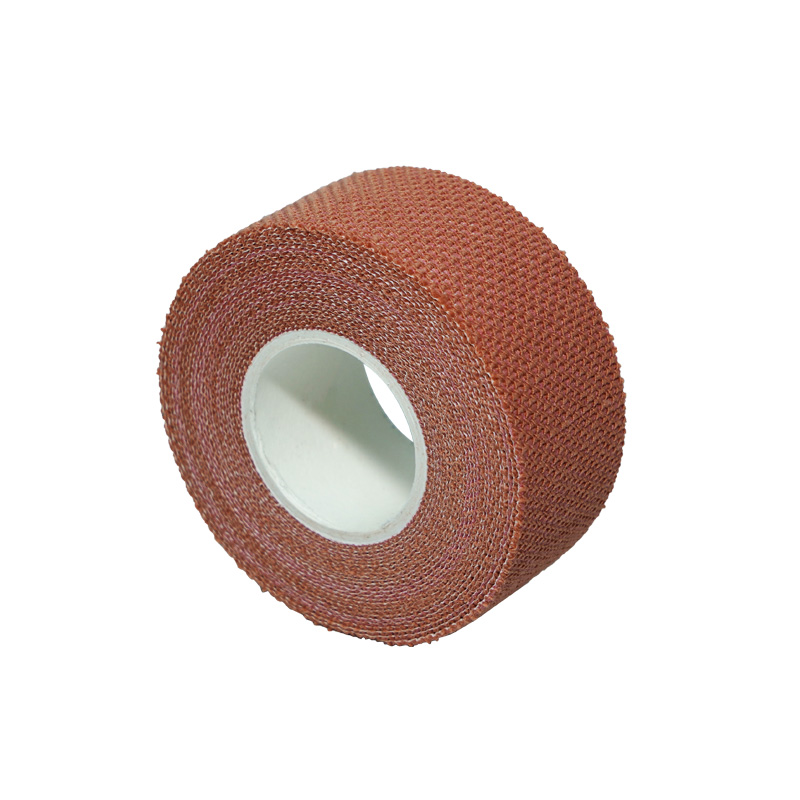 Heavy Elastic Adhesive Bandage for Joint StabilizationCotton bandage with strong adhesive and firm compression supports ankles, knees, and wrists during vigorous sport; available in skin and white.View Product →
With heavier bandages, application discipline matters more. Too much tension can restrict blood flow, and too little can let the bandage slip. Start distal to proximal, keep the overlap consistent, and check circulation before the athlete returns to play. A bandage can support a joint, but it cannot diagnose or treat an injury on its own.
Good products still need good technique. A few habits make a visible difference.
If you want a step-by-step sequence for a light elastic wrap, our guide to wrapping and securing a light elastic adhesive bandage is a useful companion.
Most adhesive sports bandages use cotton, nonwoven fabric, rayon, nylon, or a blend. Cotton feels familiar and breathes well. Nonwoven materials can be lighter and more consistent. Nylon and elastic blends provide stretch and recovery. The adhesive matters just as much: it needs to hold through movement and sweat while still coming off without pulling skin apart.
No bandage is risk-free for every skin type. Some people react to adhesives, and skin can become irritated if a bandage is left on too long or applied under too much tension. For sensitive skin, test a small piece first, keep wear time reasonable, and avoid adhesive over broken or inflamed skin. Breathability, stretch, and residue are worth checking when comparing samples.
For wholesalers, Amazon sellers, and self-employed practitioners, the product is only part of the purchase. Consistency matters. A bandage that performs well in a sample but changes in the next production run creates problems for repeat customers. It helps to work with a manufacturer that controls the tape, adhesive, roll dimensions, and packaging in one place.
At Hero Medical, we have manufactured sports tape and bandages in Jiaxing since 2016. Our production setup includes two coating lines and a current regular bandage capacity of around 300,000 rolls per month. We work with drawings and samples, offer small-batch customization, and can support packaging and brand design as well as product function changes. Our CE-certified range is aimed at wholesale, e-commerce, and independent professional buyers, and we can ship FOB, CIF, or FBA.
Before a bulk order, confirm the details that affect daily use:
Most regular orders are completed within 25 working days, and custom runs can be scheduled around the specification. The earlier artwork, labels, and carton details are confirmed, the smoother production and delivery tend to be.
 NO.89 Duanshu Road, Xinggong Road, Pinghu City, Zhejiang Province, China
 [email protected]
 +86-(0)573-8507 6991

Copyright © hero-medical.com. All Rights Reserved
 Wholesale Sport Tape Manufacturers
China Sport Tape Suppliers
The information provided on this website is intended for use only in countries and jurisdictions outside of the People's Republic of China.
 English
 Espana
 Français
 Deutsch