

Taping looks effortless from the sideline and feels surprisingly fiddly the first time you try it. A strip goes on, an ankle feels steadier, and the player runs back out. What sits behind that moment is a small set of decisions: which tape, how much tension, how much skin prep, and when to take it off again.
We have spent years making tape rather than only using it, and that has shaped how we think about it. Athletic injury tape is a support tool, not a treatment. Used well, it buys a joint some protection and gives an athlete useful feedback about where their body is in space. Used carelessly, it irritates skin, restricts movement that should stay free, or simply falls off halfway through a match.
Content
It helps to be honest about the job tape is doing. It does not heal a sprain, and it will not replace strength work or a proper assessment. What it does is change the conditions around a joint or a muscle for the length of a session.
Where tape fails is usually not the adhesive. It is the application, the choice of product, or leaving it on far longer than it should stay.
Most taping kits are built from a handful of families. They differ in stretch, adhesive strength and how long they are meant to stay on, and mixing them up is the most common reason a wrap does not behave as expected.
| Type | Best for | Stretch | Notes |
|---|---|---|---|
| Cotton athletic tape | Ankles, wrists, general fixing | Very little | The workhorse; tears by hand and takes chalk or marker well |
| Rayon rigid strapping tape | Ankles, fingers, thumbs | Very low | Higher tensile strength and a firmer lock |
| Light elastic adhesive bandage | Joints that still need to move | Some | Conforms to contours and gives light compression |
| Heavy elastic adhesive bandage | Firmer compression and support | Moderate | More hold than light elastic, still flexible |
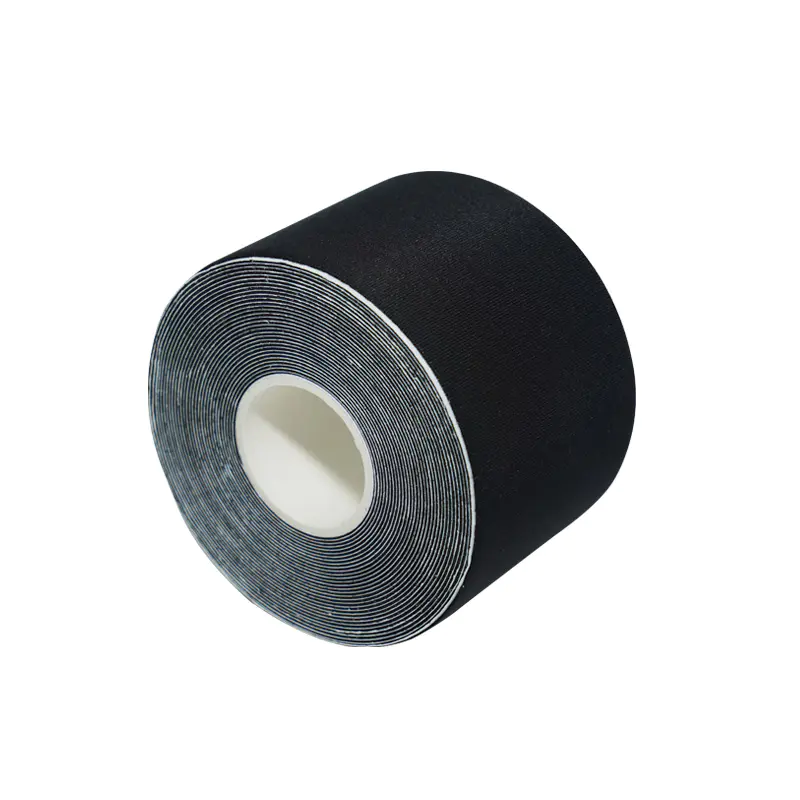
| Kinesiology tape | Muscle comfort, swelling, multi-day wear | High in one direction | Can stay in place for several days |
| Self-adhesive bandage | Holding dressings, fast wraps | Moderate | Sticks to itself rather than to skin |
| Foam underwrap | Base layer under rigid tape | High | Protects skin and hair before the real tape goes on |
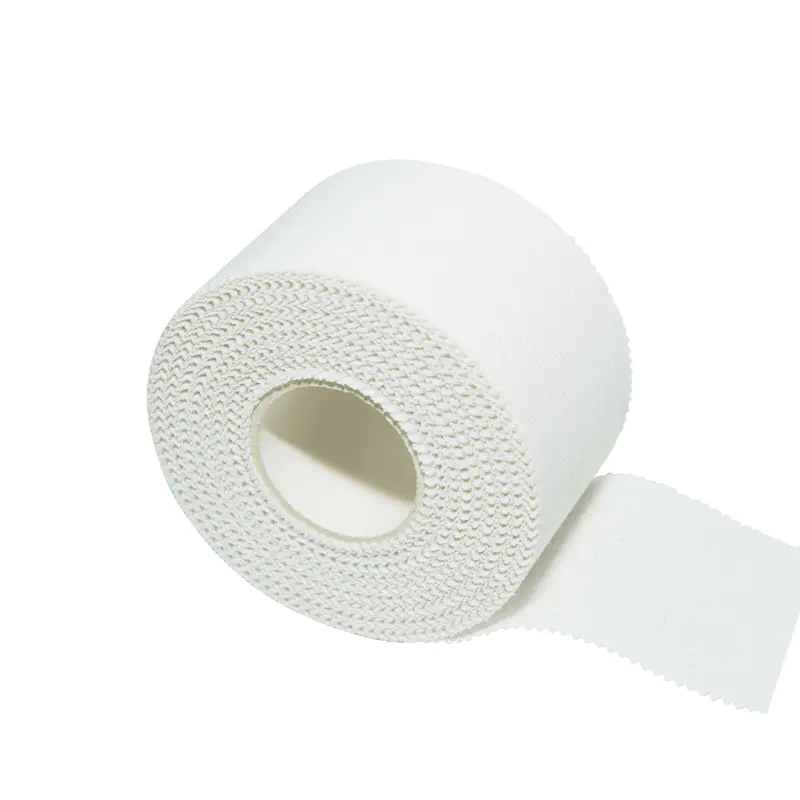
Cotton athletic tape remains the product most teams order by the case, and for good reason. It is predictable, it tears cleanly at the roll edge, and it works across ankles, wrists and general fixation. It is also the tape most people picture when they say athletic injury tape at all.
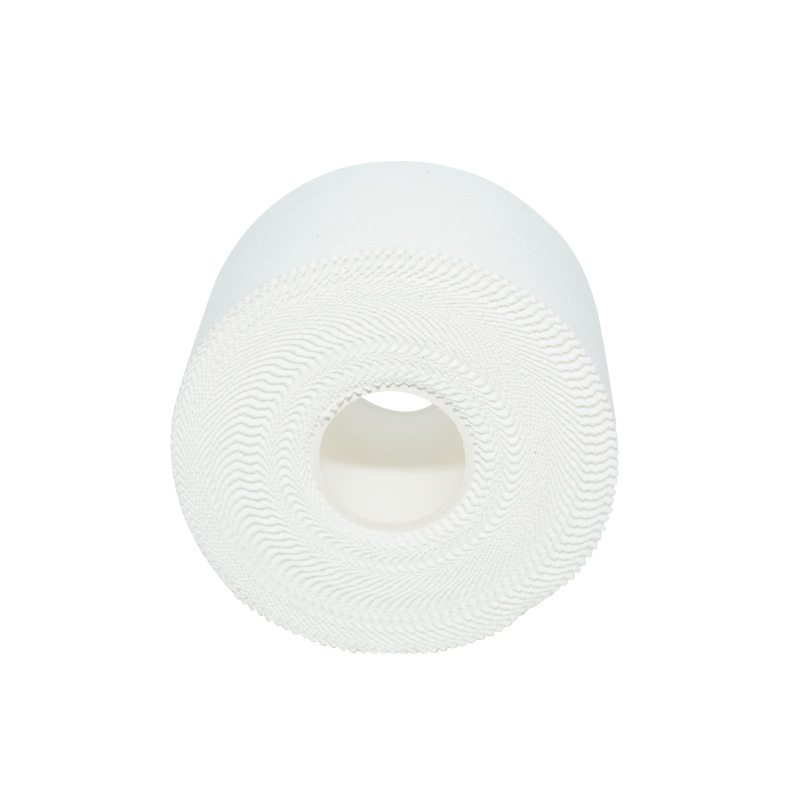 Cotton Athletic Tape for Ankles, Wrists and HandsPredictable cotton tape with latex-free adhesive that tears cleanly and conforms to ankles, wrists and hands for general fixation and hand-grip support.View Product →
Rayon rigid strapping tape sits next to it in the bag but behaves differently. It has less give, so the same number of turns produces a firmer lock. For ankles that need real restriction, or fingers that keep getting jammed, that difference matters.
The simplest rule we know is this: restrict what must not move, support what should still move, and leave everything else alone.
Rigid tape is the right call when the goal is to stop a joint reaching a position that hurts it, such as a previously sprained ankle during a match. Elastic adhesive bandages suit joints that need compression but still need range, like a knee or a shoulder through a training session. Kinesiology tape is different again: it stretches along its length, lifts the skin slightly, and is designed to stay on for days rather than minutes. It offers comfort and gentle feedback more than hard restriction, which is why the choice between rigid and elastic styles comes down to intent rather than fashion. If you want a deeper breakdown of how the two behave, this comparison of kinesiology tape and athletic tape is a useful next read.
 Skin-Tone Cotton Kinesiology Tape for Joint and Muscle SupportStretchable cotton kinesiology tape with latex-free acrylic adhesive, designed for breathable comfort and multi-day wear during sport, physiotherapy or recovery taping.View Product →
One practical point from the factory floor: kinesiology tape is only as good as its adhesive wave pattern. A product that lifts at the corners within an hour is not saving anyone money, however cheap the roll was.
Different areas ask different things of tape, and a wrap that works beautifully on an ankle can be useless on a shoulder.
Ankle. The classic setting for rigid tape. A closed basket weave with an underwrap gives firm support without cutting off circulation. Keep the heel lock snug but never tight enough to leave marks that last.
Knee. Usually better served by elastic support than by rigid strips. The knee moves through a large range, and hard tape tends to peel or pull as it does.
Shoulder. Elastic tape works well here for posture reminders and mild support, while rigid strips are reserved for specific restrictions such as limiting end-range rotation.
Fingers and thumbs. Narrow rolls of rayon rigid strapping tape are the standard. They must be tight enough to stay put through grip work and loose enough not to numb the fingertip.
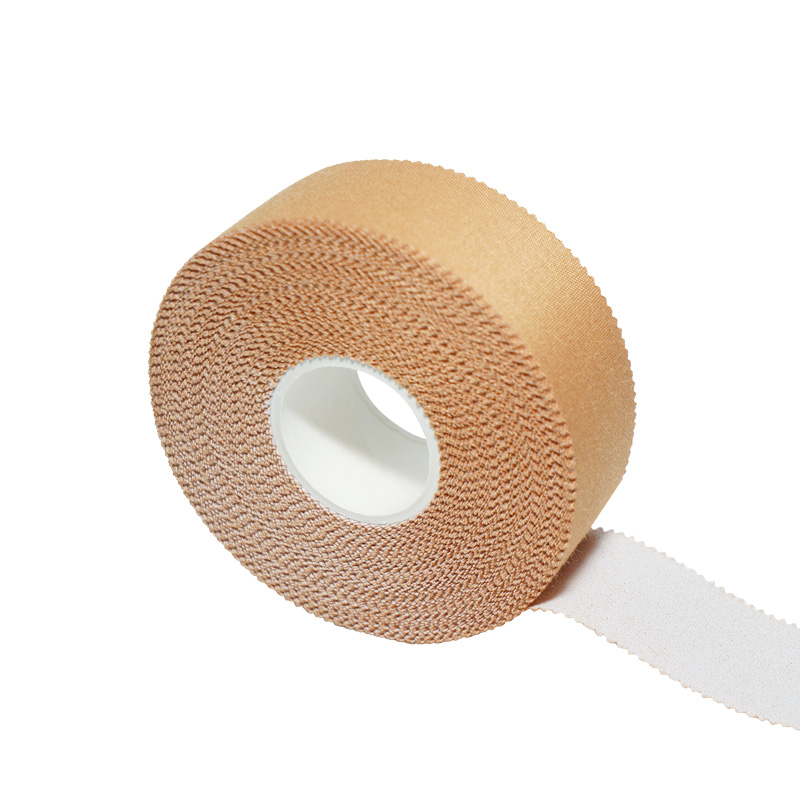 Rayon Rigid Strapping Tape for Joint StabilizationNon-stretch rayon tape with strong latex-free adhesion for firm joint support; narrow rolls suit finger taping, while thin application can help cover friction hot spots.View Product →
Feet and blisters. Friction is the enemy here. A thin layer over a hot spot, applied without wrinkles, prevents a great deal of misery on long runs.
Good taping is mostly preparation. The actual wrapping takes less than a minute once the skin is ready.
Practice is the part people skip. A few dry runs on a teammate, with no match pressure and no clock, will teach you tension faster than any video. If you want a more detailed walkthrough, our guide to applying and removing athletic tape covers the same steps in more depth.
Removal deserves as much care as application. Work slowly and in the direction of hair growth, pressing the skin down just ahead of the tape as you peel. Warm water or a little adhesive remover softens the glue considerably. Never rip a strip off dry skin to save time.
If the area is hairy or the athlete has reacted to adhesive before, a thin foam underwrap beneath the tape makes removal far kinder and costs almost nothing. It also gives rigid tape something to grip that is not skin.
Whether you are kitting out a club, stocking a clinic or building your own brand, the same questions come up.
We are a manufacturer rather than a reseller, which shapes how we work with customers. Since 2016 our plant in Jiaxing has run two coating lines that can produce two different adhesive products at the same time, with regular bandage output around 300,000 rolls a month and most orders completed within roughly 25 working days. Products are CE certified, and we ship by FOB, CIF or FBA depending on how the buyer sells. Small custom runs are welcome alongside larger contracts, including development from a drawing or a sample.
None of that changes the basic advice. Buy tape that behaves the same way every time, apply it with clean skin and sensible tension, and take it off before the skin complains.
Athletic injury tape is a small, inexpensive piece of equipment that quietly does a lot of work: it protects, it reminds, it reassures. The athletes who benefit most from it are rarely the ones with the most elaborate taping patterns. They are the ones whose tape was chosen for the job, applied with patience and removed with care. Get those three things right and the rest tends to look after itself.
 NO.89 Duanshu Road, Xinggong Road, Pinghu City, Zhejiang Province, China
 [email protected]
 +86-(0)573-8507 6991

Copyright © hero-medical.com. All Rights Reserved
 Wholesale Sport Tape Manufacturers
China Sport Tape Suppliers
The information provided on this website is intended for use only in countries and jurisdictions outside of the People's Republic of China.
 English
 Espana
 Français
 Deutsch