

Content
Athletic tape for the knee has been a staple in sports medicine and athletic training rooms for decades, and for good reason. The knee is one of the most complex and injury-prone joints in the human body — it bears the full weight of the body during running, jumping, cutting, and landing, while simultaneously being asked to rotate, flex, and extend under significant load. When something goes wrong at the knee, whether it's a ligament sprain, patellar tendon irritation, IT band syndrome, or post-surgical instability, tape can play a meaningful role in the recovery and return-to-sport process.
The benefits of knee taping go beyond simple mechanical support. Research has shown that properly applied athletic tape can improve proprioception — the body's ability to sense joint position in space — which is frequently impaired after knee injuries. Better proprioception means faster, more accurate neuromuscular responses during athletic movements, reducing the risk of re-injury. Tape also provides compression that can help manage swelling, and in some applications, it physically offloads specific structures like the patellar tendon or the iliotibial band to reduce pain during activity.
That said, not all knee tape is the same, and using the wrong type or applying it incorrectly can be ineffective at best and harmful at worst. Understanding the differences between tape types, what each is designed to accomplish, and how to apply them correctly is essential knowledge for any athlete, coach, or sports medicine professional dealing with knee issues.
There are several distinct categories of sports tape used on the knee, each with different mechanical properties, applications, and intended outcomes. Choosing the right type depends on what you're trying to achieve — rigid support, pain relief, swelling management, or proprioceptive feedback.
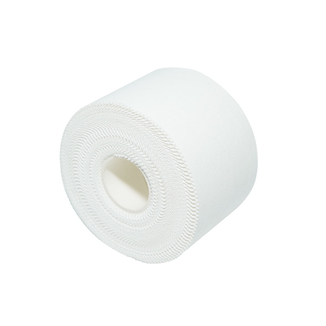
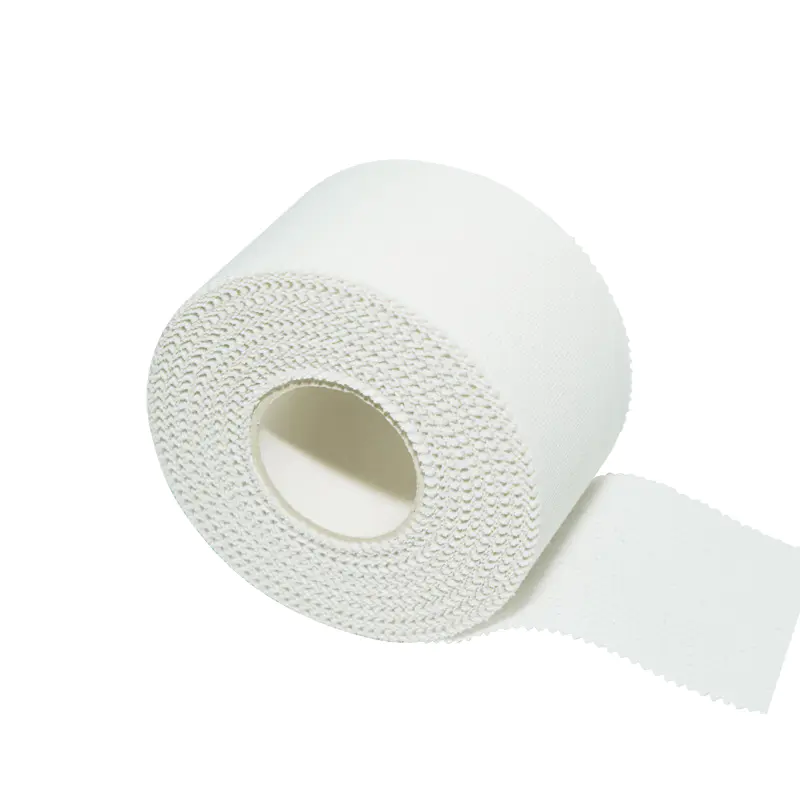
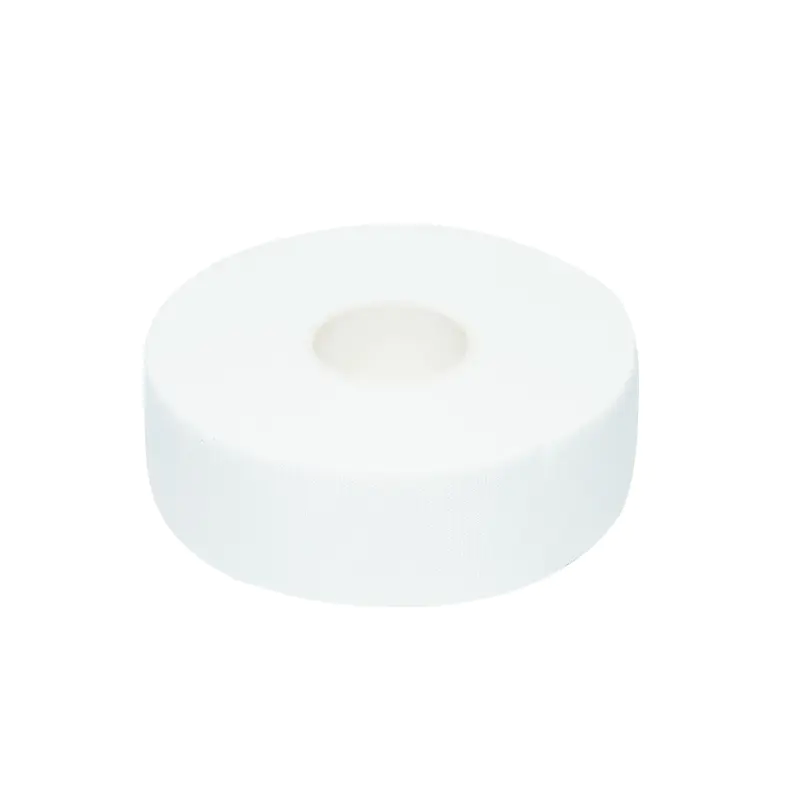
Rigid athletic tape — commonly called white tape, zinc oxide tape, or sports strapping tape — is the traditional gold standard for joint stabilization. It is non-elastic, made from a cotton or rayon fabric base coated with zinc oxide adhesive, and provides firm, inelastic support to the knee joint. When applied with proper tensioning and anchoring technique, rigid tape significantly restricts unwanted joint motion — particularly the hyperextension and valgus (inward buckling) forces that commonly injure the ACL and MCL. It is the tape of choice for acute ligament sprains, post-surgical protection, and high-contact sports like football, rugby, and basketball where preventing re-injury is the primary goal. The main downside of rigid tape is that it can restrict blood circulation and must generally be removed within a few hours, making it impractical for all-day wear.
Elastic adhesive bandage tape — often sold under names like Elastoplast, Tensoplast, or simply EAB — is a stretchy fabric tape with an aggressive adhesive that provides a combination of compression and moderate support. Unlike rigid tape, EAB conforms to the contours of the knee and moves with the joint, making it more comfortable for extended wear during sport. It is frequently used as a base layer under rigid tape to protect the skin, or as a standalone tape for compression wrapping of swollen knees. EAB is also commonly used in combination techniques where some areas of the tape application need flexibility while others need restriction.
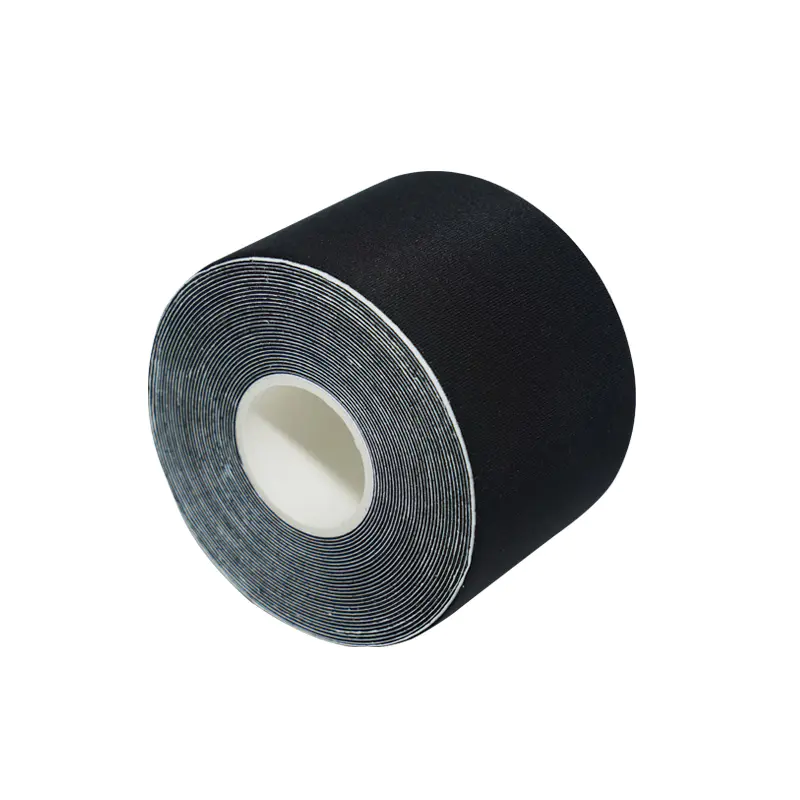
Kinesiology tape — popularized by the Kinesio Taping Method developed by Dr. Kenzo Kase — is a thin, highly elastic cotton tape with a wave-patterned acrylic adhesive that mimics the thickness and elasticity of human skin. Unlike rigid tape, kinesiology tape does not restrict joint motion. Instead, it works through subtle mechanical and neurological mechanisms: the tape's lift effect on the skin is proposed to decompress the tissue underneath, improving circulation, reducing swelling, and stimulating mechanoreceptors that enhance proprioception and pain modulation. For the knee specifically, kinesiology tape is widely used for patellofemoral pain syndrome, IT band syndrome, patellar tendinopathy, and general knee soreness. It can be worn for three to five days continuously — including during showering and swimming — making it practical for ongoing management of chronic knee conditions.
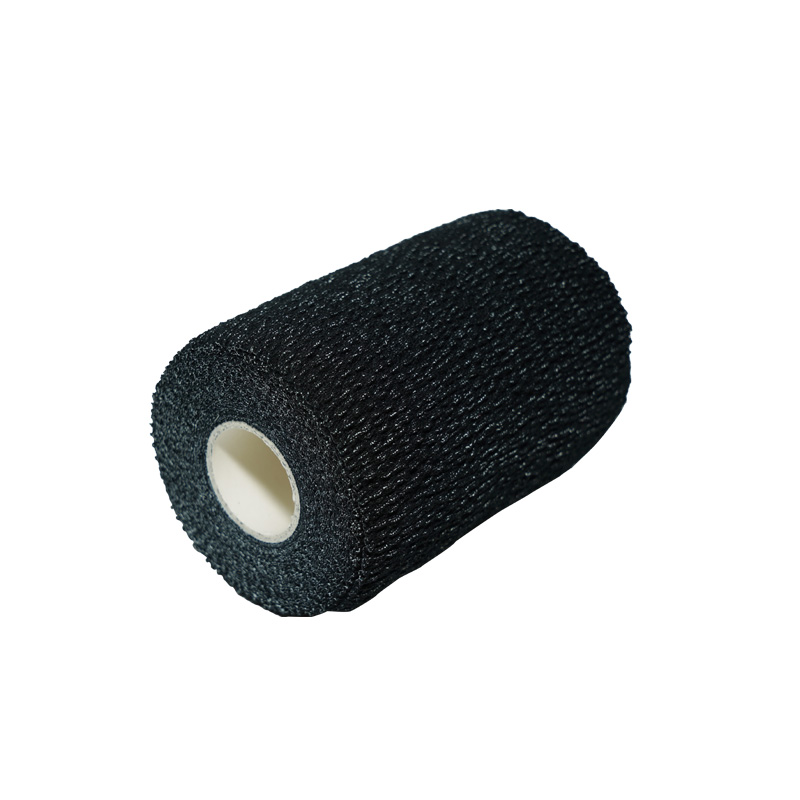
Cohesive bandage — sold under brand names like Coban, Co-flex, and Vetrap — sticks to itself but not to skin, making it a popular option for compression wrapping of acutely swollen knees without the skin irritation risk of adhesive tapes. It is elastic, conforming, and easy to remove without scissors. Cohesive bandage is most commonly used in acute injury management for compression and mild support, and as an outer wrap layer to secure padding or other tape applications during sport. It is not typically used as a primary support tape for ligamentous instability.
Pre-wrap is not a support tape in itself — it is a thin, lightly adherent foam layer applied to the skin before rigid or EAB tape to protect sensitive skin from the aggressive adhesives used in sports strapping. Without pre-wrap, repeated applications of rigid tape can strip the skin surface, cause blistering, and provoke contact dermatitis. Pre-wrap is particularly important for athletes with sensitive skin or those requiring daily taping over extended periods. When pre-wrap is used, rigid tape loses some of its direct adhesion to skin, so anchoring and tensioning technique becomes even more important to maintain the mechanical effectiveness of the tape job.
Here is a quick-reference comparison of the main athletic tape for knee to help you identify which type fits your specific situation:
| Tape Type | Elasticity | Primary Use | Wear Duration | Best For |
| Rigid / Zinc Oxide | None | Joint stabilization | 2–4 hours | ACL/MCL sprains, contact sports |
| EAB (Elastic Adhesive) | Moderate | Compression + support | 4–8 hours | Swelling, combined techniques |
| Kinesiology Tape | High (140–160%) | Pain relief, proprioception | 3–5 days | PFPS, IT band, tendinopathy |
| Cohesive Bandage | High | Compression wrapping | 4–6 hours | Acute swelling, outer wrap layer |
| Pre-Wrap | Moderate | Skin protection | Applied under other tape | Sensitive skin, daily taping |
Proper application technique is what separates effective knee taping from a tape job that slides off mid-game or cuts off circulation. The specific technique varies depending on the tape type and the condition being addressed. Here are the most clinically relevant and widely used knee taping methods:
This technique is used to support the medial collateral ligament after a sprain and to prevent valgus stress at the knee during sport. Before you begin, shave any significant hair from the knee area, clean and dry the skin thoroughly, and apply a thin layer of pre-wrap from mid-thigh to mid-calf. Position the athlete with the knee in approximately 20–30 degrees of flexion — a slight bend that keeps the ligaments in a functional, not fully tightened, position.
The McConnell taping technique was developed specifically for patellofemoral pain syndrome (PFPS) — the extremely common condition characterized by pain under and around the kneecap, especially during squatting, stair climbing, and prolonged sitting. The technique uses rigid or semi-rigid tape to physically reposition the patella on the femoral trochlea, reducing the abnormal compression and friction forces that cause pain. It requires skill and a clear understanding of the athlete's specific patellar malalignment pattern, which is why it is ideally learned from a physiotherapist or athletic trainer. The basic application involves:
Kinesiology tape application for the knee is more varied than rigid tape techniques because it can be applied in multiple configurations depending on whether the goal is pain relief, swelling reduction, patellar support, or IT band offloading. Here is the most widely used general knee support application:
Different knee conditions respond best to different taping approaches. Here's a practical guide to matching the right tape strategy to the most common knee problems athletes face:
| Knee Condition | Recommended Tape Type | Primary Goal | Key Application Note |
| ACL / MCL Sprain | Rigid zinc oxide tape | Joint stabilization | Apply with knee in slight flexion; use pre-wrap |
| Patellofemoral Pain (PFPS) | Rigid tape (McConnell) or kinesiology tape | Patellar realignment | Test correction direction; must reduce pain immediately |
| Patellar Tendinopathy | Kinesiology tape or patellar tendon strap | Tendon offloading | Apply I-strip directly over tendon with 50–75% tension |
| IT Band Syndrome | Kinesiology tape | Tissue decompression | Apply along IT band from hip to lateral knee with 15–25% tension |
| Post-Surgical Swelling | Kinesiology tape (lymphatic) | Swelling reduction | Fan strips with zero tension; apply away from incision |
| General Knee Soreness | Kinesiology tape or EAB | Proprioception + comfort | Y-strip application around patella; light tension |
| Hyperextension Prevention | Rigid tape | Motion restriction | Posterior check strap applied in knee flexion |
With so many knee tape options on the market, choosing the right product can feel overwhelming. Here are the practical factors to work through when selecting an athletic tape for your knee:
Athletic tape applied incorrectly can cause skin damage, restrict circulation, or give athletes false confidence that leads to worsened injuries. Here are the most important safety considerations and mistakes to watch out for when taping the knee:
 NO.89 Duanshu Road, Xinggong Road, Pinghu City, Zhejiang Province, China
 [email protected]
 +86-(0)573-8507 6991
Copyright © hero-medical.com. All Rights Reserved
 Wholesale Sport Tape Manufacturers
China Sport Tape Suppliers
Wholesale Sport Tape Manufacturers
China Sport Tape Suppliers
The information provided on this website is intended for use only in countries and jurisdictions outside of the People's Republic of China.
 English
 Espana
 Français
 Deutsch