

Athletic tape is one of those things that looks simple until you actually need to use it. Walk into any sports supply store and you'll find a wall of options — rigid tape, stretchy tape, colored tape, pre-wrap, underwrap — with almost no guidance on what does what. This guide cuts through the noise and gives you a practical, detailed breakdown of every major type of sports tape, when each one is the right call, and how to get the most out of it.
Content
The purpose of athletic tape is not simply to wrap a body part and hope for the best. When applied correctly, sports tape serves three distinct mechanical functions: restricting range of motion in a specific direction to protect a joint, offloading stress from an injured structure like a tendon or ligament, or providing proprioceptive feedback — a tactile cue that changes how the nervous system recruits muscles around a joint.
Different tape types accomplish these functions through different means. Rigid athletic tape restricts movement by being physically inextensible — it creates a mechanical block. Elastic therapeutic tape works differently; it lifts the skin microscopically, which affects fluid dynamics and sensory signaling under the skin. Compression tape manages swelling by applying circumferential pressure. Understanding which mechanism you need is the starting point for choosing the right product.
Athletic taping also serves a psychological function that is easy to underestimate. Research consistently shows that properly applied sports tape increases an athlete's confidence in the taped joint, which reduces hesitation and compensation patterns that can lead to secondary injuries. This doesn't make tape a placebo — the physical and neurological effects are real — but it does mean that tape's benefits extend beyond the purely mechanical.
Each type of athletic tape is engineered for a specific set of applications. Using the wrong type — rigid tape where elastic tape is needed, or vice versa — produces poor results and can even cause problems. Here is a breakdown of the major categories:
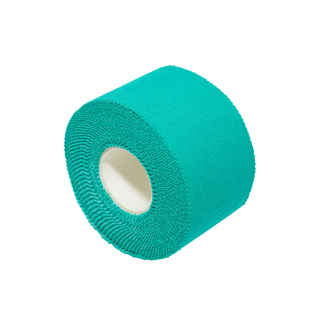
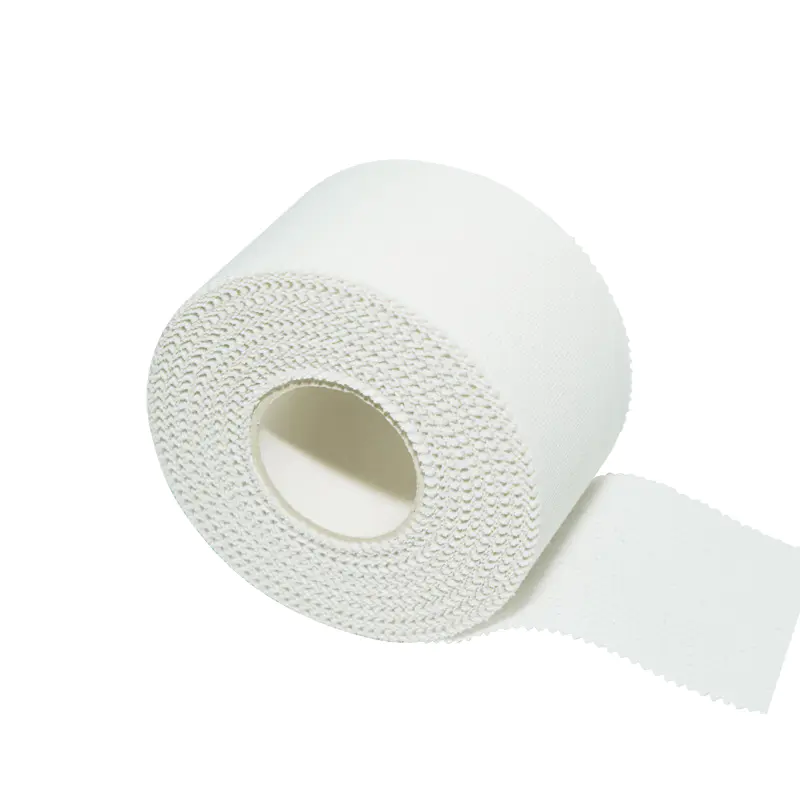
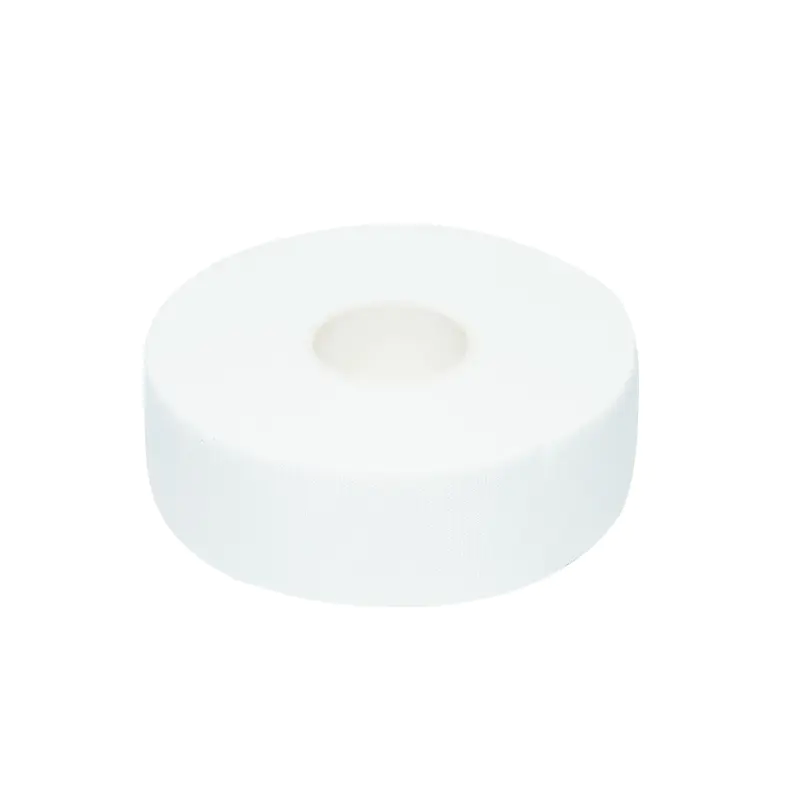
This is the classic white zinc oxide tape that has been a fixture in athletic training rooms for decades. It is made from a tightly woven cotton or cotton-blend fabric with a zinc oxide adhesive that bonds firmly to skin or underwrap. Because it has almost no stretch, rigid athletic tape creates hard limits on joint movement — exactly what you want when protecting an ankle from inversion, a thumb from hyperextension, or a wrist from excessive flexion under load.
Standard widths are 1.5 inches for smaller joints like fingers, thumbs, and wrists, and 2 inches for larger joints like ankles and knees. Rigid tape is the first choice for acute joint sprains, return-to-play stabilization, and any application where movement restriction is the primary goal. It is not appropriate for use directly on most skin for extended periods without underwrap — the adhesive is aggressive enough to cause skin damage on removal after long wear.
Kinesiology tape, often called kinesio tape or K-tape, is a thin, stretchy acrylic-adhesive tape designed to mimic the weight and elasticity of human skin. It stretches up to 120–140% of its resting length and is typically worn for two to five days, through showering and training. Unlike rigid tape, it does not restrict range of motion — it works by lifting the skin slightly during movement, which is thought to reduce pressure on pain receptors, improve lymphatic drainage, and enhance proprioceptive signaling.
Kinesiology sports tape is widely used for muscle facilitation and inhibition, managing swelling and bruising, patellofemoral pain syndrome, IT band syndrome, plantar fasciitis, rotator cuff issues, and low back pain. The application technique — specifically how much tension is applied to the tape and in which direction — determines the effect. A facilitation application uses more stretch; an inhibition application uses less. This means application training matters significantly with K-tape in a way it doesn't with rigid tape.
Elastic adhesive bandage tape — also sold under names like elastoplast tape or cohesive elastic tape — sits between rigid tape and kinesiology tape in terms of extensibility. It stretches, but not as freely as K-tape, and provides a degree of compression alongside its support function. EAB tape is commonly used for muscle and joint support where some movement needs to be preserved but compression is also beneficial — hamstring and quad support during return-to-play, shoulder stabilization, and ankle taping applications that require more flexibility than rigid tape provides.
The adhesive on EAB tape is typically latex-based, which provides strong bonding but requires a latex sensitivity check before use. It is heavier and bulkier than kinesiology tape and is not designed for multi-day wear — it is primarily an in-competition or in-training support product.
Cohesive bandage, commonly known by brand names like Coban or Co-Flex, adheres only to itself and not to skin or hair. This makes it ideal for situations where repeated application and removal are needed without skin irritation — hand and finger taping in contact sports, over-tape for securing other dressings, or compression wrapping for acute swelling management. It provides minimal rigid support on its own but is extremely useful as part of a layered taping system.
Pre-wrap is not technically a tape — it is a thin, porous foam layer applied directly to skin before rigid or EAB tape. Its purpose is skin protection: it reduces friction, prevents the adhesive from pulling hair, and creates a barrier that makes tape removal far less painful. In most athletic training applications involving rigid tape, pre-wrap is applied first. The trade-off is a slight reduction in tape adhesion, which is why techniques that rely on maximum restriction — like ankle lock-down taping for acute injuries — are sometimes applied directly to skin using adhesive spray as a base.
Here is a side-by-side comparison of the main athletic tape types to help clarify which product fits which situation:
| Tape Type | Stretch | Primary Function | Wear Duration | Best Applications |
| Rigid (Zinc Oxide) | None | Joint restriction | During activity | Ankle, wrist, thumb sprains |
| Kinesiology Tape | 120–140% | Sensory / lymphatic | 2–5 days | Tendinopathy, swelling, muscle support |
| EAB Tape | Moderate | Support + compression | During activity | Muscle strains, shoulder, ankle |
| Cohesive Bandage | Moderate | Compression / layering | Varies | Fingers, over-wrap, acute swelling |
| Pre-Wrap | Minimal | Skin protection | Under other tape | Base layer for rigid / EAB tape |
Proper taping technique varies significantly by body part and injury type. Here are the most common applications with enough detail to actually execute them correctly.
Lateral ankle sprains — the classic "rolled ankle" — are the most common sports injury, and ankle taping is the most frequently performed taping procedure in athletic training. The goal is to limit inversion (the inward roll) while preserving enough dorsiflexion for normal gait and athletic movement.
The standard closed basketweave technique begins with the athlete seated, foot held at 90 degrees. Apply two anchor strips around the lower calf. From there, apply three stirrups — vertical strips that run under the heel and up both sides of the ankle — alternating with horizontal horseshoe strips that lock the stirrups in place. Finish with heel locks: strips that wrap around the heel in a figure-of-eight pattern to prevent calcaneal movement. Close the job with circular closures from the anchors down to the foot. Performed correctly, this takes 7–9 strips of 1.5" rigid tape and significantly limits inversion without restricting dorsiflexion.
Ulnar collateral ligament sprains of the thumb — common in ball sports, skiing, and contact sports — are managed with a spica taping that limits thumb abduction and extension while allowing a functional grip. Using 1" or 1.5" rigid sports tape, begin with an anchor around the wrist. Apply diagonal strips from the anchor, across the palm, and around the thumb, overlapping each pass. The finished wrap should hold the thumb in a slightly flexed, adducted position — close enough to the palm that the UCL is not under tension during gripping.
Patellofemoral pain — pain around or behind the kneecap — responds well to K-tape applications that alter patellar tracking and reduce compressive load on the joint surface. One effective technique applies a Y-strip below the kneecap with the tails running up around either side of the patella with moderate stretch, gently lifting and repositioning the kneecap medially. A second horizontal strip across the lower patella with 50–75% stretch provides additional support. Athletes typically notice pain reduction during activity within the first application session.
Low-Dye taping is the standard technique for plantar fasciitis and arch support. Using rigid tape, begin with anchor strips around the ball of the foot and the heel. Apply three to four longitudinal strips along the plantar surface of the foot, pulling firmly from heel to ball to create arch tension. Close with circular strips around the foot to lock everything in place. This technique mechanically offloads the plantar fascia and provides immediate pain relief during weight-bearing for most patients — often dramatically so on the first application.
Even with the right tape, poor application technique undermines everything. These are the most common errors made by athletes and non-specialists:
Sport context shapes which tape types and application approaches make the most sense. A few examples illustrate the practical differences:
Quality varies considerably across athletic tape products, and it shows up in real-world use. Here is what actually matters when evaluating sports tape:
Athletic tape works — when you use the right type, applied correctly, for the right injury. The mistake most people make is treating all sports tape as interchangeable, grabbing whatever is available and hoping for the best. Rigid tape and kinesiology tape have almost nothing in common mechanically, and applying one where the other is needed produces mediocre results at best and additional problems at worst.
For most athletes, the practical starting point is a roll of quality 1.5" rigid zinc oxide tape and a roll of kinesiology tape in a neutral color — these two products cover the majority of acute joint and soft tissue situations. From there, adding pre-wrap, cohesive bandage, and EAB tape fills out a complete kit that handles everything from finger sprains to muscle facilitation applications. Invest a little time in learning proper technique for your most common injury sites, and athletic tape becomes one of the most cost-effective injury management tools available.
 NO.89 Duanshu Road, Xinggong Road, Pinghu City, Zhejiang Province, China
 [email protected]
 +86-(0)573-8507 6991
Copyright © hero-medical.com. All Rights Reserved
 Wholesale Sport Tape Manufacturers
China Sport Tape Suppliers
Wholesale Sport Tape Manufacturers
China Sport Tape Suppliers
The information provided on this website is intended for use only in countries and jurisdictions outside of the People's Republic of China.
 English
 Espana
 Français
 Deutsch