
Content
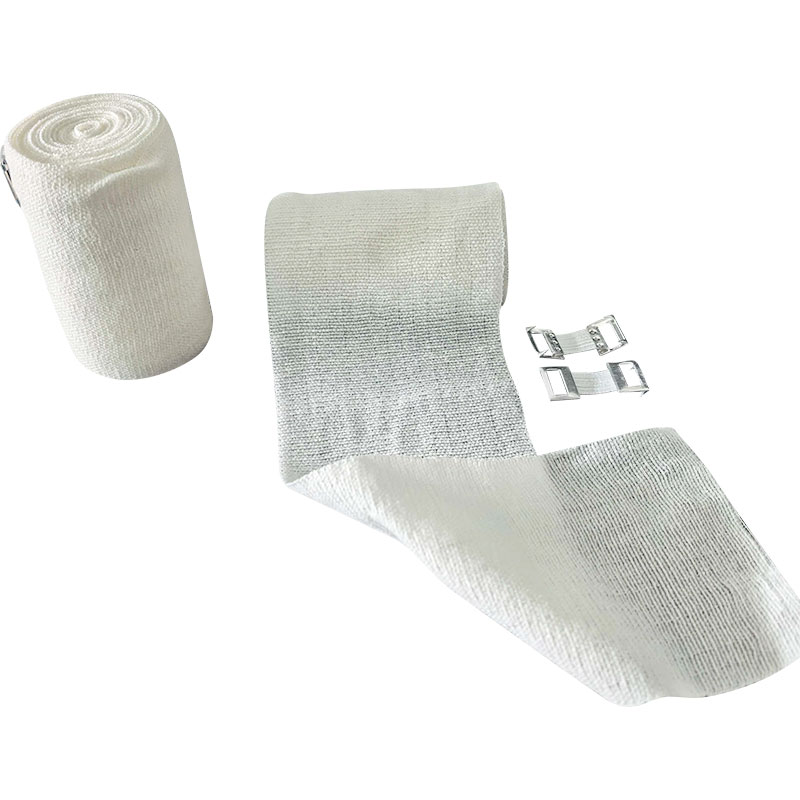
If you've ever wrapped a sprained ankle or wrist and watched the bandage unravel within minutes, you already know why clips matter. A clips elastic bandage is simply a stretchy compression wrap that comes with small metal or plastic clips instead of tape, Velcro, or safety pins to hold the end in place. These clips slide onto the fabric, grip the loops of the weave, and keep the wrap snug without leaving sticky residue or poking through the skin. They're a small detail, but for anyone who wraps joints regularly - athletes, parents, nurses, or weekend warriors - they make the difference between a bandage that stays put and one that needs constant readjusting.
The mechanism is simpler than it looks. Most elastic bandages are woven with a slightly open, ribbed texture. Bandage clips have two or three curved metal prongs shaped like tiny hooks. You press the prongs through the fabric layers after wrapping, and the curve of the metal catches the weave so it can't slip back out under tension. Because the bandage material has natural give, the clip doesn't tear or fray the fibers the way a staple or pin might. Plastic clips work on the same principle but use a pinch-and-lock design instead of metal prongs, which some people prefer for sensitive skin or pediatric use.
Medical tape can irritate skin with repeated removal, and safety pins carry an obvious risk of pricking whoever is wrapped. Clips avoid both problems. They're reusable, they don't leave adhesive marks, and they can be repositioned instantly if the wrap needs to be tightened or loosened during the day.
Not all clips are built the same, and picking the right style can affect how secure and comfortable the wrap feels. Here's a breakdown of the most common types sold with elastic bandages today.
Getting a clean, secure wrap isn't complicated, but a few small habits make the clips hold much better and keep the bandage comfortable for hours.
Even a simple tool like a clip can be misused. One frequent mistake is clipping only the outer layer of fabric, which means the clip pops off the moment the joint moves. Another is placing the clip directly over a bone, tendon, or the front of a joint, which creates pressure points that become painful during motion. People also sometimes reuse a bent or weakened clip that no longer grips tightly, leading to a wrap that loosens throughout the day. Finally, storing clips loose in a bag or drawer often results in lost or misplaced clips right when they're needed most, so keeping them attached to the bandage roll between uses is a simple habit worth building.
Choosing between clips, Velcro, tape, or pins often comes down to comfort, reusability, and how often the bandage will be removed and reapplied. The table below compares the most common options side by side.
| Fastening Method | Reusable | Skin Friendly | Adjustability |
| Metal Clips | Yes | Moderate | High |
| Plastic Clips | Yes | High | High |
| Medical Tape | No | Low | Low |
| Velcro Strip | Yes | High | Moderate |
| Safety Pins | Yes | Low | Moderate |
Not every elastic bandage and clip combination suits every purpose. A first-aid kit for a household with kids benefits from plastic clips that are gentle and easy for a child to tolerate, while an athletic trainer wrapping knees before a game might prefer sturdy metal clips that can handle repeated stretching and movement. Width matters too - narrower bandages with smaller clips work well for wrists and fingers, while wider bandages with larger butterfly-style clips distribute pressure better on thighs or torsos. It's also worth checking that the clips are rustproof if the bandage will be washed and reused often, since a corroded clip loses its grip and can leave marks on the fabric.
A minor wrist strain generally needs a lighter, narrower wrap with a small clip, while a knee or ankle recovering from a more serious sprain benefits from a wider, higher-compression bandage with a stronger clip that won't loosen during walking.
Good clips can last through dozens of wraps if they're treated properly. After each use, wipe metal clips dry to prevent rust, and avoid tossing them into a washing machine with the bandage itself, since agitation can bend the prongs. Store clips attached to the rolled-up bandage rather than loose in a drawer, both to prevent loss and to keep the prongs from bending against other objects. If a clip ever feels loose or no longer grips fabric firmly, it's safer to replace it than to keep using it, since a failing clip can let a compression wrap slip at the worst possible moment, like mid-workout or mid-shift on your feet.
 NO.89 Duanshu Road, Xinggong Road, Pinghu City, Zhejiang Province, China
 [email protected]
 +86-(0)573-8507 6991
Copyright © hero-medical.com. All Rights Reserved
 Wholesale Sport Tape Manufacturers
China Sport Tape Suppliers
Wholesale Sport Tape Manufacturers
China Sport Tape Suppliers
The information provided on this website is intended for use only in countries and jurisdictions outside of the People's Republic of China.
 English
 Espana
 Français
 Deutsch