

Content
The term "elastic bandage" covers a surprisingly broad family of products that differ significantly in how they are constructed, how they stretch, how they stay in place, and what they are best suited for. Walking into a pharmacy or searching online and simply ordering "elastic bandage" without understanding these distinctions often leads to buying something that does not work well for your actual need. Here is a clear breakdown of the main types you will encounter.
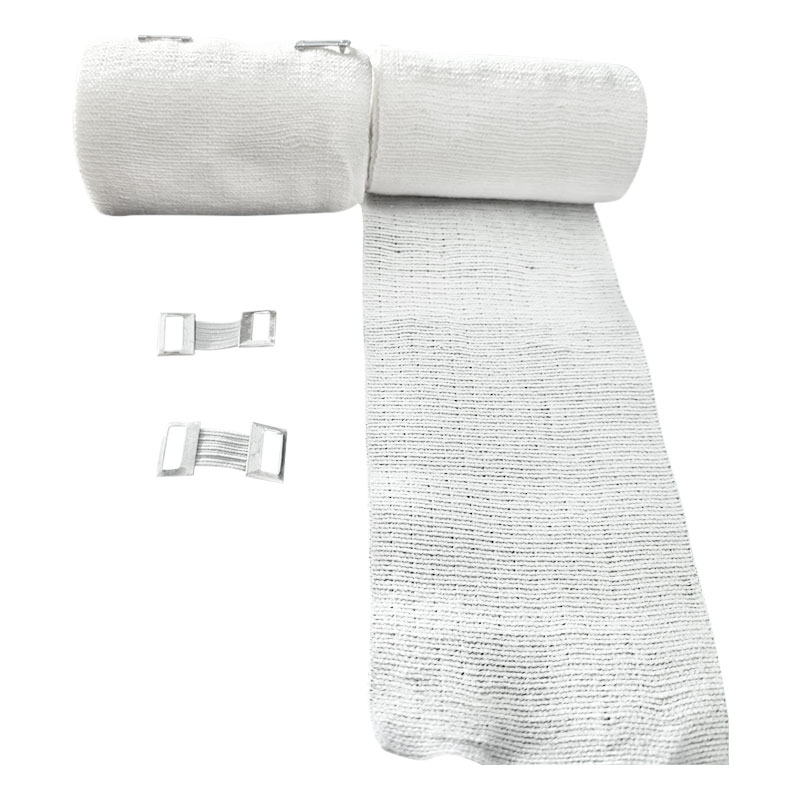
The traditional elastic wrap bandage — most widely recognized in the form of the ACE brand bandage — is woven from a blend of cotton and elastic fibers (typically latex or spandex). These bandages stretch lengthwise to allow controlled compression and are secured at the end with metal or plastic closure clips. They can be washed and reused many times, making them economical for ongoing use in sports, physical therapy, and home first aid. Traditional woven elastic bandages provide good conformability around curved body parts and allow the user to control the level of compression by adjusting how firmly they pull the bandage during application. They are the standard choice for joint sprains, post-surgical edema management, and general compression therapy.
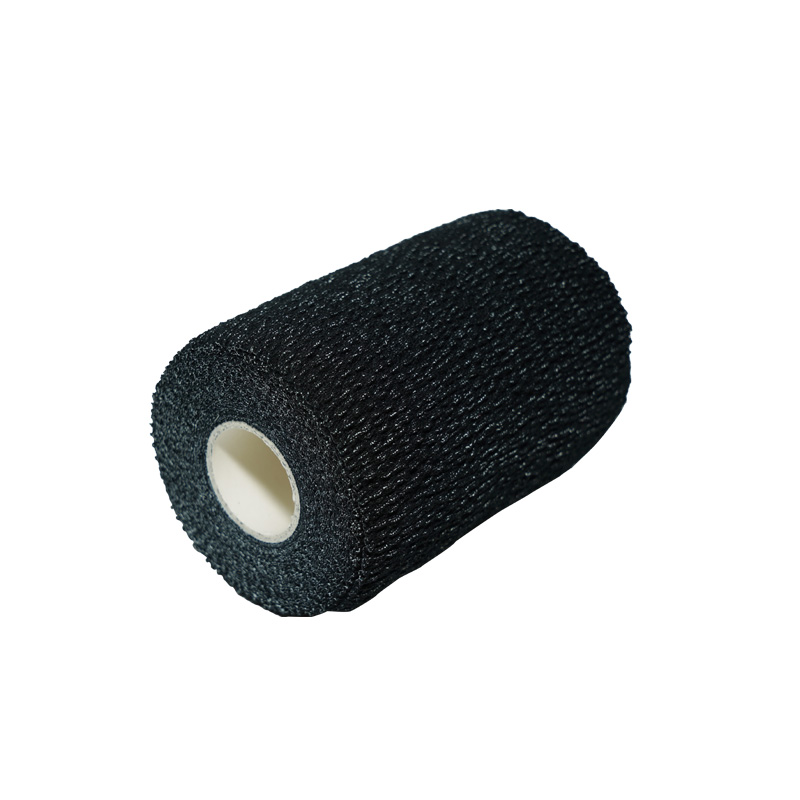
Cohesive bandages — sold under brand names like CoFlex, VetWrap, and Co-Flex — are made from a non-woven fabric that sticks to itself but not to skin, hair, or clothing. This self-adhesive property eliminates the need for clips or tape to secure the wrap and makes the bandage stay in place far more reliably during activity than a clip-secured traditional wrap. Cohesive elastic bandages are widely used in sports medicine, equine and veterinary care, wound dressing retention, and occupational first aid because they are fast to apply, do not slip, and can be removed easily without disturbing underlying dressings. Most cohesive bandages are single-use only — the self-adhesive layer loses its cohesive properties once the bandage has been stretched and unwound. They are available in a wide range of colors, which has made them particularly popular in athletic taping applications.
Tubular elastic bandages are seamless knitted tubes of elastic fabric that are pulled over a limb rather than wrapped around it. They provide uniform, consistent circumferential compression without the variable tension that can occur with hand-wrapped bandages. Tubular elastic supports are widely used for mild compression of joints during recovery from minor sprains, for managing chronic conditions like mild lymphedema, and for retaining wound dressings on limbs. They come in a range of sizes calibrated to fit specific limb diameters and body parts. Because they are pulled on like a sleeve, they are easy to apply correctly without training — making them a practical option for patients who need to self-manage compression at home.
Crepe bandages are a lighter, lower-stretch variant of the elastic wrap bandage, made from a crinkled cotton or cotton-synthetic blend fabric. They provide mild support and light compression but have significantly less elastic recovery than standard woven elastic bandages, meaning they do not maintain consistent pressure as well over time. Crepe bandages are well suited for wound dressing retention, light support for minor soft tissue injuries, and post-procedure wound coverage. They are widely used in hospitals and clinical settings because of their low cost and versatility. For significant joint compression or edema management, a proper high-stretch elastic compression bandage is preferable to a crepe wrap.
One of the most clinically important — and least commonly understood — characteristics of elastic compression bandages is their stretch grade. This refers to the percentage by which the bandage can be extended beyond its resting length. Stretch grade has a direct impact on the type of compression the bandage delivers and which clinical applications it is appropriate for.
| Stretch Grade | Extension Range | Compression Type | Best Uses |
| Short Stretch | Up to 70% extension | High working pressure, low resting pressure | Lymphedema, chronic venous insufficiency, post-thrombotic syndrome |
| Long Stretch | 100–200% extension | High resting and working pressure | Acute sprains, sports compression, post-surgical edema |
| Extra-Long Stretch | Over 200% extension | Very high conformability, moderate sustained pressure | Wound dressing retention, irregular body contours |
Short-stretch elastic bandages are the gold standard for managing lymphedema and chronic venous insufficiency because they generate high pressure during muscle contraction (working pressure) that assists venous and lymphatic pump function, but low resting pressure when the limb is still — reducing the risk of ischemic damage during inactivity. Long-stretch bandages — the type most commonly found in pharmacies and sports medicine settings — generate sustained pressure at rest as well as during movement, making them appropriate for acute injury management but less suitable for overnight or prolonged use in venous or lymphatic conditions.
Elastic bandages and compression wraps are used across a wide range of medical and rehabilitation scenarios. Understanding these uses helps you select the right product and apply it with the right intent.
Elastic compression bandages are a core component of the RICE protocol (Rest, Ice, Compression, Elevation) for acute soft tissue injuries such as ankle sprains, muscle strains, and knee contusions. In this context, the primary role of the elastic wrap is to limit the accumulation of edema (swelling) in the injured tissue during the first 48–72 hours after injury. Excessive swelling prolongs recovery, increases pain, and can mechanically impair healing by stretching tissue beyond its normal capacity. A correctly applied elastic compression bandage applies circumferential pressure that mechanically resists fluid accumulation in the interstitial space, working synergistically with ice (which reduces local blood flow) and elevation (which assists venous drainage).
Chronic venous insufficiency (CVI) is a condition in which the valves in the leg veins fail to function properly, causing blood to pool in the lower limbs and producing chronic swelling, skin changes, and in severe cases, venous leg ulcers. Elastic compression bandages — particularly short-stretch bandages applied in a multi-layer system by trained clinicians — are a cornerstone of conservative management for CVI and venous leg ulcers. The compression reduces venous hypertension in the superficial leg veins, improves venous return, and reduces edema. Multi-layer compression bandage systems for venous ulcer management typically combine a padding layer, a short-stretch cohesive bandage layer, and an outer elastic cohesive bandage, providing graduated compression of 40 mmHg or more at the ankle.
Lymphedema — a chronic condition causing limb swelling due to impaired lymphatic drainage, most commonly following cancer treatment involving lymph node removal — is managed in its active treatment phase using short-stretch elastic bandages applied in a multi-layer technique by certified lymphedema therapists. The bandaging is typically applied after manual lymph drainage massage, maintaining the reduction in limb volume achieved by the massage until the next treatment session. Once the limb volume has been reduced to a stable baseline, patients typically transition from bandaging to fitted compression garments for long-term maintenance.
After orthopedic procedures — knee replacements, ankle surgeries, ACL reconstructions — elastic compression bandages are routinely applied to manage post-operative swelling and provide support to the surgical site during the initial recovery phase. They are also used after procedures like vein stripping, sclerotherapy for varicose veins, and liposuction, where sustained post-procedural compression assists healing and reduces hematoma formation. In these clinical applications, the bandage is typically applied by the surgical team and the patient is given specific instructions about when to remove it, when to reapply, and what warning signs to monitor for.
In sports medicine and athletic training, elastic bandages and cohesive elastic wraps are everyday tools used for injury prevention, performance support, and acute injury management on the field. The applications are broad:
The elastic bandage market ranges from high-quality clinical products to thin, low-elasticity wraps that look similar but perform very differently. Here is what to assess when choosing a product:
| Feature | What to Look For | Why It Matters |
| Material composition | Cotton/spandex or cotton/latex blend | Affects breathability, elasticity, and skin comfort |
| Latex content | Latex-free options available | Essential for patients with latex allergy |
| Width options | 2", 3", 4", 6" widths available | Correct width ensures even compression over the body part |
| Reusability | Washable and reusable (traditional wraps) | Reduces cost for ongoing use; check maximum wash cycles |
| Closure system | Metal clips, hook-and-loop, or self-adhesive | Affects ease of application and security during activity |
| Stretch indicator | Color-change or printed guide marks | Helps apply consistent, correct compression tension |
| Regulatory marking | CE mark (EU), FDA registration (US) | Confirms the product meets minimum medical device standards |
One feature worth specifically looking for on elastic compression bandages intended for clinical or serious injury use is a printed tension indicator — small squares, rectangles, or diamonds printed on the bandage fabric that change shape when the bandage is stretched to the correct tension. When the indicator shape appears as a perfect square or circle, the bandage is at the right extension and is delivering its intended compression level. This simple feature takes much of the guesswork out of applying consistent pressure and is available on products from several reputable manufacturers including BSN Medical (Comprilan, Elastomull), 3M, and others.
A good quality elastic wrap bandage is an investment that should last for many months or even years of regular use if it is properly maintained. Here is how to get the most out of your reusable elastic compression bandages:
 NO.89 Duanshu Road, Xinggong Road, Pinghu City, Zhejiang Province, China
 [email protected]
 +86-(0)573-8507 6991
Copyright © hero-medical.com. All Rights Reserved
 Wholesale Sport Tape Manufacturers
China Sport Tape Suppliers
Wholesale Sport Tape Manufacturers
China Sport Tape Suppliers
The information provided on this website is intended for use only in countries and jurisdictions outside of the People's Republic of China.
 English
 Espana
 Français
 Deutsch