

Fixation tape rarely gets the credit it deserves. It does not compress a joint, support a muscle, or deliver anything to the skin. It simply holds something in place, a wound dressing, a gauze pad, a sensor, or a length of tubing, and then quietly steps out of the way. In clinics, first aid kits, and sports bags, that modest job is what keeps everything else working.
We are Jiaxing Heao Medical Equipment Co., Ltd., a sports tape manufacturer founded in 2016 in Jiaxing, China. Fixation tape sits close to the centre of our daily work, because the same coating, slitting, and winding lines that produce athletic tape also produce the nonwoven rolls that hold dressings in place. This guide collects what we have learned about how fixation tape is built, specified, and bought.
Content
Fixation tape is a thin, conformable adhesive tape whose main purpose is retention. It keeps a primary dressing, pad, or device against the skin so that the dressing can do its job. It is usually not sterile, it is not designed to absorb exudate, and it is not meant to be stretched under tension the way an elastic bandage is.
That single-minded role shapes every design choice. Backings are selected for conformability and breathability rather than sheer strength. Adhesives are selected for dependable tack on dry skin and for clean, low-trauma removal, because a fixation tape may be changed daily and the skin beneath it may already be fragile. Widths stay narrow so the tape can follow the contour of a finger, a wrist, or a jawline without lifting at the edges.
For a broader definition and a look at how the category is organised, see our article explaining what fixation tape is.
Buyers usually sort fixation tape by backing material, because the backing decides how the tape feels, how it breathes, and how it behaves when it gets wet. Four families cover most of the market.
| Type | Backing | Typical use | What to keep in mind |
|---|---|---|---|
| Nonwoven dressing roll fixation tape | Nonwoven fabric, often perforated or microporous | General dressing retention and wound care | Soft, breathable, and conformable; the default clinical choice |
| Transparent film fixation tape | Thin transparent film | Waterproof dressing retention, showering, IV sites | Keeps water out but breathes less than nonwoven |
| Paper or microporous fixation tape | Paper or lightweight nonwoven with microporous adhesive | Light dressings on sensitive or paediatric skin | Very gentle, but lower adhesion and easier to lift |
| Elastic adhesive fixation tape | Woven or knitted fabric with elastic yarns | Retention over joints and moving areas | Stretch follows movement, so placement matters more |
Width, spool length, core diameter, perforation pattern, and pack format vary within each family, which is why fixation tape is rarely a single line item for a wholesaler. It is usually a small matrix of specifications that a channel fills out over time.
Fixation tape travels well beyond the hospital storeroom. Four settings come up again and again in the orders we produce.
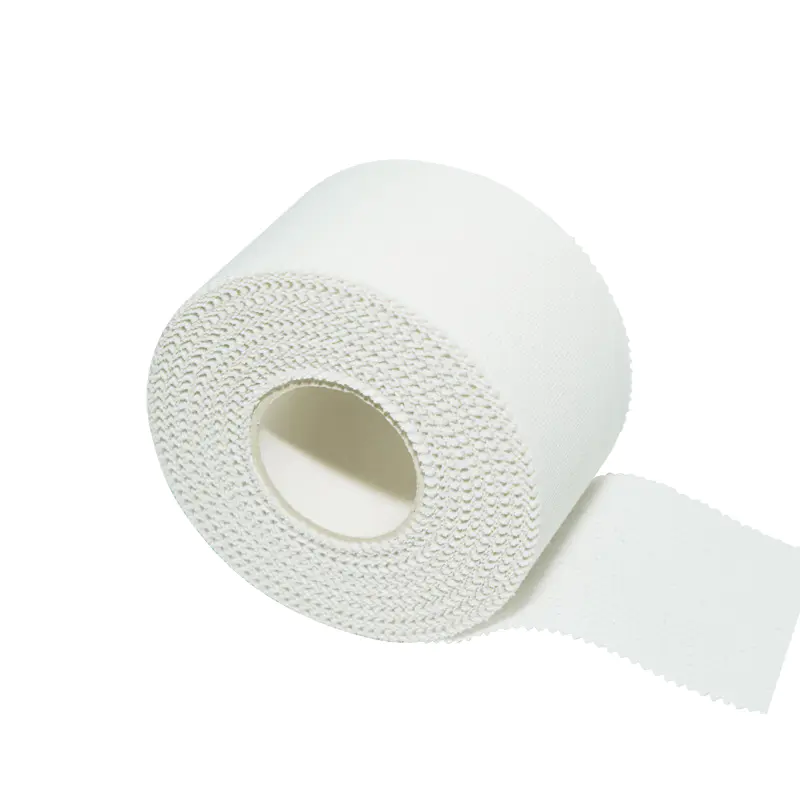
The nonwoven dressing roll is the workhorse of this category, and it is one of the constructions we produce in the widest range of widths and pack formats.
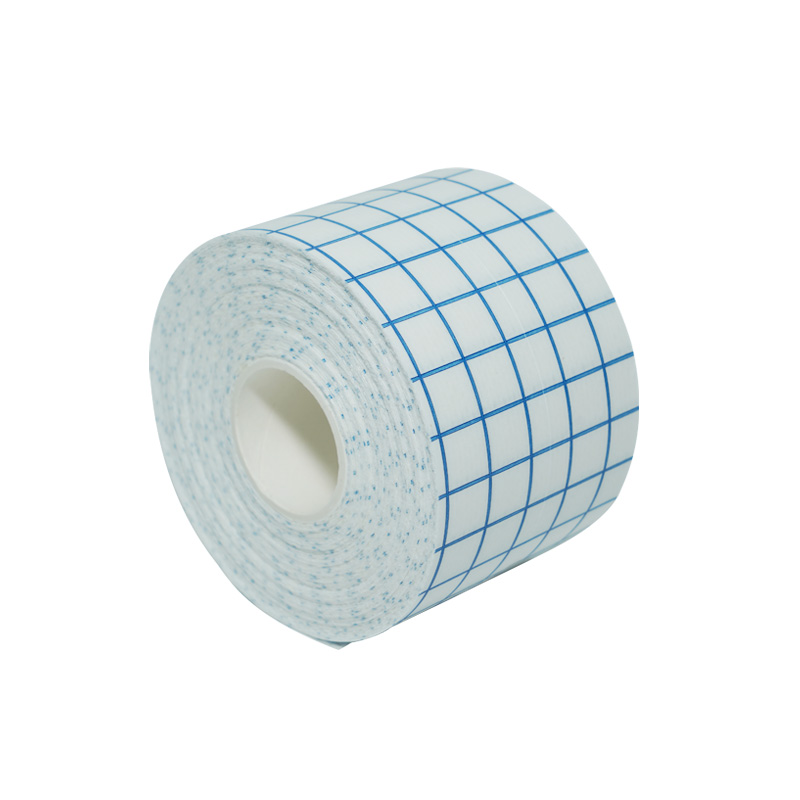 Non-woven Fabric Dressing Roll Fixation TapeFixation tape/dressing roll/cover rollView Product →
Clinical and retail customers often want the same roll in different packaging, which is why carton configuration can matter as much as the adhesive itself.
Wearable medical devices have changed what buyers expect from a fixation tape. A sensor patch may stay on the arm for days at a time, which means it has to hold through sweat, showers, and clothing friction while staying comfortable enough that the wearer forgets it is there. That combination pushes the specification toward a thinner, more conformable backing with a skin-friendly adhesive, cut to the device footprint rather than supplied as a plain roll.
We produce adhesive patches for this kind of application alongside our traditional tape lines, including covers shaped around continuous glucose monitoring sensors.
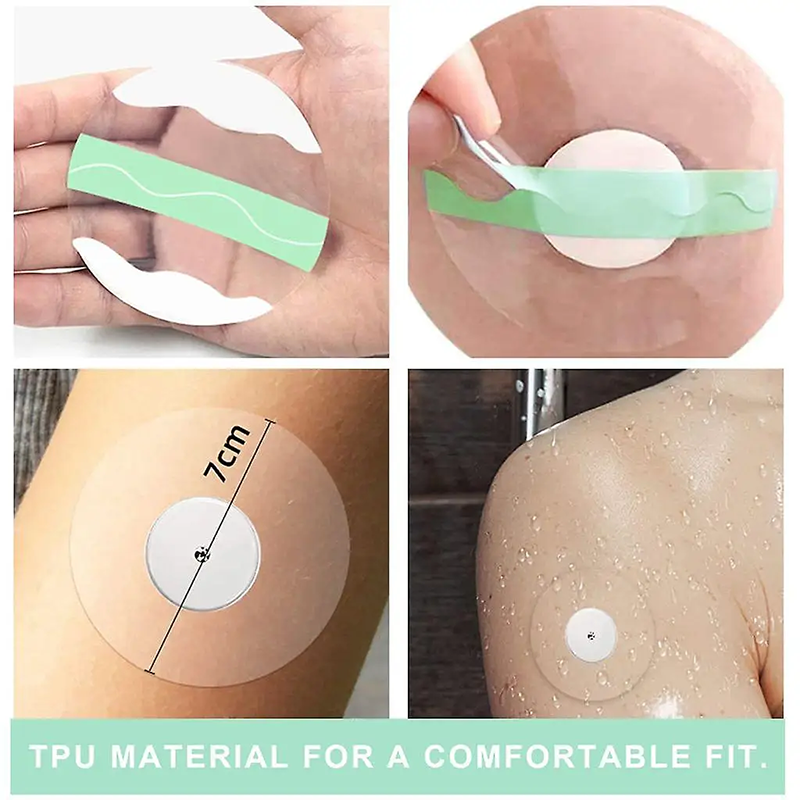 CGM Adhesive Patch/CGM Sensor Cover GripCGM Adhesive Patch/CGM Sensor Cover GripView Product →
For brand owners in this space, the conversation usually starts with device dimensions and expected wear time, not with a catalogue number.
The three names overlap in shops and warehouses, so it helps to separate them by intention rather than by material.
A single patient encounter can involve all three: a fixation tape holding the dressing, a rigid tape stabilising the joint above it, and an elastic bandage layered over both.
When a wholesaler or an e-commerce seller asks us to quote fixation tape, the fastest route to a workable sample is a short set of answers.
A sample usually settles these questions faster than a specification sheet. Our process is sample, confirmation of the sample, then bulk production.
Most complaints about fixation tape come from technique rather than from the tape itself. A few habits prevent nearly all of them.
On fragile or irritated skin, an adhesive remover wipe or a warm, damp cloth held over the tape for a minute makes removal noticeably easier.
Fixation tape is a coating product before it is a medical product, and that is the part we control in house. Our factory in Jiaxing runs two coating lines that can produce two different adhesive products at the same time, with a monthly capacity of about 300,000 rolls of standard bandage products and annual output above one million rolls. Slitting, perforating, winding, and packaging all happen on site, which is how one order can contain several widths and pack formats without becoming a scheduling problem.
Quality control is handled by our own testing laboratory, and finished products carry CE certification. For buyers in Europe and North America we ship under FOB, CIF, or FBA arrangements, and most orders are completed within 25 working days. Custom work is welcome: we develop from customer drawings or samples, support small batch runs, and can take a product from backing and adhesive selection through to branded retail packaging.
If you would like to know more about the company behind the products, you can read more about our factory and certifications.
Fixation tape is a small purchase with an outsized effect on how a dressing performs, how a device wears, and how a patient remembers the experience. Match the backing to the job, match the adhesive to the skin, and buy from a manufacturer who can hold those specifications consistently from the first sample to the ten thousandth roll.
If you are sourcing fixation tape for a clinic, a retail line, or a wearable device, send us the dimensions, the wear time, and the packaging you have in mind. We will tell you honestly which of our constructions fits, and which one does not.
 NO.89 Duanshu Road, Xinggong Road, Pinghu City, Zhejiang Province, China
 [email protected]
 +86-(0)573-8507 6991
Copyright © hero-medical.com. All Rights Reserved
 Wholesale Sport Tape Manufacturers
China Sport Tape Suppliers
Wholesale Sport Tape Manufacturers
China Sport Tape Suppliers
The information provided on this website is intended for use only in countries and jurisdictions outside of the People's Republic of China.
 English
 Espana
 Français
 Deutsch