

Foam under wrap is the quiet workhorse behind a comfortable taping job. It is a thin foam layer applied to the skin before rigid strapping tape, athletic tape, or a heavy elastic bandage goes on top, and it often decides whether an athlete finishes a session with healthy skin or with blisters and sticky residue.
As a sports tape manufacturer based in Jiaxing, China, we have produced foam underwrap alongside cotton athletic tape, kinesiology tape, hockey tape, and elastic bandages since 2016. We supply wholesalers, Amazon sellers, and self-employed therapists, and nearly every new buyer asks the same question: when should foam under wrap be used instead of pre-wrap or nothing at all?
This guide covers what the product is, how to apply it, how it compares with other base layers, and what to check when sourcing it in volume.
Content
Foam under wrap, also called foam underwrap or foam primer bandage, is a narrow roll of thin foam wrapped around skin or over a joint before tape is applied. It is a barrier and cushioning layer, not a structural support. The foam is usually closed-cell polyethylene or a similar material that stays soft against skin, does not soak up much sweat, and cuts or tears easily to length.
Most rolls are made in widths close to athletic tape, generally around 5 to 7 centimeters, so the base layer and the tape above it can be handled with the same motion. Two formats are common:
Foam under wrap cannot stabilize a joint or deliver meaningful compression. That work belongs to the strapping tape or elastic bandage applied over it; the foam exists to make that top layer tolerable for the skin underneath.
Strapping tape is designed to grip, which is exactly what makes it uncomfortable when it sits directly on skin for hours. A foam base layer solves several problems at once:
The athletes and therapists who tape most often are usually the ones who insist on a base layer. Someone taped twice a week for a full season notices a missing layer of foam far faster than a casual user does.
Foam is not the only option for protecting skin under tape. Nonwoven pre-wrap and cohesive bandages are sometimes used for the same job, and each choice changes how the finished taping behaves.
| Base layer | Material | Typical use | What it adds |
|---|---|---|---|
| Foam under wrap | Thin closed-cell foam | Under rigid strapping tape and hockey tape | Cushioning, skin protection, clean removal |
| Nonwoven pre-wrap | Porous nonwoven fabric | Under athletic tape and casts | Breathability, very low bulk |
| Self-adhesive bandage | Cohesive elastic fabric | Light compression without skin adhesive | Compression, but more bulk |
| No base layer | Skin only | Short sessions and quick fixes | Maximum adhesion, fastest application |
The rule of thumb: choose foam when cushioning and skin protection matter more than a low profile, choose pre-wrap when you want the thinnest possible barrier, and skip the base layer only for short sessions where tape comes off within an hour or two.
On the production floor we always suggest cutting the roll rather than tearing it, because a ragged foam edge rolls up under tape and turns into an uncomfortable lump.
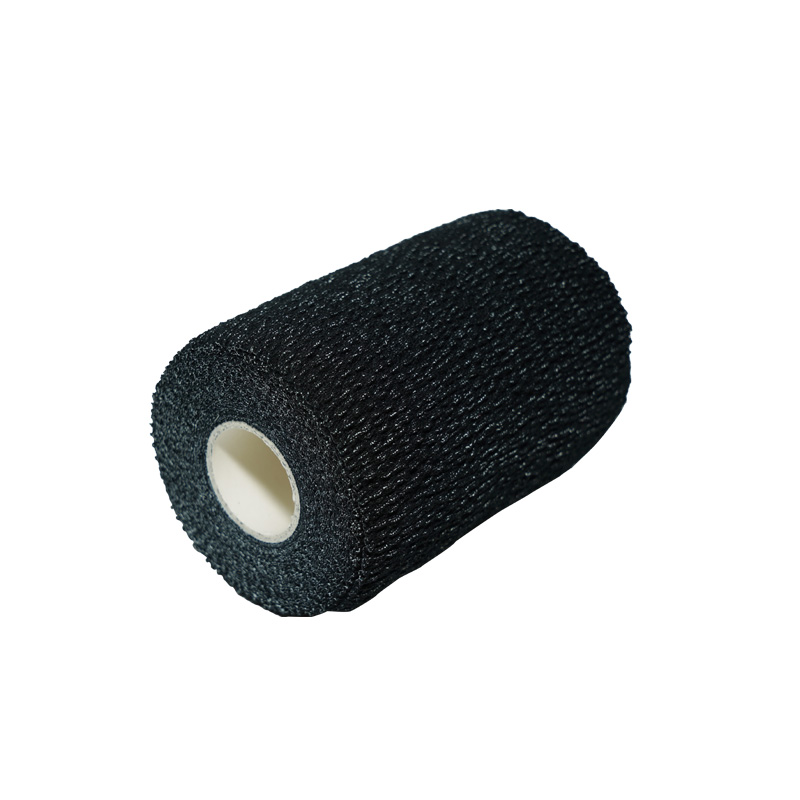
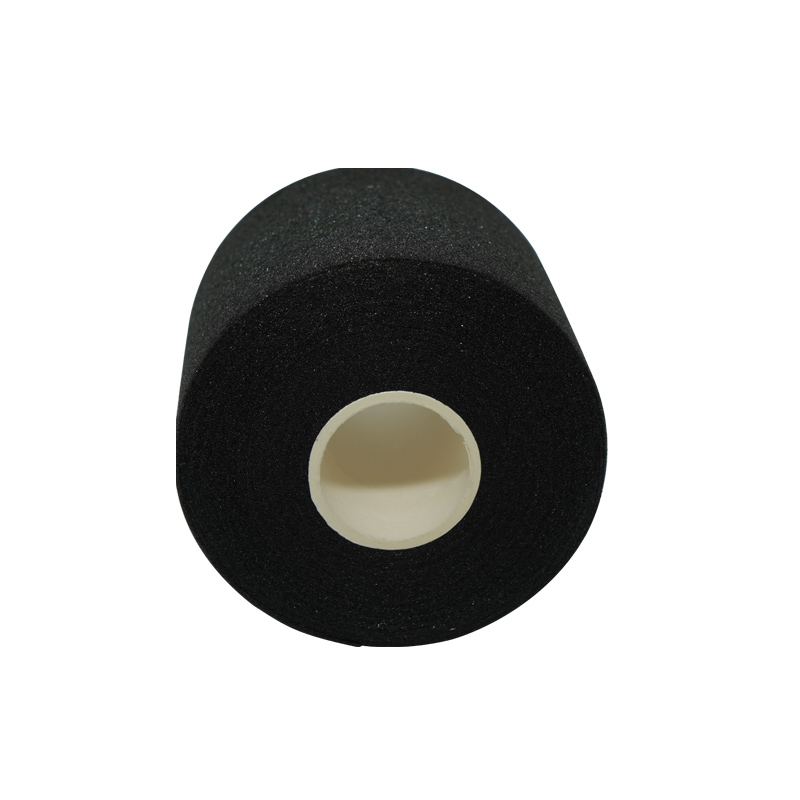 Black polyurethane foam under wrap for skin protectionBLACK COLOR FOAM UNDER WRAPView Product →
For daily physio and team use, our black foam under wrap is the version most customers reorder, partly because it hides residue and looks clean under darker strapping tape.
Foam under wrap earns its place next to rayon rigid strapping tape, cotton athletic tape, hockey tape, and heavy elastic adhesive bandages. In rugby, weightlifting, and combat sports, a foam layer is standard practice before rigid tape goes over a thumb, wrist, or ankle, because those joints are taped hard and taped often.
Technique matters as much as materials. Our guide to applying rigid strapping tape covers tension, anchors, and locking strips.
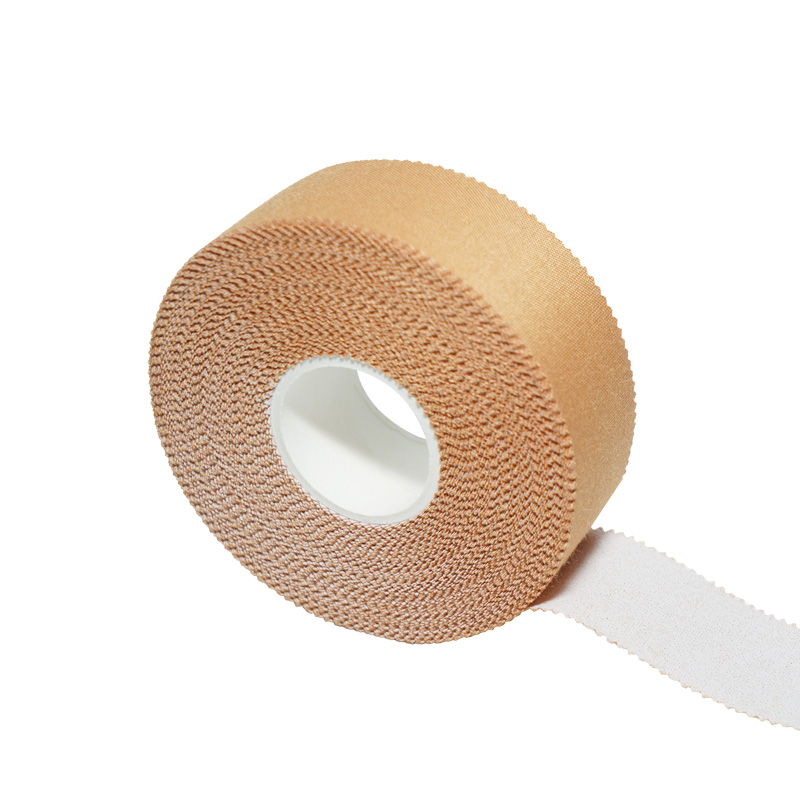 Skin Strong Rayon Rigid Strapping Sports TapeRayon rigid strapping tapeView Product →
A skin-tone rayon rigid strapping tape pairs naturally with a foam base layer, staying discreet while giving the firm hold that contact sports demand.
Four details decide whether a foam under wrap performs well in the field:
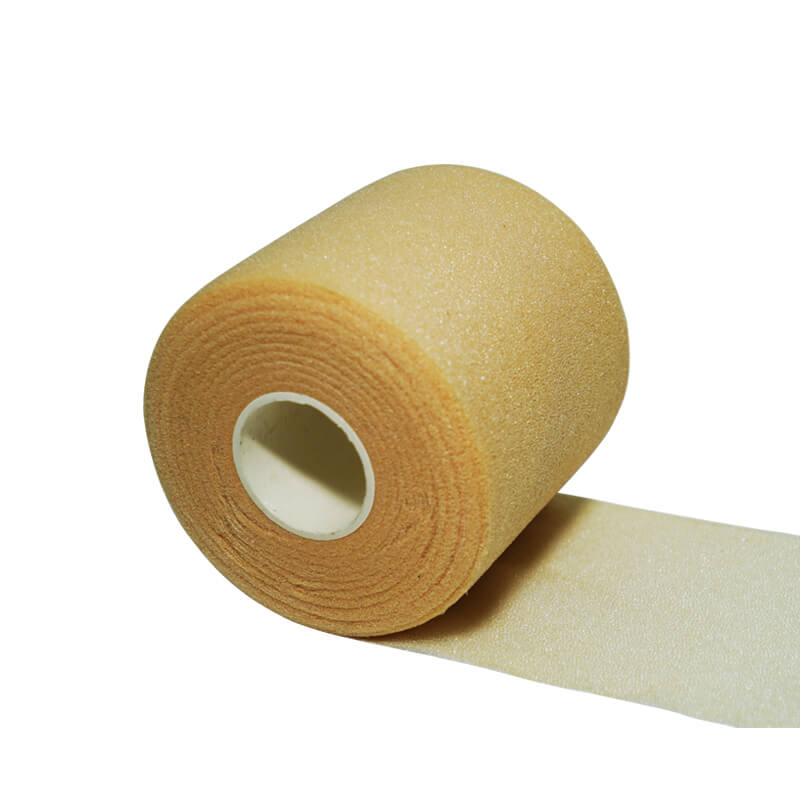 Skin color soft polyurethane foam under wrapSKIN COLOR FOAM UNDER WRAPView Product →
A yellow foam primer bandage, for instance, keeps the underwrap visible on the shelf instead of hidden in a kit bag, which is an easy way to differentiate a starter range.
For wholesalers, brand owners, and Amazon sellers, foam under wrap is a low-cost, high-repeat item that supports the rest of a taping range. What matters most is supply stability, customization flexibility, and packing that survives the journey.
Our factory runs two coating lines that can produce two different adhesive products at the same time, with a current monthly capacity of roughly 300,000 rolls of conventional bandage products and more than one million rolls a year. Most orders ship within about 25 working days, and we arrange FOB, CIF, or FBA delivery depending on how our customers sell.
Our products carry CE certification, and our regular customers are wholesalers, Amazon sellers, and self-employed practitioners, so we are used to orders ranging from a full container to a few cartons for a first test.
No. Pre-wrap is a thin nonwoven fabric, while foam under wrap is a denser foam layer. Foam cushions more, while pre-wrap is thinner and more breathable.
Yes, for light cushioning or reducing friction from equipment, but it will not stabilize a joint or provide compression. Support comes from the tape applied over it.
One to two smooth layers with about 50 percent overlap is standard. Add a second layer only where extra cushioning is genuinely needed.
Foam under wrap is a small line item in a taping kit, but it changes the experience for the person wearing the tape and cuts down on the skin complaints a therapist has to handle.
If you are building or expanding a sports tape and bandage range, we are glad to talk through underwrap specifications, colors, and packaging that fits your sales channel.
 NO.89 Duanshu Road, Xinggong Road, Pinghu City, Zhejiang Province, China
 [email protected]
 +86-(0)573-8507 6991
Copyright © hero-medical.com. All Rights Reserved
 Wholesale Sport Tape Manufacturers
China Sport Tape Suppliers
Wholesale Sport Tape Manufacturers
China Sport Tape Suppliers
The information provided on this website is intended for use only in countries and jurisdictions outside of the People's Republic of China.
 English
 Espana
 Français
 Deutsch