

Whether you're taping a sprained ankle before a match, securing a dressing over a fresh wound, or providing compression support after a joint injury, a heavy elastic adhesive bandage is one of the most versatile tools in a first aid kit or athletic training room. Unlike ordinary gauze or standard adhesive tape, this bandage combines stretch, grip, and breathability into a single product designed to move with the body while staying firmly in place. Below, we take a detailed look at how this bandage works, when to use it, and how to apply it correctly for the best results.
Content
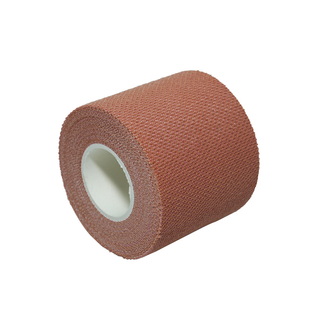
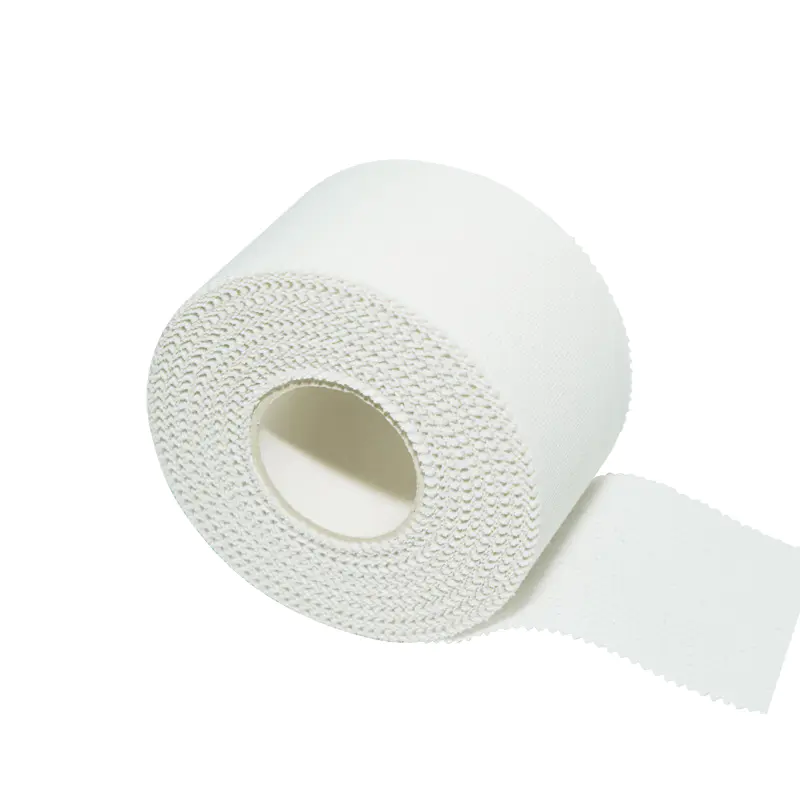
A heavy elastic adhesive bandage, often abbreviated as EAB, is constructed from a woven or knitted fabric base coated with a layer of medical-grade adhesive. Unlike rigid athletic tape, the fabric backing is engineered to stretch in one or multiple directions, allowing the bandage to expand and contract as the underlying muscle or joint moves. This elasticity is what separates it from standard non-stretch adhesive tape, which tends to restrict movement entirely and can dig into the skin during activity.
The "heavy" designation typically refers to a thicker fabric weave and a stronger adhesive backing compared to lightweight elastic wraps. This added density gives the bandage greater tensile strength, making it suitable for applications that demand firm, lasting compression — such as stabilizing a joint during high-impact sports or securing bulky dressings that need to stay put through hours of movement and sweat.
Because of its combination of stretch and adhesion, this type of bandage is used across a wide range of medical, athletic, and first aid scenarios. Understanding its common applications helps clarify when it's the right tool for the job.
The therapeutic value of a heavy elastic adhesive bandage lies largely in the principle of graduated compression. When wrapped correctly, the bandage applies consistent pressure to the affected area, which helps reduce fluid buildup and swelling in the tissue surrounding an injury. This compression also provides proprioceptive feedback — a gentle reminder to the nervous system about the position and movement of the joint — which can reduce the risk of re-injury during the healing process.
Immediately following a soft tissue injury such as a sprain or strain, controlling swelling is one of the most important early steps in recovery. A heavy elastic adhesive bandage applied with even, moderate tension helps limit the accumulation of fluid in the injured area, which can otherwise slow healing and increase discomfort.
Because the bandage stretches with the body rather than restricting it entirely, it allows for functional movement while still limiting excessive or unstable motion at the joint. This makes it particularly useful during the middle stages of recovery, when some mobility is encouraged but full unsupported movement could risk further injury.
Proper application technique makes a significant difference in both comfort and effectiveness. Follow these general steps for a secure, even wrap.
Clean and dry the skin thoroughly before application, as moisture, oils, or lotions can significantly reduce adhesive performance. If the area has hair, consider trimming it beforehand, since this can improve adhesion and make removal more comfortable later.
Start by anchoring the bandage below the injury site with light tension, then wrap upward in overlapping spirals, covering roughly half of the previous layer with each pass. Apply moderate, even stretch throughout — stretching the bandage to around 50 to 70 percent of its maximum elasticity generally provides firm support without cutting off circulation. Avoid pulling the bandage to its full stretch limit, as this can create excessive pressure and restrict blood flow.
After wrapping, check that fingers or toes below the bandage remain warm and normally colored, and that the person can still feel sensation in the area. Numbness, tingling, or a bluish tint are signs the bandage has been applied too tightly and should be loosened immediately.
Not every elastic adhesive bandage is suited to every situation. Several factors should guide your selection depending on the intended use.
| Factor | What to Consider |
| Width | Narrower widths for fingers and wrists; wider for knees, thighs, and larger joints |
| Adhesive Strength | Higher tack for high-sweat athletic use; gentler adhesive for sensitive skin |
| Stretch Direction | Uni-directional stretch for targeted support; multi-directional for flexible joints |
| Breathability | Porous weave for extended wear and reduced skin irritation |
| Water Resistance | Important for athletes or outdoor use where sweat or moisture exposure is high |
Even a high-quality heavy elastic adhesive bandage can cause problems if applied incorrectly. Wrapping too tightly is one of the most frequent errors, often resulting in numbness, throbbing, or discoloration in the area below the wrap. It's important to reassess tension periodically, especially in the first hour after application, since swelling can increase pressure under the bandage even if it felt appropriately snug at first.
Reusing a bandage that has lost its elasticity is another common mistake. Over time and with repeated stretching, the fabric backing can lose its recoil, resulting in a wrap that no longer provides consistent compression. Additionally, applying the bandage directly over broken or irritated skin without a protective dressing underneath can cause further irritation, given the strength of the adhesive used in heavy-duty variants.
With so many bandage and wrap options available, it helps to understand where a heavy elastic adhesive bandage offers a distinct advantage. Compared to a standard non-adhesive elastic wrap, which relies on clips or tucking to stay secure, the adhesive backing of this bandage keeps it firmly in place through vigorous activity, making it a better choice for sports, physical labor, or any situation involving significant movement.
Because heavy elastic adhesive bandages use strong adhesive to stay secure through demanding activity, proper removal technique matters for skin comfort. Peel the bandage back slowly, holding the skin taut with one hand while pulling the bandage back on itself at a low angle, rather than lifting it straight up. This reduces pulling on the skin and minimizes irritation, particularly for individuals with sensitive skin or those who apply and remove bandages frequently as part of a training routine.
After removal, gently cleanse the area to remove any adhesive residue, and allow the skin to breathe for a period before reapplying a new bandage, especially if the area shows any redness or signs of irritation.
 NO.89 Duanshu Road, Xinggong Road, Pinghu City, Zhejiang Province, China
 [email protected]
 +86-(0)573-8507 6991
Copyright © hero-medical.com. All Rights Reserved
 Wholesale Sport Tape Manufacturers
China Sport Tape Suppliers
Wholesale Sport Tape Manufacturers
China Sport Tape Suppliers
The information provided on this website is intended for use only in countries and jurisdictions outside of the People's Republic of China.
 English
 Espana
 Français
 Deutsch