

Hockey tape is one of those small items every player touches before stepping on the ice, yet it rarely gets a second thought. A roll costs very little, you wrap your blade or your knob, and you get on with the game. We have spent years making this product for wholesalers, Amazon sellers, and small brands, and the same lesson keeps coming back: the details that look unimportant, such as backing, adhesive, width, and the way you wrap, are exactly what players notice first.
Below is a practical look at hockey tape: what it is made of, how cloth and clear versions differ, how to wrap a blade and a knob properly, and what to check if you are buying by the container rather than by the roll.
Content
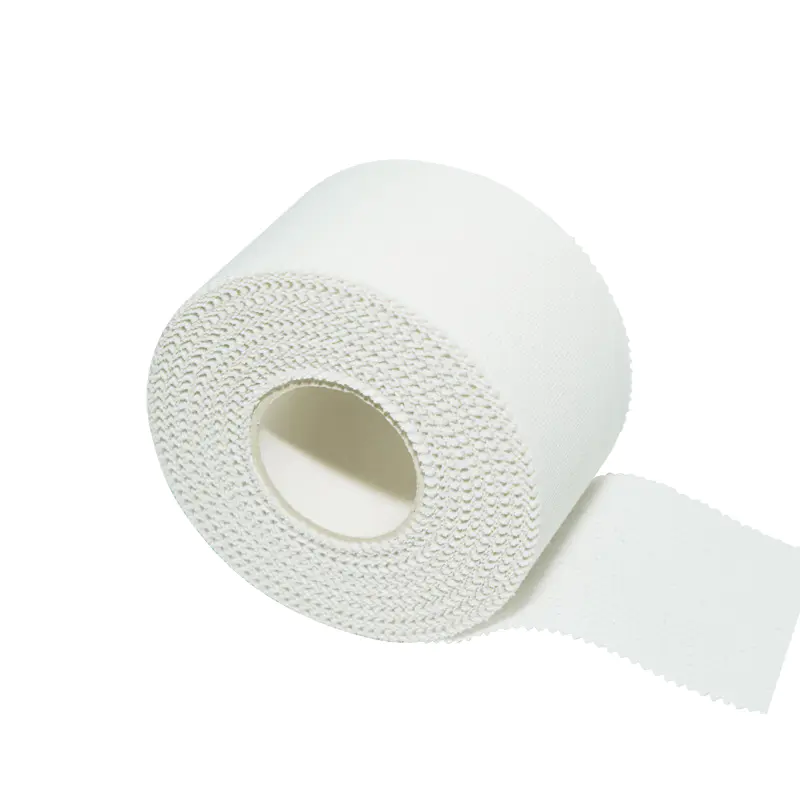
Hockey tape is a cloth-backed pressure-sensitive tape. The backing is usually tightly woven cotton, coated on one side with an adhesive that grips when you press it down, with no heat or water needed. Rolls are typically 24 to 25 millimetres wide, about one inch, and 20 to 30 yards long, which is enough blade wraps to last most players a full season.
Two jobs dominate: wrapping the blade, and wrapping the knob at the top of the shaft. Blade tape protects the blade from ice, boards, and the puck while adding some bite to the surface. Knob tape builds a lip that stops a gloved hand from sliding off the end of the stick, and it adds a little cushioning. Some players also tape their socks or use a strip to hold shin guards in place, which is why rolls disappear faster than anyone expects.
One thing worth clearing up early: hockey tape is not athletic tape, and it is not kinesiology tape. Those are engineered for skin, with lower tack, breathable backing, and hypoallergenic adhesives. Hockey tape is built for equipment, so it is tougher, tackier, and never meant to go directly on a wound. There is a short primer on what hockey tape is in our knowledge section if you want the basics in more detail.
Most pro shops and rink counters sell two things: cloth tape and clear tape. They are not interchangeable, and knowing the difference saves arguments in the dressing room.
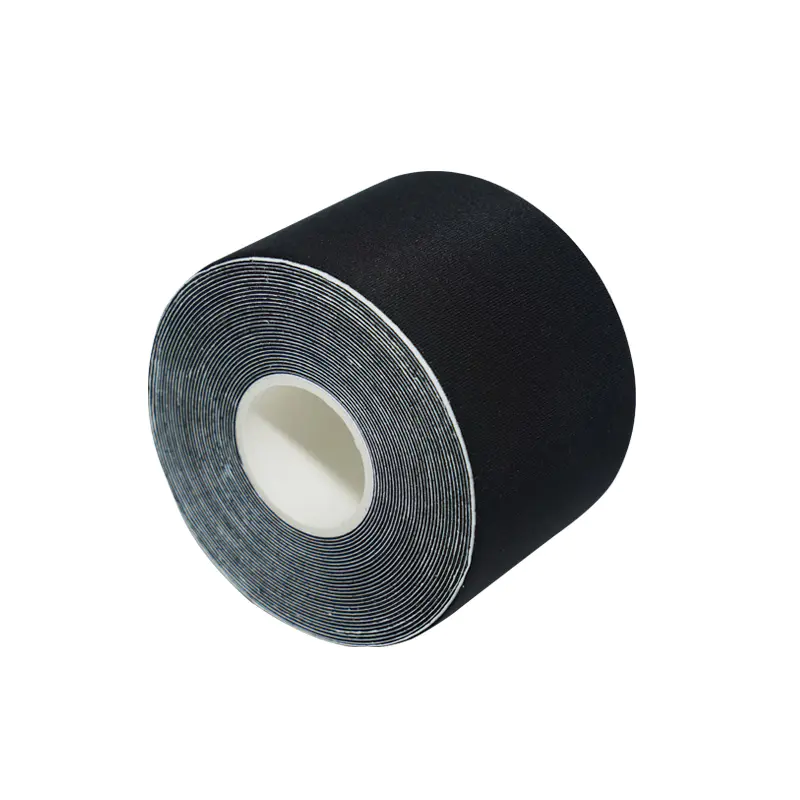
Cloth tape is the classic. The woven cotton surface grips a glove, holds wax if you use it, and absorbs a little water instead of turning slick under your hands. The trade-off is wear, because cloth fuzzes, collects snow, and needs replacing more often. Black and white are the standards, and colour or printed versions are straightforward to produce for teams and private labels.
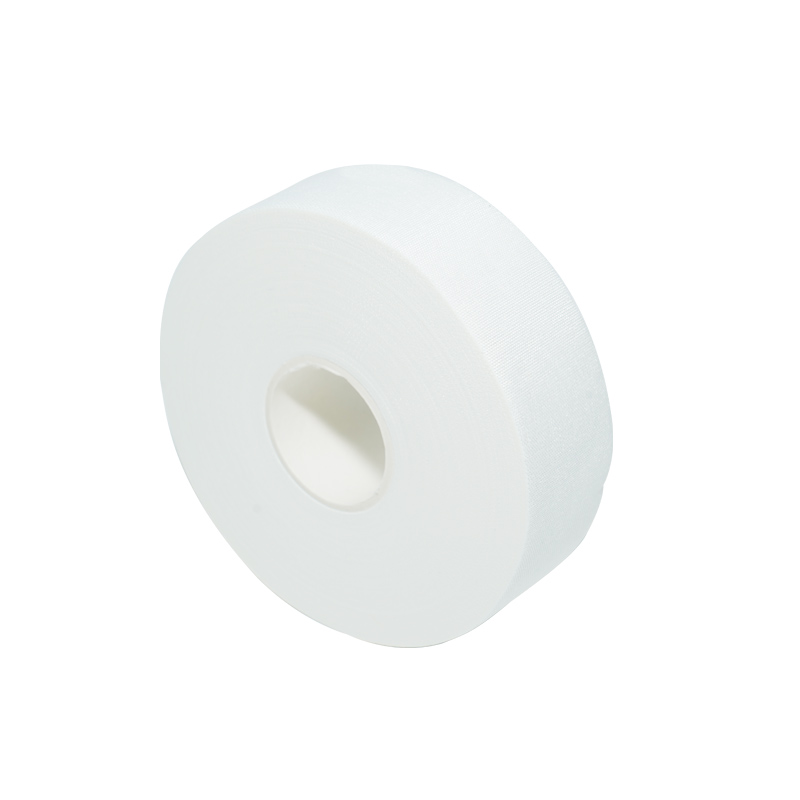 Waterproof Latex-Free White Hockey TapeA latex-free, non-elastic white tape for hockey stick wrapping, offered in cotton, polycotton, or polyester with hot-melt adhesive and custom sizes.View Product →
Clear tape is a thin polymer film with a slick finish. It is usually wrapped over cloth to protect the weave and let the puck slide, or used alone by players who want almost no texture. It lasts longer but grips less, and scratches show up on it quickly.
| Type | Typical width | Where it goes | What to expect |
|---|---|---|---|
| Cloth (woven cotton) | 24-25 mm | Blade and knob wraps | Strong grip, absorbs water, wears faster |
| Clear (polymer film) | 24-25 mm | Over cloth, or on its own | Slick surface, longer wear, less grip |
| Stretch grip tape | 25 mm | Handle and shaft | Thin, very tacky, improves hand feel |
| Coloured cloth | 24-25 mm | Blade and knob wraps | Same performance, chosen for look |
A blade wrap takes two or three minutes once you have done it a few times. This is the sequence we recommend to players who ask.
Keep the layer count reasonable. Three or four passes over any one spot is plenty; a thick wrap changes how the puck feels and adds weight where you do not want it.
The knob is the part beginners get wrong most often. It is simple, but it has to be tight.
Almost every league requires a taped knob, so this is more than a comfort detail. Players who prefer a thinner profile often finish with a strip of grip tape instead of adding more cloth.
From the outside, two rolls look identical. On the ice, the difference shows up within a period. These are the four things we check on every batch we run.
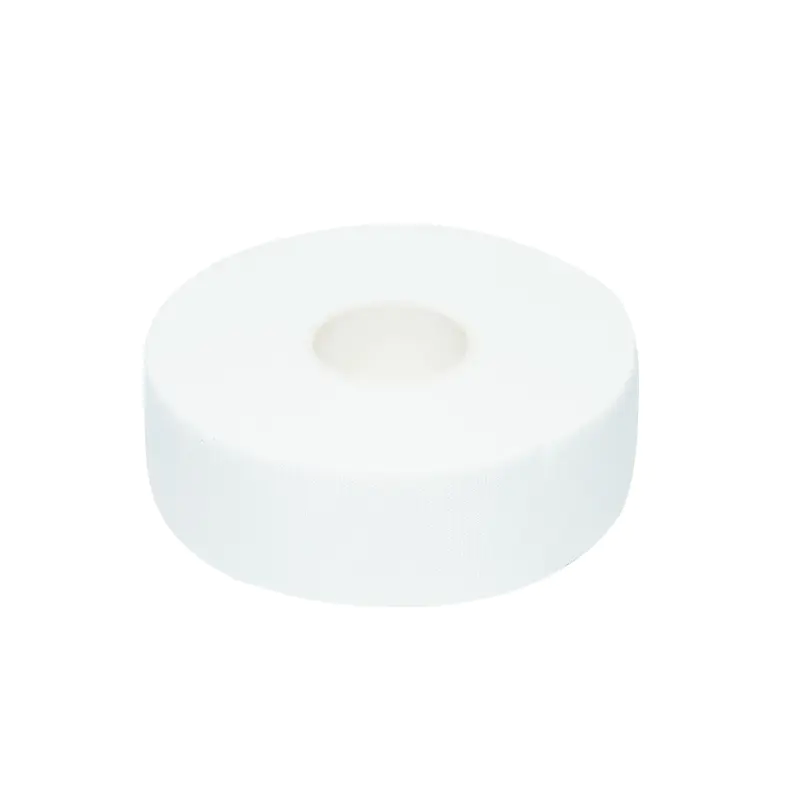
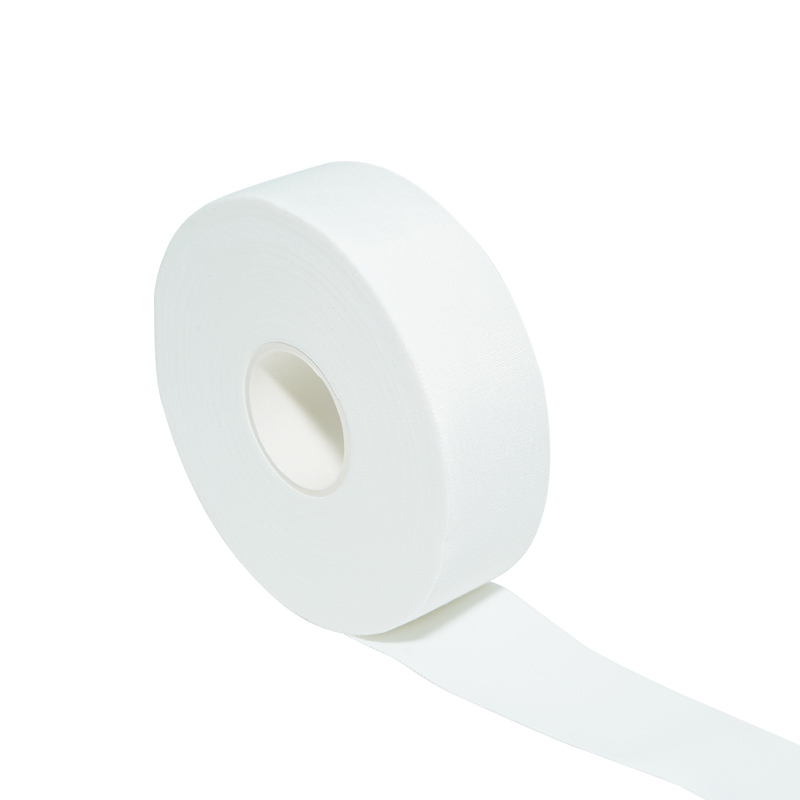 Non-Elastic Cotton Hockey Tape for Ice and FootballNon-elastic cotton hockey tape with hot-melt adhesive, designed for stick wrapping and football uses; tight, even weave supports clean hand tearing and reliable grip.View Product →
The cotton should be tightly and evenly woven. Loose weave frays at the edges, sheds fibre on the blade, and tears unevenly when you rip it by hand, which is how most players actually cut tape.
Cold, wet conditions are brutal on adhesive. Good hockey tape holds in freezing temperatures, releases without leaving a gummy film on the blade, and does not transfer onto gloves. Natural rubber adhesives generally give the best grip on a cloth backing, but the formulation matters more than the wording on the box.
One inch is the working standard because it matches a blade and wraps neatly around a shaft. Thickness is a matter of taste, since thinner tape feels faster while thicker tape cushions more and lasts longer. Roll length should be stated honestly, because a roll that measures short is a common complaint when teams buy in bulk.
Teams, schools, and retailers notice colour drift between shipments. If you order the same black tape three times a year, it should look the same three times. That is a production control issue rather than a marketing one, and it is one reason we keep our own testing lab on site.
For a player skating two or three times a week, expect to re-tape the blade every one to three games. Tape that looks fuzzy, holds snow, or has worn through at the toe is finished. A knob wrap usually lasts a month or more because it takes far less abuse.
Yes. It will not grip as well and it will feel slicker, but plenty of defencemen prefer exactly that. What you should avoid is wrapping cloth tape on top of clear tape, because the cloth will not sit flat and will peel from the edges.
Habit, availability, and a long-standing tradition among goalies. White also hides adhesive residue and wax marks better than black, so it looks cleaner for longer.
If you are reading this as a buyer rather than a player, the questions change. Price per roll matters, but colour consistency, honest roll length, adhesive performance, and delivery reliability usually matter more, because a short roll or a drifting colour shows up in reviews and returns.
We manufacture sports tape, and hockey tape is one of our core lines. Our coating lines run two adhesive products at the same time, our standard lines can produce around 300,000 rolls a month, and we develop products from customer drawings or samples rather than from a fixed catalogue. Packaging design, brand design, and functional changes to the tape itself are all part of the work, and small-batch runs are welcome for sellers who are still testing a market. Shipping can be arranged FOB, CIF, or into FBA warehouses, and most orders are completed within 25 working days. You can see the rest of our sports tape range on the main site.
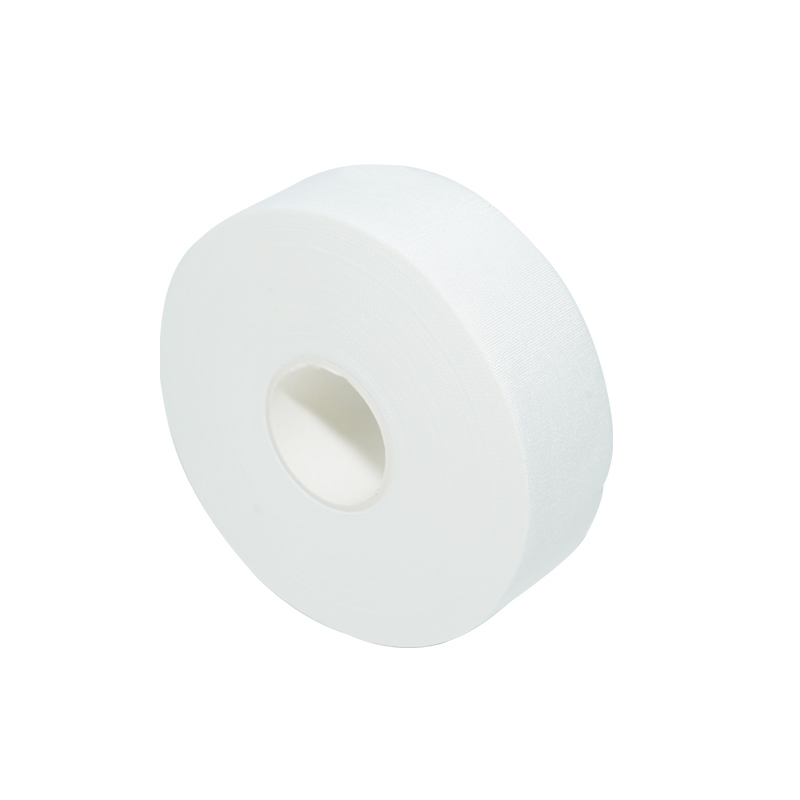
Wholesale Custom Ice Hockey Tape with OEM OptionsNon-elastic cotton or polyester hockey tape with hot-melt adhesive, customizable widths and lengths, free samples up to two rolls, OEM logos and carton packing.View Product →Hockey tape is not a complicated product, but it is one that players judge instantly. A roll that grips, tears cleanly, and looks like the last one you bought will keep a customer for years, and that is the standard we build to. If you are working through a tape specification and want a second opinion on backing, adhesive, or packaging, we are happy to talk it through.
 NO.89 Duanshu Road, Xinggong Road, Pinghu City, Zhejiang Province, China
 [email protected]
 +86-(0)573-8507 6991
Copyright © hero-medical.com. All Rights Reserved
 Wholesale Sport Tape Manufacturers
China Sport Tape Suppliers
Wholesale Sport Tape Manufacturers
China Sport Tape Suppliers
The information provided on this website is intended for use only in countries and jurisdictions outside of the People's Republic of China.
 English
 Espana
 Français
 Deutsch