

Content
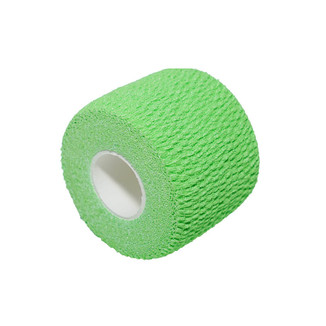
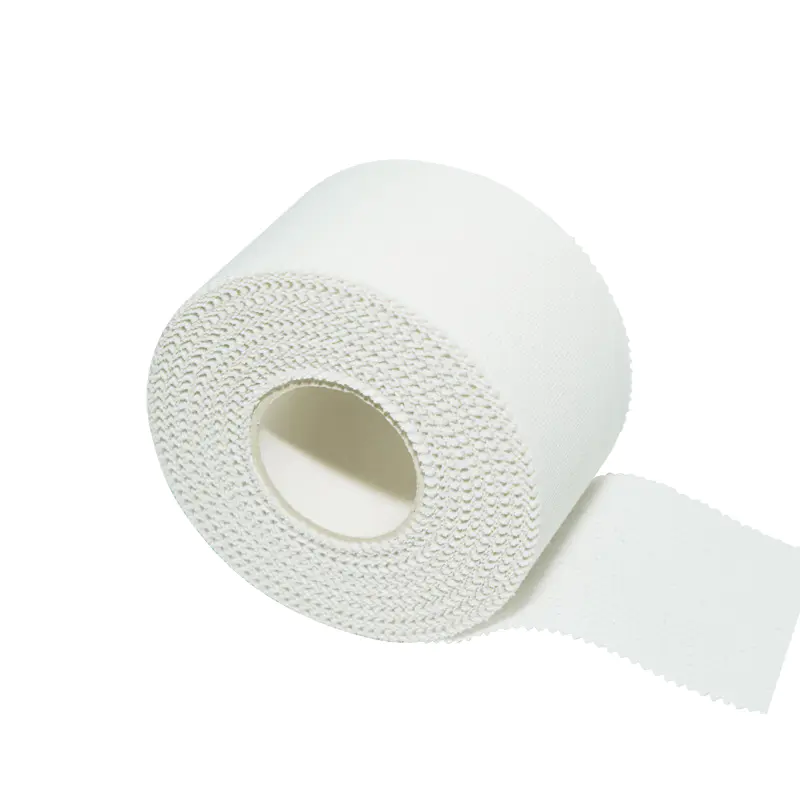
A light elastic adhesive bandage (EAB) is a specialized compression wrap designed to provide flexible support while maintaining a high degree of mobility. Unlike heavyweight adhesive bandages that are rigid and designed for total immobilization, the light version is characterized by its thinner fabric and superior stretch. This allows the bandage to conform to the complex contours of the body, such as the ankles, wrists, and elbows, without creating bulky layers that restrict movement. It is primarily used in sports medicine and clinical settings to manage minor soft tissue injuries and provide preventative joint stabilization.
The construction typically involves a high-quality cotton or cotton-blend substrate coated with a zinc oxide or synthetic adhesive. The "light" designation refers to the weight of the fabric, which ensures breathability and reduces the risk of skin maceration during extended wear. Because it adheres directly to the skin or an underwrap, it stays securely in place even during vigorous physical activity, making it a staple in any athletic trainer's kit or first-aid station.
The primary role of a light EAB is to offer dynamic support. This means it reinforces the ligaments and tendons of a joint while still allowing a functional range of motion. For athletes returning from a mild sprain, applying a light EAB provides a "safety net" that prevents the joint from overextending into a painful range without hindering the performance required for the sport.
Following an acute injury, controlling swelling is critical for a fast recovery. The elasticity of these bandages allows for controlled compression. Because the fabric is light, it applies a gentle, consistent pressure that aids in lymphatic drainage and reduces the buildup of fluid in the interstitial spaces. It is often used as a secondary layer over primary dressings or to hold cold packs in place during the R.I.C.E. (Rest, Ice, Compression, Elevation) protocol.
Choosing the right light elastic adhesive bandage depends on the specific needs of the user. Below is a comparison of typical features found in professional-grade light EABs to help guide your selection process:
| Feature | Standard Light EAB | Premium Light EAB |
| Material | Cotton Blend | 100% High-Twist Cotton |
| Adhesive Type | Synthetic Late-Free | Porous Zinc Oxide |
| Elasticity | 60-80% Stretch | Up to 100% Stretch |
| Edge Type | Straight Edge | Feathered/E-Z Tear Edge |
To maximize the benefits of a light elastic adhesive bandage, proper application technique is essential. Incorrectly applied bandages can lead to restricted circulation or insufficient support. Follow these guidelines for a professional-grade wrap:
While light elastic adhesive bandages are highly effective, they are generally intended for short-term use during physical activity or acute recovery phases. It is recommended to remove the bandage before sleeping to allow the skin to breathe and prevent any potential circulatory issues during rest. If redness, itching, or a rash develops, the bandage should be removed immediately as this may indicate a sensitivity to the adhesive material.
Furthermore, these bandages are water-resistant but not waterproof. If the bandage becomes heavily saturated with sweat or water, it may lose some of its adhesive properties and structural integrity. In such cases, it is best to replace the wrap with a fresh one to maintain the required level of support and hygiene.
 NO.89 Duanshu Road, Xinggong Road, Pinghu City, Zhejiang Province, China
 [email protected]
 +86-(0)573-8507 6991
Copyright © hero-medical.com. All Rights Reserved
 Wholesale Sport Tape Manufacturers
China Sport Tape Suppliers
Wholesale Sport Tape Manufacturers
China Sport Tape Suppliers
The information provided on this website is intended for use only in countries and jurisdictions outside of the People's Republic of China.
 English
 Espana
 Français
 Deutsch