

Content
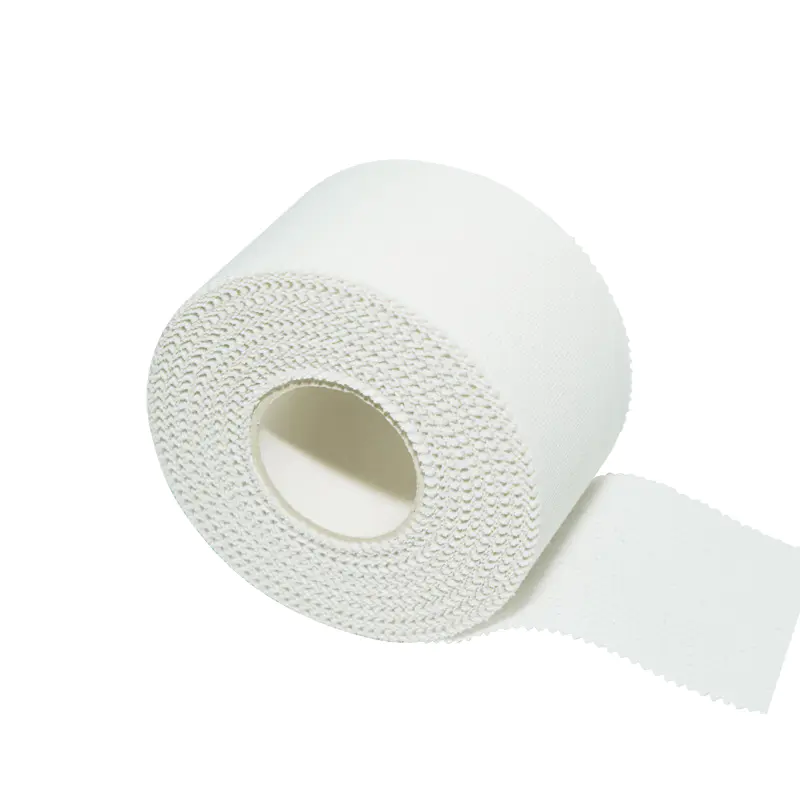
A light elastic adhesive bandage is a stretchable, fabric-based bandage with an adhesive backing that allows it to conform to the contours of the body and stay in place without clips, pins, or additional fixation. Unlike rigid strapping tape or heavy compression bandages, the "light" designation refers to the bandage's controlled extensibility — it stretches enough to accommodate movement and natural body contours but applies only mild to moderate pressure, making it suitable for support, retention, and wound dressing fixation rather than high-compression therapy.
The fabric base is typically woven or knitted from a blend of cotton, rayon, and elastic yarns — usually rubber or spandex threads interwoven through the structure — which gives the bandage its characteristic two-way or four-way stretch. The adhesive applied to one face is commonly a zinc oxide-based or acrylic-based pressure-sensitive adhesive that bonds reliably to skin without requiring heat activation, and is designed to release cleanly after use without leaving significant residue or causing skin trauma on removal. This combination of gentle stretch, conformability, and skin-safe adhesion is what distinguishes a light elastic adhesive bandage from both non-elastic adhesive plasters and heavier elastic compression systems.
In clinical and sports medicine settings, this type of bandage is known by several closely related terms: elastic adhesive bandage (EAB), light elastic bandage, adhesive elastic tape, and flexible adhesive bandage all refer to products that share this fundamental construction. The differences between products carrying these names tend to relate to specific extensibility percentages, adhesive type, fabric weight, and intended application rather than fundamentally different product categories.
Understanding where a light elastic adhesive bandage sits in the broader bandage landscape helps users choose the right product for each situation. The distinctions matter clinically — the wrong bandage type applied to the wrong indication can impede recovery, cause pressure injuries, or simply fail to stay in place.
| Bandage Type | Stretch Level | Adhesive | Primary Use | Pressure Level |
| Light Elastic Adhesive Bandage | Moderate (typically 50–70% extension) | Skin-adhesive backing | Support, fixation, mild compression | Light to moderate |
| Cohesive Elastic Bandage | High (up to 100%+) | Self-adhering (no skin adhesive) | Wound retention, veterinary use | Variable |
| Rigid Strapping Tape | Minimal (<10%) | Skin-adhesive backing | Joint immobilization, taping | High (restrictive) |
| Compression Bandage (e.g. Class 2–3) | High stretch | No adhesive (clip-fixed) | Oedema, venous insufficiency | High (graduated) |
| Tubular Elastic Bandage | High circumferential stretch | No adhesive | Dressing retention, limb support | Light to moderate |
The key practical distinction is that the light elastic adhesive bandage bonds directly to skin while still allowing movement — a combination that neither rigid tape nor non-adhesive compression bandages can replicate. This makes it the default choice in situations where the bandage needs to stay precisely positioned during activity without being bulky or excessively restrictive.
The light elastic adhesive bandage occupies a specific and important niche in both clinical wound management and sports medicine. Its combination of conformability, mild support, and secure skin adhesion makes it the product of choice across several distinct use cases that other bandage types cannot serve as effectively.
One of the most common uses of a light elastic adhesive bandage is to secure primary wound dressings — absorbent pads, non-adherent wound contact layers, foam dressings — to the skin without the need for separate retention bandages or adhesive tape strips. The bandage conforms smoothly over irregular body surfaces such as heels, elbows, and knees, areas where flat adhesive tape tends to wrinkle, lift, and lose adhesion quickly. Applied without tension over a wound dressing, it holds the dressing in position, protects the wound area from external contamination, and allows enough stretch to accommodate the swelling that often accompanies acute injuries or post-surgical sites.
In sports medicine and physiotherapy, light elastic adhesive bandages are widely applied around ankles, knees, wrists, and elbows to provide proprioceptive feedback and mild mechanical support during rehabilitation or return-to-sport activity. Unlike rigid strapping, the elastic support bandage does not attempt to fully restrict joint motion — instead, it provides sensory input through skin contact that helps athletes maintain awareness of joint position and movement limits. This application is particularly well-supported in ankle rehabilitation research, where elastic adhesive taping has been shown to reduce re-injury rates and improve functional confidence during the recovery period following lateral ankle sprains.
After minor surgical procedures, injections, cannula removal, or venipuncture, a small section of light elastic adhesive bandage applied over a cotton swab or non-woven pad is the standard method for applying brief local pressure and securing the site. Its elasticity ensures the underlying pad maintains even contact without creating a tourniquet effect if the bandage is applied slightly too tightly, and its adhesion to skin is sufficient to keep it in place through typical patient movement without the pad shifting or the bandage unraveling.
Athletes and hikers use narrow strips of light elastic adhesive bandage applied to high-friction zones — the posterior heel, the ball of the foot, the palm of the hand — as a preventive measure against blister formation. The elasticity allows the bandage to move with the skin rather than creating a shear stress concentration at its edges, which is the mechanism by which rigid tape often causes secondary blisters at the tape margin. Some products in this category are specifically marketed for blister prevention and are cut and packaged in formats suited to these anatomical locations.
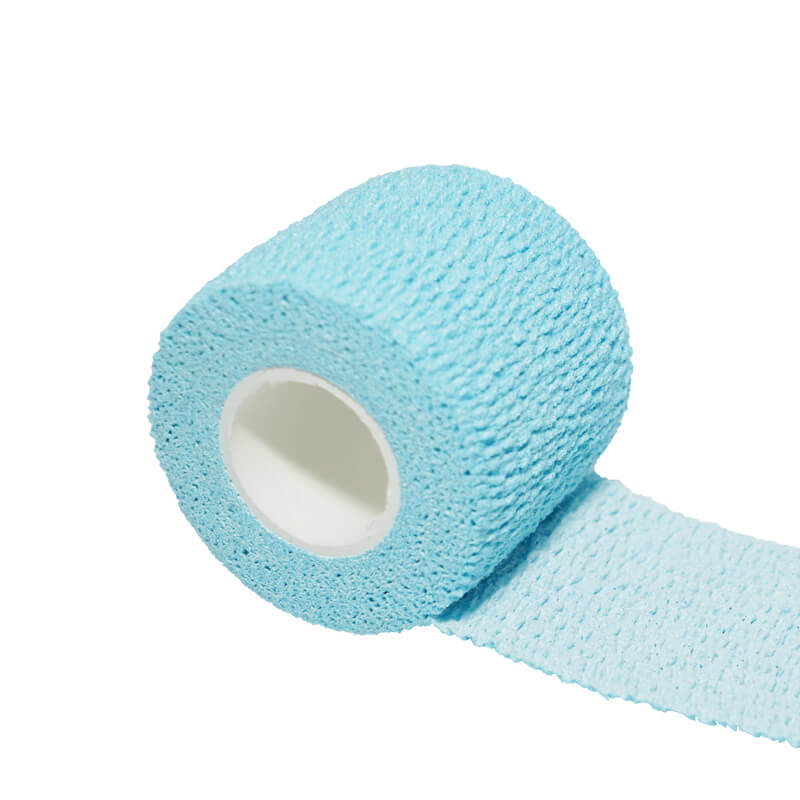
Correct application technique determines whether the bandage performs as intended or causes the skin irritation, pressure problems, and premature lifting that are commonly attributed to the product itself but are almost always the result of application errors. The following steps and principles apply to most light elastic adhesive bandage applications on intact or lightly compromised skin.
The market for light elastic adhesive bandages is broad and includes products ranging from hospital-grade medical devices to low-cost general consumer products. The performance gap between these tiers is significant in practice, and selecting the right product requires knowing which specifications actually matter for your intended use.
Most complaints about light elastic adhesive bandages — poor adhesion, skin irritation, pressure marks, or premature lifting — trace back to a small number of recurring application and product selection errors. Knowing these in advance prevents the majority of clinical and sports medicine problems attributed to this product type.
 NO.89 Duanshu Road, Xinggong Road, Pinghu City, Zhejiang Province, China
 [email protected]
 +86-(0)573-8507 6991
Copyright © hero-medical.com. All Rights Reserved
 Wholesale Sport Tape Manufacturers
China Sport Tape Suppliers
Wholesale Sport Tape Manufacturers
China Sport Tape Suppliers
The information provided on this website is intended for use only in countries and jurisdictions outside of the People's Republic of China.
 English
 Espana
 Français
 Deutsch