

Content
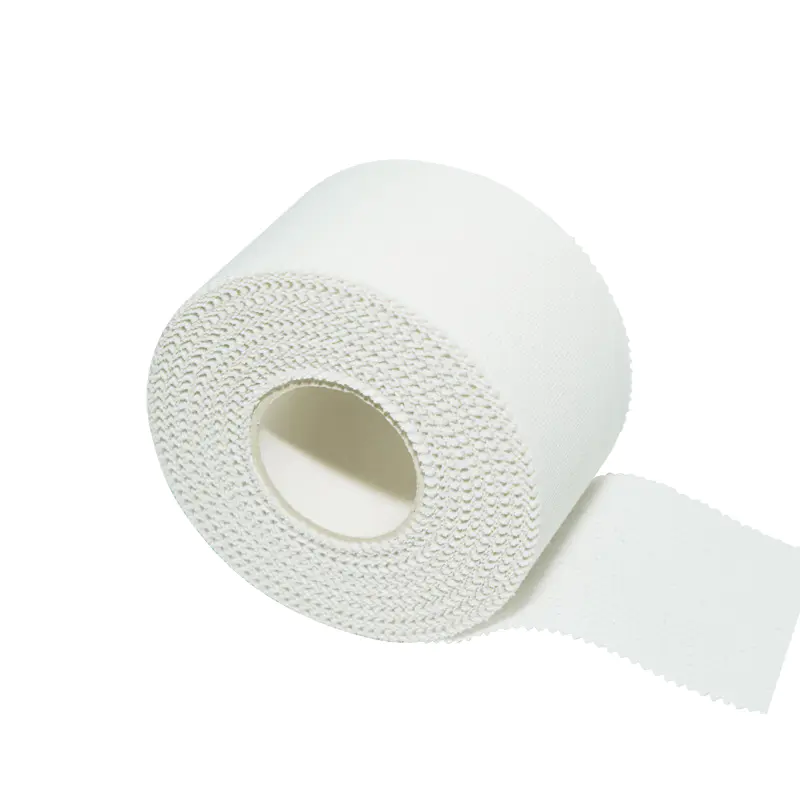
A self-adhesive bandage — also widely referred to as a cohesive bandage, self-adhering bandage wrap, or cohesive wrap — is a specialized elastic bandage that bonds to itself without adhering to skin, hair, or most clothing. Unlike conventional bandages that rely on clips, pins, or adhesive tape to stay in place, a self-adhesive bandage uses a cohesive agent, most commonly a natural or synthetic latex-based or non-latex cohesive coating, applied to the fabric or non-woven substrate during manufacturing. When two layers of the material are pressed together, intermolecular cohesive forces between the coated surfaces create a bond that holds the wrap securely in position throughout activity, even under dynamic movement or moisture exposure.
The mechanism behind this self-sticking property is fundamentally different from pressure-sensitive adhesives used on regular medical tape or wound dressings. The cohesive agent creates a surface-to-surface bond only when the bandage contacts itself — it lacks sufficient tack to grip skin or wound surfaces. This property makes self-adhesive elastic bandages exceptionally comfortable to remove, non-traumatic to underlying tissue and hair, and safe for patients with fragile or sensitive skin, including elderly individuals, children, and patients on anticoagulant therapy where tape-related skin tears are a clinical concern.
The substrate material and cohesive coating of a self-adhesive bandage together determine its stretch characteristics, conformability, breathability, fluid resistance, and overall performance in clinical or field use. Understanding these material variables helps clinicians, athletes, and veterinary professionals select the most appropriate product for a given application.
The structural base of most self-adhering bandage wraps falls into one of three categories:
The cohesive agent applied to the bandage substrate is a critical formulation decision, particularly for patients with latex sensitivity:
When evaluating a self-adhesive bandage for clinical or field use, the following properties should be assessed against the requirements of the specific application:
| Property | Description | Why It Matters |
| Extensibility (%) | How far the bandage stretches relative to its resting length | Determines compression level and conformability to body contours |
| Cohesion Strength | Force required to peel two bonded layers apart | Prevents unwrapping during activity or moisture exposure |
| Breathability | Air and moisture vapor permeability of the substrate | Reduces skin maceration and infection risk under prolonged wear |
| Water Resistance | Ability to maintain cohesion when wet | Critical for sports, wound care in high-perspiration environments |
| Tear Ease | Whether the bandage can be torn by hand without scissors | Essential for emergency or field use where cutting tools are unavailable |
| Latex Content | Presence or absence of natural rubber latex | Determines suitability for latex-sensitive patients |
| Width and Roll Length | Common widths: 2.5 cm, 5 cm, 7.5 cm, 10 cm | Determines which body areas and applications the roll is suited for |
Self-adhesive bandages have become a staple across a wide range of clinical settings due to their ease of use, patient comfort, and versatility. Their non-adherent surface makes them uniquely appropriate for applications where conventional adhesive tape would cause harm or discomfort.
One of the most common clinical uses of self-adhesive bandages is securing primary wound dressings in place without applying adhesive directly to periwound skin. In patients receiving treatment for chronic wounds such as venous leg ulcers, diabetic foot ulcers, or surgical incisions, repeated tape application and removal causes significant epidermal stripping and periwound skin breakdown. A self-adhering bandage wrap applied over a primary contact layer and absorbent pad holds the dressing firmly without any adhesive contact with the surrounding skin, dramatically reducing the risk of iatrogenic injury during dressing changes.
In intravenous therapy, self-adhesive bandages are routinely wrapped around cannula sites on the hand or forearm to stabilize the IV line and protect the insertion site from accidental dislodgement. A narrow 2.5 cm or 5 cm cohesive bandage can be applied loosely enough to allow visualization of the site while providing sufficient mechanical security to prevent catheter movement. For pediatric and neonatal patients in particular, the gentle, non-adhesive removal of cohesive wraps eliminates the distress and skin trauma associated with tape removal — a meaningful clinical and comfort advantage.
Multi-layer compression bandaging systems for venous leg ulcer management and lymphedema treatment frequently incorporate self-adhesive elastic bandages as the final cohesive layer. Applied over orthopedic wool padding and a short-stretch compression layer, a cohesive outer bandage locks the entire system in place during ambulation, preventing slippage and ensuring sustained therapeutic compression levels are maintained between dressing changes. Compression delivered by these systems typically ranges from 25 to 40 mmHg at the ankle, depending on the number of layers and the degree of bandage stretch applied during wrapping.
Following venipuncture, arterial blood sampling, or catheter removal, self-adhesive bandages are applied as a pressure dressing over the puncture site to achieve hemostasis. In post-cardiac catheterization care, a firm cohesive wrap is applied over gauze at the femoral or radial artery access site to maintain consistent pressure while the patient recovers, without the bruising and skin damage that adhesive tapes can cause over sensitive, freshly accessed arterial sites. The wrap is easily removed once hemostasis is confirmed, without disturbing the site.
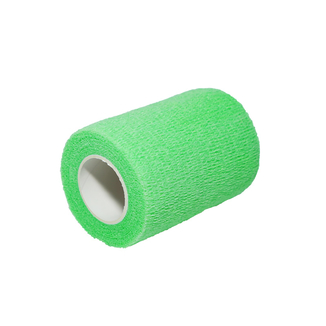
In sports medicine and athletic training, self-adhesive bandages are applied daily across all levels of sport — from professional teams to recreational athletes — for injury prevention, joint support, and protective padding during competition and training.
Self-adhesive bandages are fundamental to veterinary wound management and orthopedic support across species. Their non-adherent removal is especially important in animals, where the pain and struggling associated with adhesive tape removal can complicate dressing changes and stress both the patient and the handler.
In equine care, thick foam-backed cohesive bandages (commonly 10 cm wide) are used for lower leg support and wound dressing retention, where they are applied over a primary wound contact layer and cotton padding to protect tendons and soft tissue injuries during healing. In small animal practice, cohesive wraps are the standard means of securing dressings on limbs, paws, ears, and tail tips in dogs and cats — areas where conventional tape tends to slip, cause hair matting, or create pressure sores if applied too tightly. Colorful printed self-adhesive bandages have also become standard in veterinary clinics, helping to indicate which leg received an injection or blood draw and making the bandage visible so owners monitor it at home.
Correct application technique is critical — an improperly applied self-adhering bandage can create a tourniquet effect, restrict circulation, cause pressure sores, or fail to provide adequate support. The following principles apply across all applications:
With dozens of products available across clinical, sports, and veterinary markets, selecting the most appropriate self-adhesive bandage requires matching product characteristics to the specific demands of the application. The following framework simplifies the decision:
| Application | Recommended Width | Substrate Type | Key Feature to Specify |
| IV / cannula securing | 2.5 cm | Non-woven | Latex-free, breathable |
| Post-venipuncture pressure | 5 cm | Non-woven | Latex-free, easy tear |
| Wound dressing retention | 5–10 cm | Non-woven | High breathability, latex-free |
| Compression therapy | 10 cm | Woven elastic | High cohesion, consistent stretch |
| Sports ankle / wrist support | 5–7.5 cm | Woven elastic | Water resistance, strong cohesion |
| Finger strapping | 2.5 cm | Non-woven or woven | Hand-tearable, conformable |
| Equine leg bandaging | 10 cm | Foam-backed or woven | High tensile strength, cushioning |
| Small animal / veterinary | 2.5–5 cm | Non-woven | Bright colors, easy tear, latex-free |
For facilities procuring in volume, standardizing on a latex-free, non-woven cohesive bandage in 5 cm and 10 cm widths covers the majority of clinical needs while eliminating latex allergy risk across the patient population. Sports medicine programs should additionally stock a woven elastic variant in 5–7.5 cm widths for superior support and moisture resistance during athletic activity. Always verify that the selected product carries relevant regulatory approvals — CE marking in the European Union, FDA 510(k) clearance or Class I exemption registration in the United States — before clinical procurement.
 NO.89 Duanshu Road, Xinggong Road, Pinghu City, Zhejiang Province, China
 [email protected]
 +86-(0)573-8507 6991
Copyright © hero-medical.com. All Rights Reserved
 Wholesale Sport Tape Manufacturers
China Sport Tape Suppliers
Wholesale Sport Tape Manufacturers
China Sport Tape Suppliers
The information provided on this website is intended for use only in countries and jurisdictions outside of the People's Republic of China.
 English
 Espana
 Français
 Deutsch