

Content
Strapping tape is a high-strength reinforced adhesive tape designed to bundle, secure, and reinforce heavy items during shipping, storage, and handling. Unlike standard packaging tape, strapping tape is engineered with internal reinforcement — typically fiberglass filaments or polyester threads — running lengthwise or in a cross-hatch pattern through the tape's backing. This construction gives it exceptional tensile strength that ordinary tapes simply can't match.
You'll find strapping tape used in warehouses, manufacturing plants, freight operations, and even in construction and sports medicine. The core purpose is always the same: to hold things together under stress without tearing, stretching, or failing. If you've ever received a large appliance or piece of furniture that was secured with a tough, fiber-reinforced tape, you've already seen strapping tape at work.
Not all strapping tape is built the same way. The right type for your application depends on the load weight, surface material, environmental conditions, and whether you need the tape to be removable or permanent. Here's a breakdown of the most common varieties:
Filament strapping tape — sometimes called fiberglass strapping tape or reinforced strapping tape — contains continuous fiberglass strands embedded in the adhesive backing. These filaments run parallel along the tape's length, allowing it to resist splitting or tearing under longitudinal stress. It's the go-to choice for bundling pipes, lumber, rolled goods, and heavy boxes. Filament tape typically has a polypropylene or polyester film backing and uses a pressure-sensitive rubber or synthetic adhesive.
Cross-woven or bi-directional filament tape features fiberglass strands running in both the lengthwise and widthwise directions, forming a grid pattern. This gives it resistance to tearing in multiple directions, making it ideal for palletizing irregularly shaped loads, reinforcing carton corners, and securing items that may shift in multiple directions during transit. It's stronger than standard filament tape but also more expensive.
Polyester-reinforced strapping tape uses woven or knitted polyester fabric as its internal structure. It offers a good balance of strength and flexibility, making it suitable for applications where some degree of stretch is acceptable. It's commonly used in the textile industry, for bundling fabrics or light metal parts, and in applications where the tape needs to conform slightly to an uneven surface without losing grip.
Also known as gummed filament tape, water-activated strapping tape uses a starch-based or dextrin adhesive that bonds when moistened with water. Once activated, it forms an extremely aggressive bond that actually bonds to the surface of corrugated cardboard rather than just adhering to the surface. This makes it nearly impossible to remove cleanly without damaging the substrate, which is useful for tamper-evident packaging and high-security shipments.
When you're shopping for heavy-duty strapping tape, the label numbers matter a lot. Here are the specs you should always check before purchasing:
| Specification | What It Means | Typical Range |
| Tensile Strength | Maximum pulling force before the tape breaks | 100–400+ lbs per inch width |
| Adhesion Strength | How strongly the tape bonds to a surface (peel resistance) | 30–100+ oz per inch width |
| Tape Width | Wider tape spreads force over a larger area | ½ inch to 3 inches |
| Filament Count | More filaments = higher strength per unit width | 3 to 17+ filaments per inch |
| Temperature Resistance | Operating range before adhesive fails | 0°F to 200°F depending on type |
| Roll Length | Total usable tape per roll | 30 to 360 yards per roll |
For most general shipping and bundling tasks, a filament strapping tape with 150–200 lbs of tensile strength and a width of ¾ inch to 1 inch will handle the job comfortably. For extremely heavy or industrial loads, step up to higher filament counts and wider widths.
Strapping tape shows up in a surprisingly wide range of applications. Understanding where and how it's used can help you identify the right product for your specific situation.
This is the most common use case. Reinforced strapping tape is used to seal heavy cartons, reinforce box seams that might burst under the weight of stacked freight, and bundle multiple items together on a pallet. It's particularly effective for closing boxes that contain dense or heavy products like tools, auto parts, or construction materials where standard box tape would fail under the weight.
On job sites, strapping tape is used to bundle lumber, PVC pipes, metal conduit, and rebar for transport and storage. Its resistance to moisture and UV exposure (in certain grades) makes it practical for outdoor applications. Some contractors also use it to temporarily secure insulation batts or vapor barriers while permanent fasteners are installed.
Professional movers rely on heavy-duty strapping tape to reinforce furniture drawers, keep cabinet doors closed during transit, and bundle items like rugs and mattresses. The high tensile strength means you can apply significant tension without the tape snapping, and the aggressive adhesive keeps it from slipping during a bumpy truck ride.
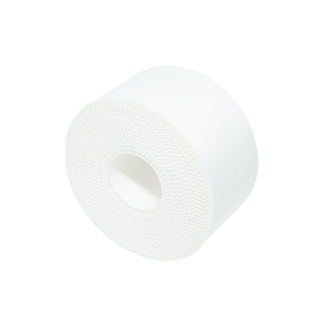
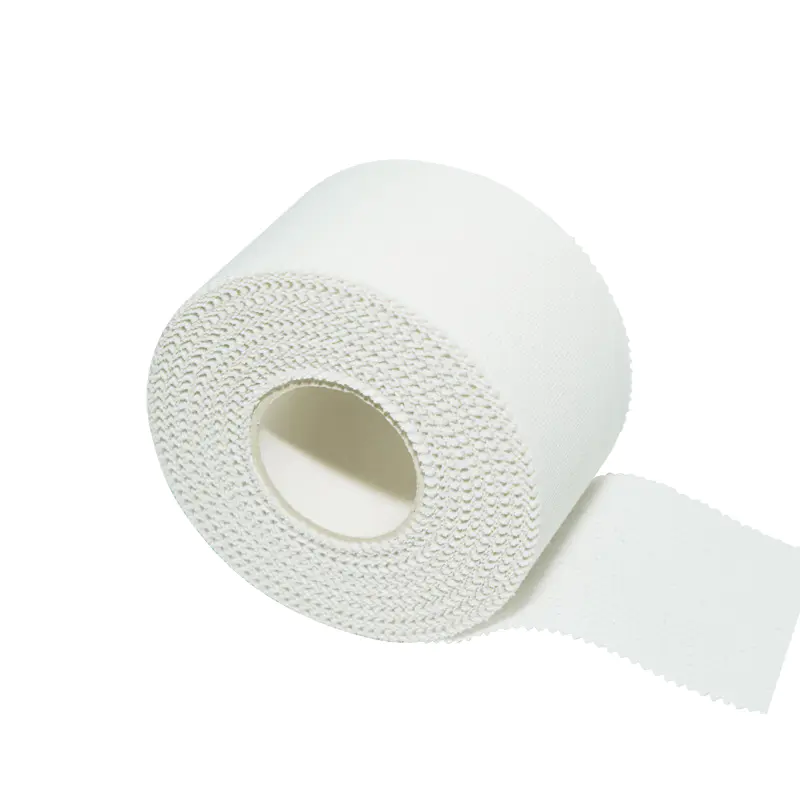
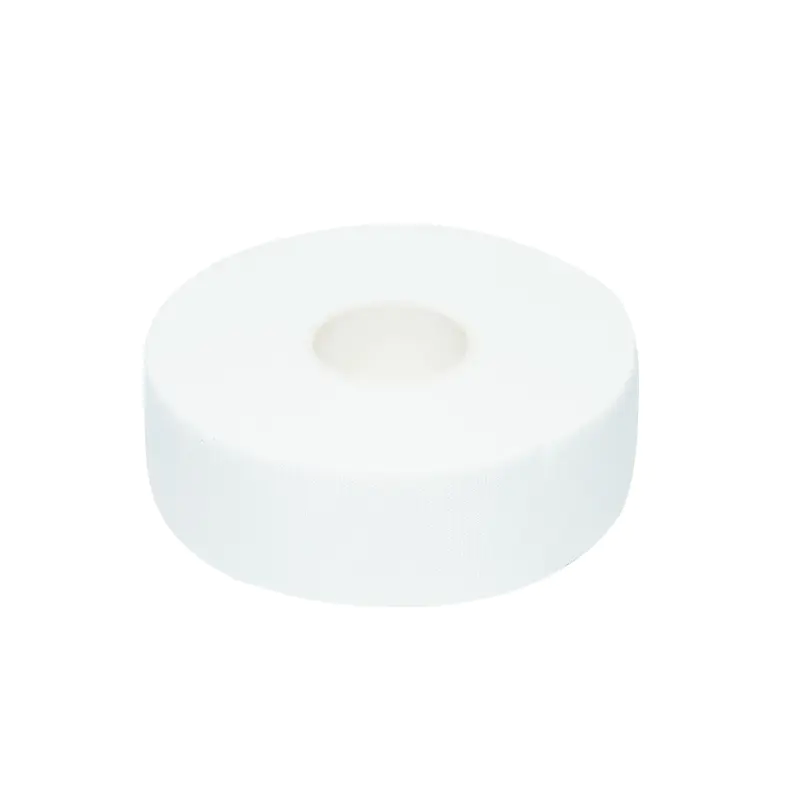
A specific category of strapping tape is used in athletic and medical settings. Sports strapping tape — while different in construction from industrial filament tape — is designed to support and stabilize joints, tendons, and muscles. Rigid athletic strapping tape (typically made of cotton or linen with a zinc oxide adhesive) is applied to ankles, wrists, and knees to prevent injury or support recovery. Kinesiology tape, a more elastic variant, is also widely used for muscle support and lymphatic drainage.
In manufacturing environments, strapping tape is used to secure components during assembly, bundle finished products before packaging, and reinforce items that will undergo mechanical stress during processing. Electronics manufacturers often use it to hold components in place during soldering or curing processes, while automotive suppliers use it to bundle wiring harnesses and lightweight parts.
For very heavy-duty bundling and palletizing applications, you might be weighing filament strapping tape against traditional strapping materials like steel banding or polypropylene strapping. Here's how they compare:
The bottom line: if you're securing loads under 300–400 lbs and need a no-tool solution, strapping tape wins on speed and convenience. For heavier pallet loads moved frequently through a distribution center, plastic or steel strapping will serve you better in the long run.
Getting the most out of your reinforced strapping tape requires more than just slapping it on and calling it done. Proper application technique makes a real difference in holding strength and durability.
Strapping tape adhesive performs best on clean, dry, and dust-free surfaces. Cardboard, wood, metal, and plastic surfaces should be free of oils, moisture, and loose fibers. On corrugated cardboard, press down firmly across the full width of the tape to ensure full contact with the surface. On smooth surfaces like metal or plastic, wipe the area with isopropyl alcohol before applying the tape.
When bundling items together — like a stack of pipes or a rolled carpet — apply the tape under moderate tension so it pulls the bundle tight. Don't just lay it loosely. The filaments in the tape are designed to carry tensile loads, and a taut application means the tape is doing its job from the moment it's applied. Use a tape dispenser with a brake mechanism if you're applying tape frequently or at high volumes.
For maximum strength, start and end each strip of strapping tape with at least 2–3 inches of overlap onto itself or onto an adjacent fixed surface. If you're reinforcing a box seam, run the tape along the seam and extend it several inches onto the top and bottom panels of the box. For bundling, wrap the tape at least 1.5 times around the bundle so the adhesive layers overlap and bond to each other, not just to the outer surface of the items.
Most pressure-sensitive strapping tape adhesives work best when applied at temperatures between 50°F and 100°F. In cold warehouse environments or during winter outdoor applications, the adhesive can become sluggish and fail to bond properly. If you must apply tape in cold conditions, warm the roll to room temperature first and consider switching to a cold-temperature adhesive formulation.
Even a premium roll of filament strapping tape can underperform if it's used incorrectly. Here are the most frequent mistakes people make — and how to avoid them:
With so many varieties of strapping tape on the market, narrowing down the right product can feel overwhelming. Here's a simple framework to guide your decision:
For loads under 150 lbs that mainly experience linear stress (pulling in one direction), standard filament tape with parallel fibers is sufficient. For heavier loads or those that shift in multiple directions, upgrade to cross-woven bi-directional tape for multi-directional tensile resistance.
Will the tape be applied to a rough or smooth surface? Outdoors or indoors? In cold storage or ambient conditions? Rough surfaces and outdoor use favor aggressive rubber-based adhesives with moisture resistance. Cold environments require low-temperature adhesive formulations. Chemical exposure calls for solvent-resistant tape constructions.
Should the tape be permanent or removable? For shipping and securing finished goods, a strong permanent bond is what you want. For in-process manufacturing holds or temporary bundling, a repositionable or medium-tack strapping tape prevents surface damage when removed.
If you're applying strapping tape dozens or hundreds of times per day in a warehouse or production environment, invest in an ergonomic tape dispenser designed for filament tape. This saves time, reduces hand fatigue, and ensures consistent tension on every application. For occasional use, a handheld roll is perfectly adequate.
The strapping tape market is served by several reputable manufacturers whose products are widely available through packaging distributors, hardware stores, and online retailers. Here are some of the most trusted names:
Strapping tape is one of those products that seems simple on the surface but has a lot of nuance once you start using it for real-world applications. Choosing the right type — whether that's a standard filament tape for everyday bundling or a heavy-duty cross-woven tape for palletizing industrial loads — makes a measurable difference in performance, safety, and cost efficiency.
The key takeaways: match the tensile strength and width to your actual load, prepare your surface before application, apply with appropriate tension, and store your rolls properly to preserve adhesive performance. Do those things consistently, and strapping tape becomes one of the most reliable and cost-effective tools in your packaging or logistics operation.
 NO.89 Duanshu Road, Xinggong Road, Pinghu City, Zhejiang Province, China
 [email protected]
 +86-(0)573-8507 6991
Copyright © hero-medical.com. All Rights Reserved
 Wholesale Sport Tape Manufacturers
China Sport Tape Suppliers
Wholesale Sport Tape Manufacturers
China Sport Tape Suppliers
The information provided on this website is intended for use only in countries and jurisdictions outside of the People's Republic of China.
 English
 Espana
 Français
 Deutsch