

Content
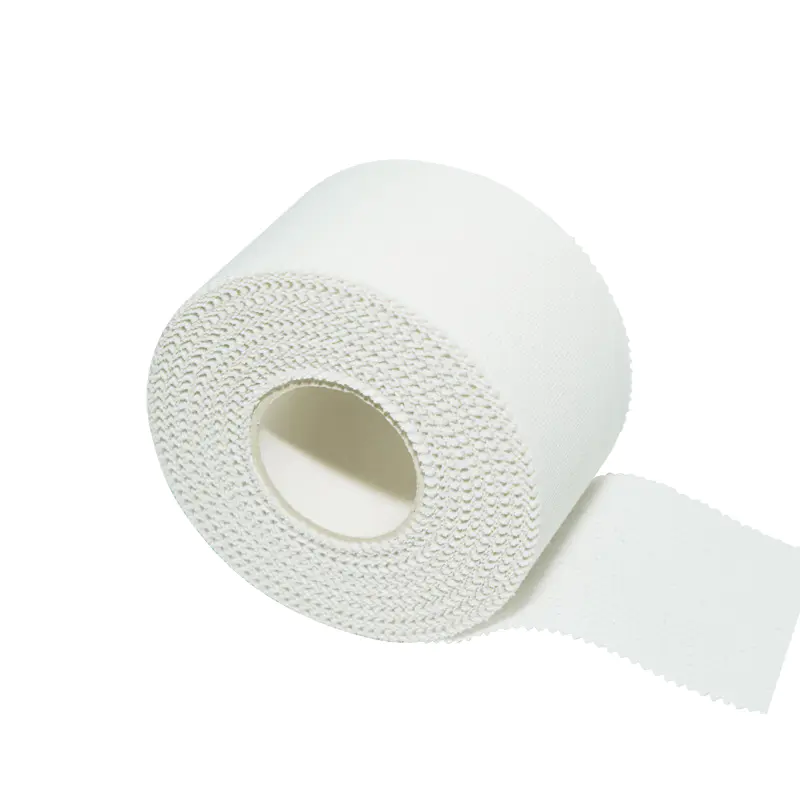
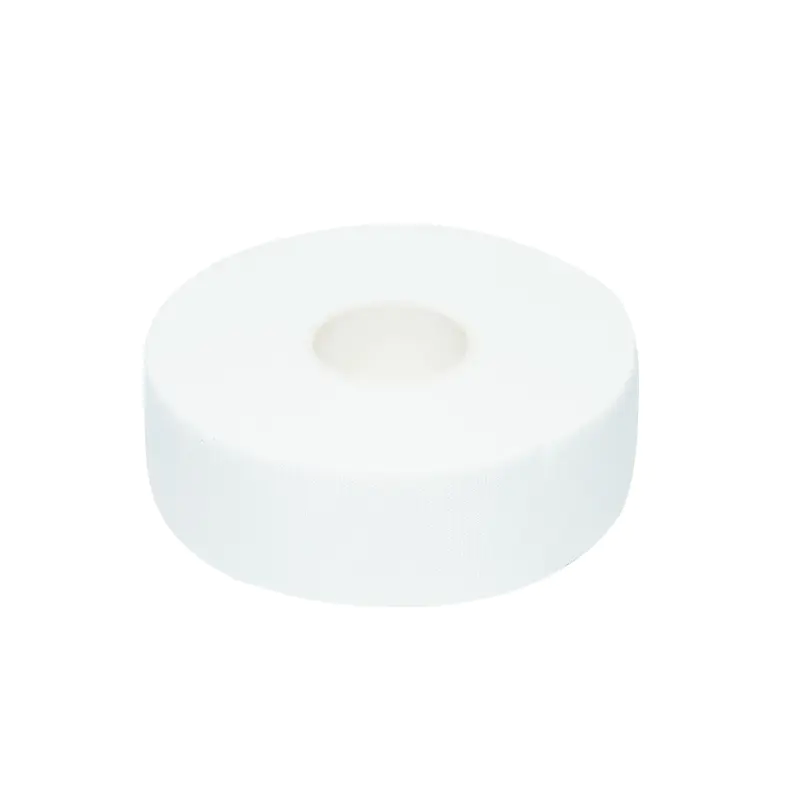
A light elastic adhesive bandage (often referred to as EAB in sports medicine) is a specialized medical wrap designed to provide flexible support and compression. Unlike heavy-duty strapping tapes, the "light" version is constructed from a high-quality cotton or rayon substrate that offers a high degree of stretch. This elasticity allows the bandage to conform to the body's natural contours, making it ideal for joints like the ankle, knee, or wrist where movement is necessary. The adhesive backing is usually porous, which ensures the bandage stays in place during physical activity while still allowing the skin to breathe.
The primary purpose of this type of bandage is to provide "dynamic" support. This means it helps stabilize a joint or muscle group without completely immobilizing it. Because it is lightweight, it is less bulky than traditional compression wraps, allowing athletes to wear it under socks or footwear comfortably. Its tearable nature often means you don't need scissors in an emergency, which is a major plus for sideline trainers and hikers.
Using a light elastic adhesive bandage provides several physiological benefits. First, it offers controlled compression, which is vital for managing inflammation and reducing swelling after an acute injury. By applying pressure to the soft tissue, it prevents excessive fluid buildup. Secondly, the texture of the bandage provides proprioceptive feedback—basically, it reminds your brain to be mindful of the injured area, which can prevent further slips or overextensions during the recovery phase.
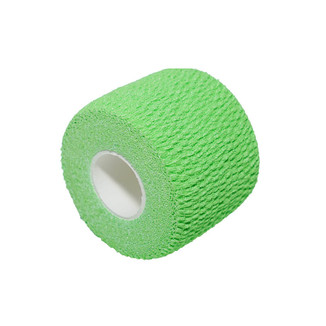
Choosing the right tape can be confusing. While rigid tapes are meant to lock a joint in place, the light elastic adhesive bandage is all about "controlled mobility." It sits right in the middle of the spectrum between a simple gauze wrap and a heavy rigid strapping tape. Below is a comparison to help you understand when to reach for the light EAB.
| Bandage Type | Main Function | Elasticity Level |
| Rigid Zinc Oxide Tape | Total Joint Immobilization | Zero Stretch |
| Light Elastic Adhesive Bandage | Compression & Flexible Support | Moderate to High Stretch |
| Kinesiology Tape | Muscle Facilitation & Pain Relief | Extremely High Stretch |
| Cohesive Bandage | Non-Adhesive Compression | High Stretch (Self-Clinging) |
To get the most out of your light elastic adhesive bandage, application technique is key. Because it is elastic, it is very easy to wrap it too tightly, which can cut off circulation. When applying, you should generally overlap each turn by about half the width of the bandage. Always start wrapping from the point furthest from the heart and move inward; for example, if wrapping a knee, start at the upper calf and move toward the thigh.
Ensure the skin is clean, dry, and free of oils or lotions before applying. If you are using it for a sports injury, applying the bandage in a "figure-eight" pattern around joints provides the best stability. Once finished, press down firmly on the end of the bandage to activate the pressure-sensitive adhesive. If the person wearing the bandage experiences tingling or numbness, it should be removed and reapplied with less tension immediately.
In summary, the light elastic adhesive bandage is an essential tool for both clinical and home use. Its balance of support, breathability, and ease of use makes it superior for treating sprains, strains, and minor swelling. Whether you are an athlete looking to stay in the game or someone managing a chronic joint issue, having a few rolls of this breathable medical wrap on hand ensures you are prepared for whatever life throws your way. Its ability to provide firm compression while allowing the body to move naturally is truly what sets it apart from traditional medical supplies.
 NO.89 Duanshu Road, Xinggong Road, Pinghu City, Zhejiang Province, China
 [email protected]
 +86-(0)573-8507 6991
Copyright © hero-medical.com. All Rights Reserved
 Wholesale Sport Tape Manufacturers
China Sport Tape Suppliers
Wholesale Sport Tape Manufacturers
China Sport Tape Suppliers
The information provided on this website is intended for use only in countries and jurisdictions outside of the People's Republic of China.
 English
 Espana
 Français
 Deutsch