

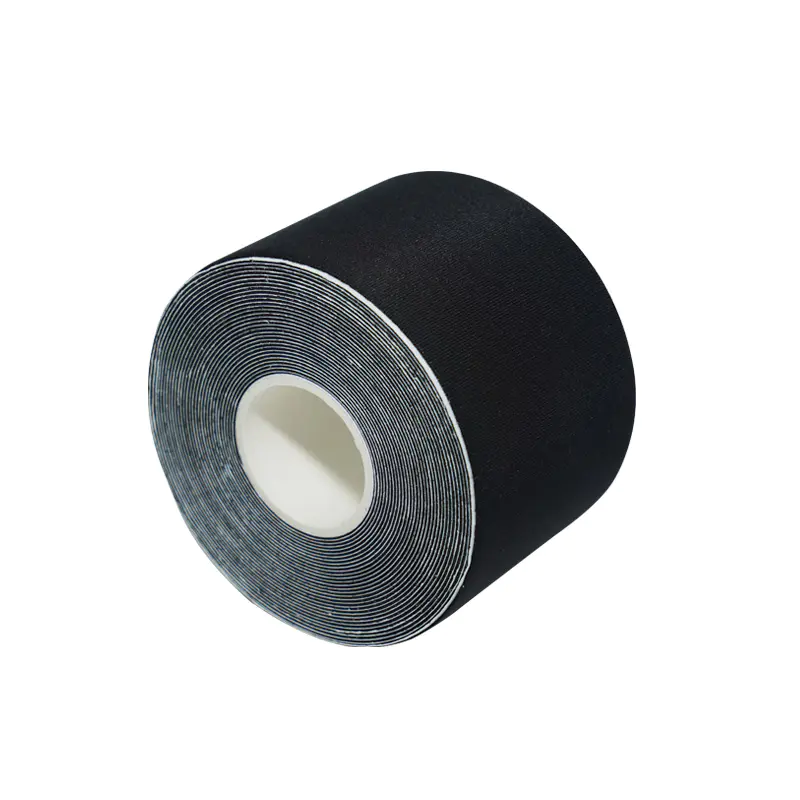
Some rolls earn their reputation quietly, and black athletic tape is one of them. It does exactly the same job as the white roll rattling around in your kit bag — locking an ankle, steadying a wrist, keeping a dressing where you put it — but it does it without advertising every speck of turf, chalk and dirt. On dark socks, black boots and mud-stained kit, it simply disappears.
We have been making sports tape at our facility in Jiaxing since 2016, and over those years the black cotton roll has moved from a niche colour request to a standing line item for a lot of our wholesale and e-commerce customers. This guide walks through what the tape actually is, where it works best, how to apply it so it stays put, and what to check before you commit to a full order.
Content
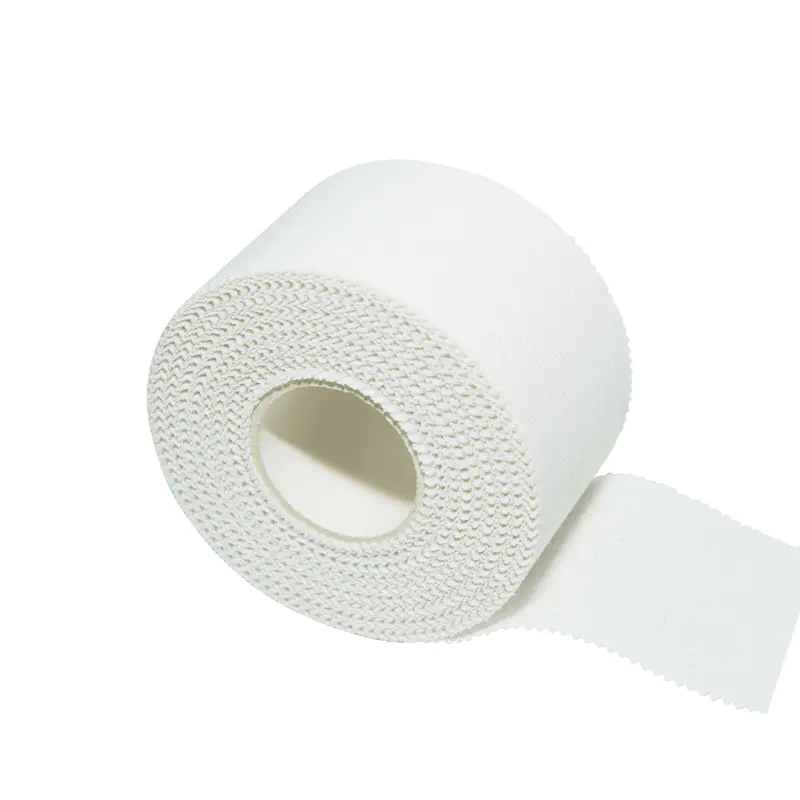
Set the colour aside for a moment and black athletic tape is a rigid cotton cloth tape coated with a zinc oxide adhesive. The cloth is woven cotton, non-elastic or very nearly so, which is the whole point: it does not stretch under load, so it can limit movement in a joint rather than move with it. Standard rolls run 10 yards (about 9 metres) with widths of 1 inch, 1.5 inches, 2 inches and 3 inches, and the edges are usually serrated so you can tear a strip by hand without reaching for scissors.
Because the tape sits directly on skin and gets yanked off after training, the quality signals are mostly invisible. Thread count, cloth weight, adhesive coat weight and how evenly that adhesive is spread decide whether a roll grips for a whole match or peels at the first sprint.
Adding dye to the cloth does not change how the tape performs, but it does add one quality question. A well-made black roll should not transfer colour onto skin, socks or the white trim of a uniform, even after a sweaty session. That is a dye-fastness issue, and it is worth asking for a sample and rubbing it against a damp white cloth before you commit to a pallet. When we run black batches, the dye lot is checked alongside the adhesive batch, because a roll that looks right but bleeds onto a customer's kit is a return waiting to happen.
The uses are the same as any rigid athletic tape, but the black finish shifts a few of them into first choice rather than fallback:
One honest caveat: black tape is not invisible. On bare skin it is about as conspicuous as white, so if discretion matters — a joint you would rather not draw attention to — plan for it.
Most tape failures we hear about are application problems, not product problems. A little patience at the start saves a re-wrap at half time.
If the skin underneath is thin, fragile or prone to irritation — or if you simply want an easier removal after a long session — a thin foam base layer makes a real difference. It also protects the skin from the tape's adhesive entirely, which helps for anyone who reacts easily.
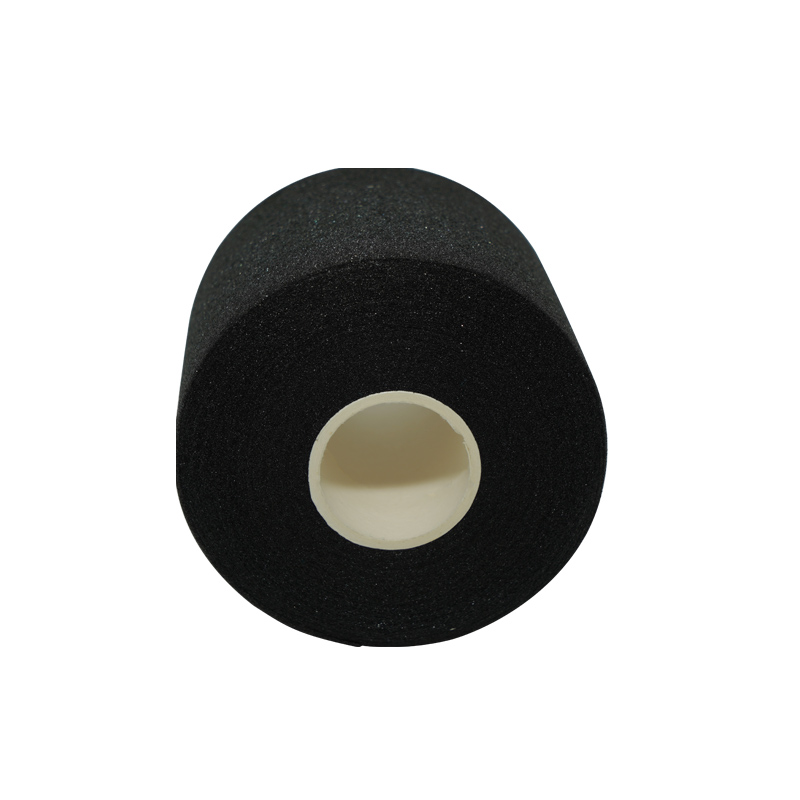 Black Polyurethane Foam Underwrap for Skin ProtectionA thin, non-latex foam first layer that shields sensitive skin from adhesive and helps make tape removal easier after long sessions.View Product →
Black athletic tape is one member of a larger family, and buyers often want to stock more than one black option. The table below lines up the main alternatives so you can see where each one sits.
| Tape type | Stretch | Typical use | What to know about black versions |
|---|---|---|---|
| Cotton athletic tape | None | Ankle and wrist support, equipment wraps | Matte finish, tears by hand, most popular general-purpose black roll |
| Rayon rigid strapping tape | None | Heavier joint strapping, secure bundling | Stronger and less conformable than cotton |
| Kinesiology tape | Four-way elastic | Muscle support, longer wear periods | Available in black cotton, nylon and reflective cloth |
| Light elastic adhesive bandage | Light stretch | Compression, mild swelling | Softer, breathable, kinder to sensitive skin |
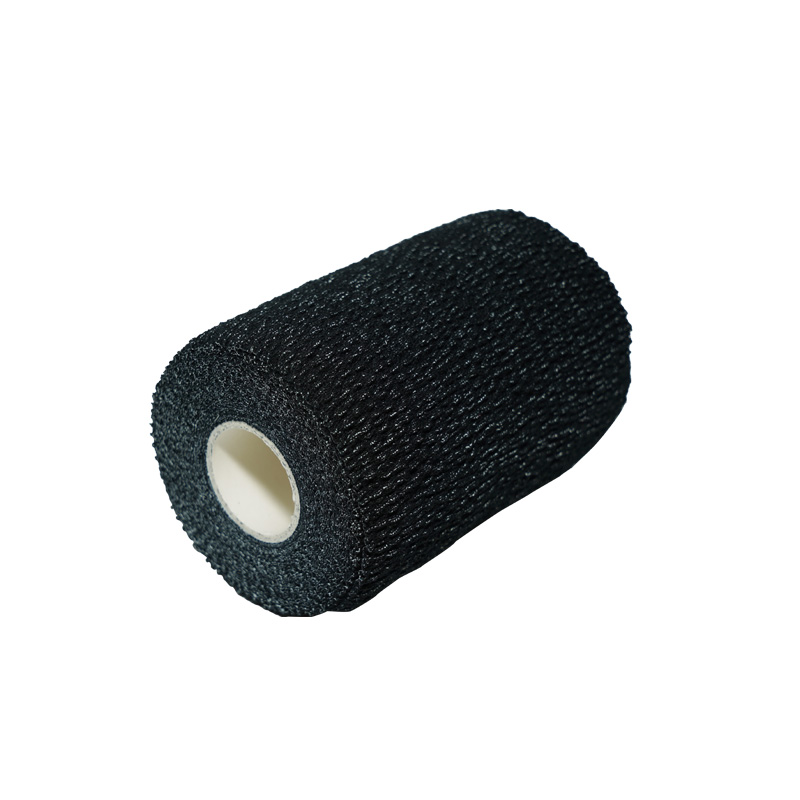
| Self-adhesive bandage | Elastic, sticks to itself | Wraps that must come off easily | Black and camouflage both widely stocked |
| Foam under wrap | None | Base layer beneath rigid tape | Thin black foam, protects skin and eases removal |
The practical takeaway: if you are stocking a range, the black athletic tape is the workhorse, and the other black rolls are the specialists around it.
When you are comparing suppliers, these are the points that actually separate one roll from another:
Our own black cotton athletic tape is built around those same checkpoints, and we are happy to send samples so you can test the tear, the tension and the removal on your own skin before ordering.
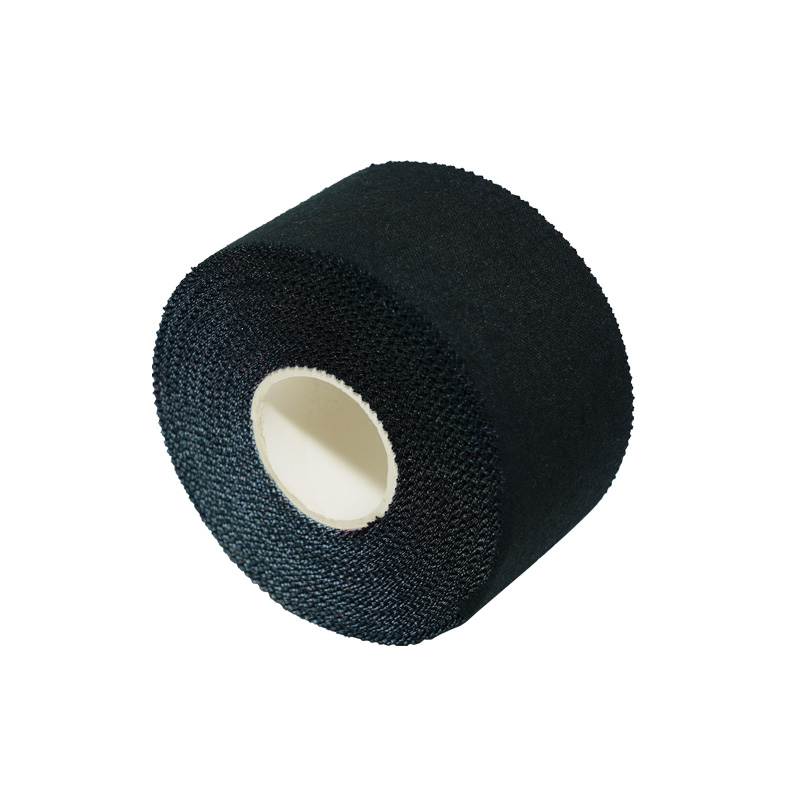 Black Cotton Elastic Athletic Support TapeA breathable, elastic cotton tape for joint and muscle support, available in black and suited to sample testing before wholesale orders.View Product →
For wholesalers, private-label brands and marketplace sellers, the questions shift from "does it work" to "can it be repeated". Our facility runs two coating lines that can produce two different adhesive products at the same time, which keeps colour changeovers and mixed orders manageable rather than chaotic. Annual output sits above one million rolls, and most orders are completed within about 25 working days.
Customisation is where most of our conversations start. We can work from your drawing or sample, and we handle packaging design, brand design and product function adjustments — everything from printed core labels and retail boxes to different adhesive tack levels for a specific sport. Small-batch runs are part of that offer, which matters if you are testing a black colourway on one marketplace before committing to a full container.
Shipping is arranged around how you actually sell: FOB, CIF and FBA options are all available, so the goods can move straight into an Amazon warehouse without an extra handling step. If you need a heavier, less conformable tape for rigid strapping alongside the standard cotton roll, the black rayon version is worth adding to the same order.
 Black Rayon Rigid Strapping Tape for SportsA latex-free rayon tape for firm joint support during high-stress sport, with FOB, CIF and FBA shipping options for wholesale orders.View Product →
If you would like to compare specifications side by side, our guide to choosing, applying and sourcing cotton athletic tape goes deeper into cloth weights and adhesive options. When you are ready to talk numbers, get in touch with our team with your target width, roll length, packaging format and expected volume, and we will come back with a realistic quote rather than a wishful one.
Black athletic tape is a small purchase that gets judged on every roll, so it is worth choosing carefully. Order a few samples, tape an ankle, leave it on through a training session and take it off again. If the hold, the tear and the removal all feel right, you have found the roll worth buying by the case — and if something is off, we would rather hear about it before the order than after.
 NO.89 Duanshu Road, Xinggong Road, Pinghu City, Zhejiang Province, China
 [email protected]
 +86-(0)573-8507 6991

Copyright © hero-medical.com. All Rights Reserved
 Wholesale Sport Tape Manufacturers
China Sport Tape Suppliers
The information provided on this website is intended for use only in countries and jurisdictions outside of the People's Republic of China.
 English
 Espana
 Français
 Deutsch