

Blue athletic tape tends to catch the eye before anything else in a training room. It is bright against skin, easy to spot on video, and it has become the default color for a lot of clubs, clinics, and online sellers. But the color is only the first decision. What sits underneath it — the cloth, the stretch, the adhesive mass, the way the roll is slit and wound — decides whether the tape holds through a match or peels off in the first ten minutes.
We have been coating and slitting sports tape since 2016, and blue is one of the shades we run most often. This guide walks through what blue athletic tape actually is, how the main types differ, where it gets used, and what buyers should check before placing an order.
Content
Most blue athletic tape on the market is a cotton cloth tape, typically around 95% cotton with a small share of spandex or elastic yarn to give it a little give. The cloth is woven, dyed, then coated on the back with a zinc oxide or acrylic adhesive. The dye step matters more than people expect: a poor dye lot fades unevenly, bleeds when an athlete sweats, and looks noticeably different from roll to roll in the same carton.
The two families you will meet most are rigid and elastic. Rigid tape has minimal stretch and is used where you want a firm anchor — ankles, wrists, the arch of a foot. Elastic tape stretches with the body and is used where movement matters. Within those two families there is a wide range of thicknesses, adhesive masses, and roll lengths, and that range is where most sourcing decisions get made.
Blue is not automatically better than white or beige, but it does a few jobs well:
The catch is consistency. Deep navy and light sky blue behave differently in the dye bath, and a buyer who reorders six months later expects the same shade. That is a conversation worth having with your supplier before the first production run, not after.
The table below compares the blue products we run most often. Stretch figures are typical ranges, not fixed promises — final specifications follow the sample you approve.
| Type | Stretch | Typical use | Common buyer |
|---|---|---|---|
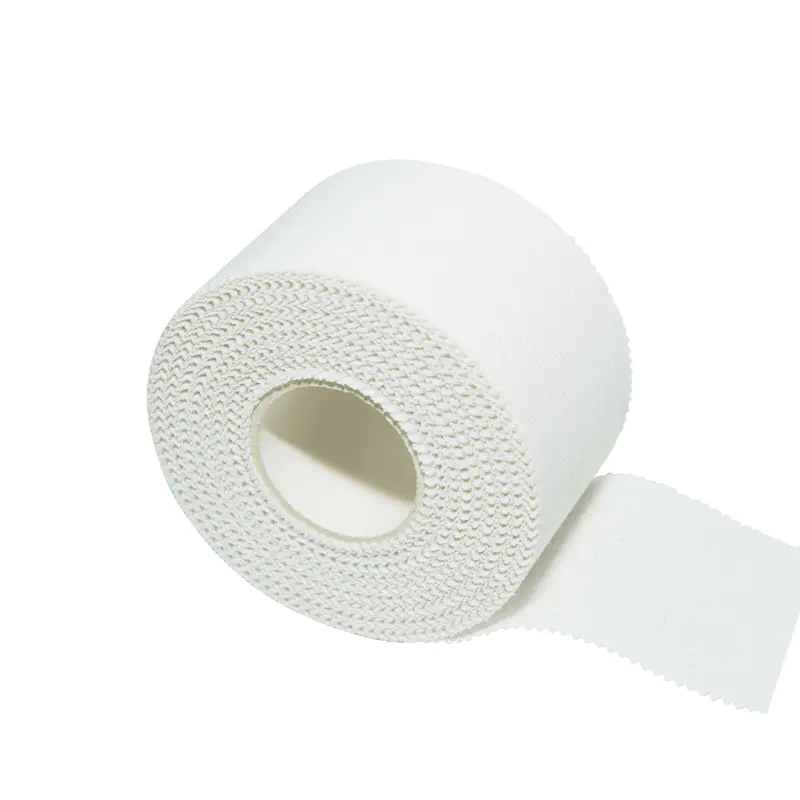
| Cotton athletic tape | Low, mostly rigid | Ankle locks, wrist support, general strapping | Clubs, physio clinics, wholesalers |
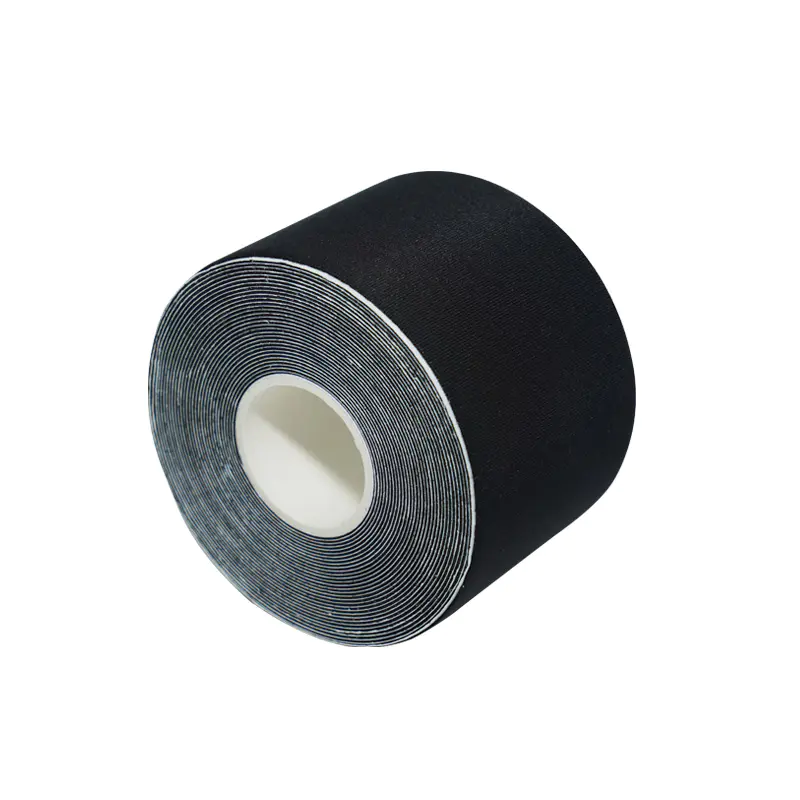
| Kinesiology tape | Four-way elastic | Muscle support, joint tracking, longer wear | Sports brands, online sellers |
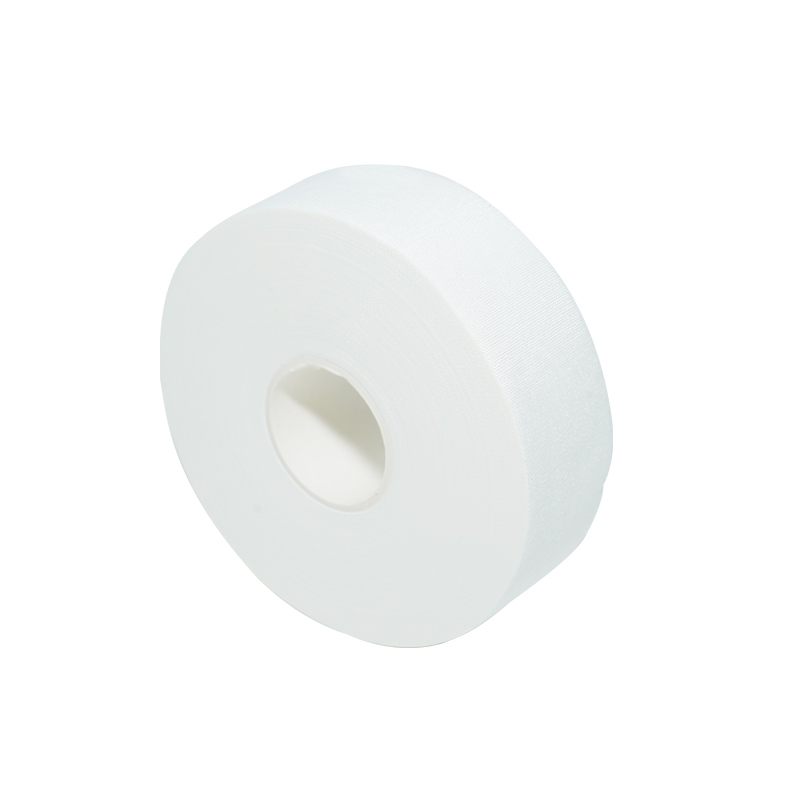
| Rayon rigid strapping tape | Very low | Firm joint fixation, high-tension work | Sports medicine distributors |
| Light elastic adhesive bandage | Moderate | Compression, swelling control, light support | Pharmacies, first aid channels |
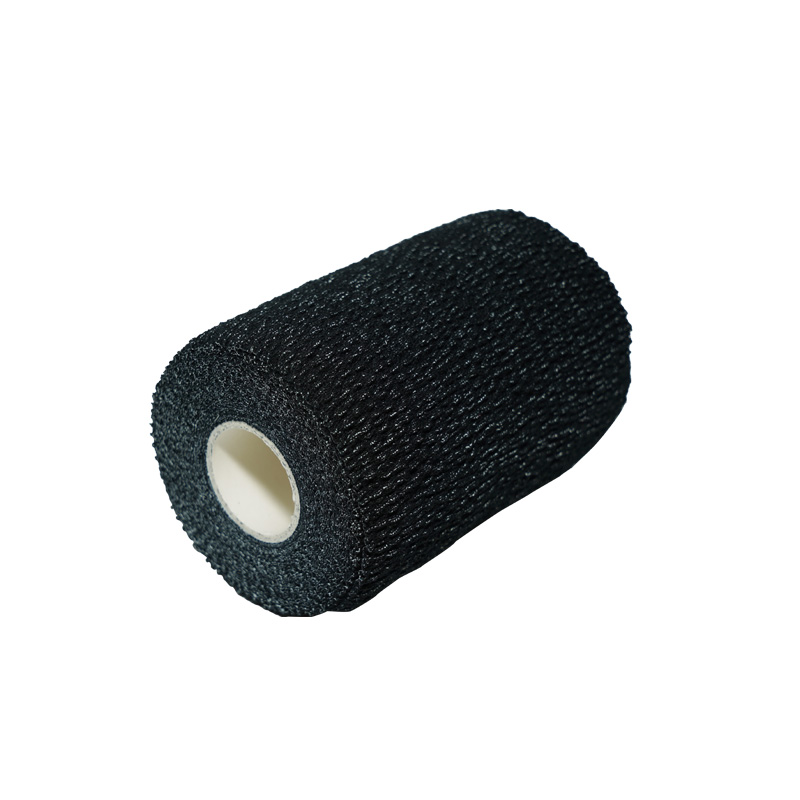
| Self-adhesive bandage | High | Cohesive wraps that stick to themselves | Retail, equestrian, gym supply |
| Rayon finger tape | Low, narrow | Finger and hand protection in grappling and ball sports | Combat sports sellers |
If blue is the color you need most often, cotton athletic tape is the workhorse. It tears cleanly by hand, holds an edge when applied over a foam under-wrap, and comes off without taking skin with it. Roll length and adhesive mass are the two specifications that change the feel most: a heavier adhesive mass grips harder but can leave residue, while a lighter coat is friendlier for athletes with sensitive skin.
 Blue Waterproof Cotton Athletic TapeA blue cotton athletic tape with waterproof, sweat-resistant adhesive for ankles, wrists, and hands; worth considering for customers who need strong support during training.View Product →
Kinesiology tape is a different animal. The blue four-way stretch versions are elastic in both directions, which is what allows them to follow a shoulder or a quad without lifting at the ends. If your customers wear tape for several days at a time, this is usually the category they move toward.
 Four-Way Stretch Kinesiology TapeElastic kinesiology tape with four-sided stretch for joints and muscles; suited to customers who need multi-day support and movement-friendly taping.View Product →
Blue self-adhesive bandages sit outside the classic athletic tape category but show up in the same orders. They stick to themselves rather than to skin, which makes them a natural add-on for retail packs and club kits.
 Blue Self-Adhesive Cohesive BandageCohesive bandage that sticks to itself without adhering to skin, useful for ankle and wrist support, dressings, and light compression in sports kits.View Product →
The applications are more varied than the shelf label suggests. Ankles and wrists are the obvious ones, but we also see steady demand for fingers in volleyball and grappling, thumb wrapping in weightlifting, hockey stick knobs, and rugby arm grip work where the tape needs to survive grabs and turf contact.
Outside sport, blue tape turns up in physiotherapy rooms, veterinary clinics, and even in packaging lines where a bright strap is easier to see. The common thread is the same: the wrap has to stay where it was put, and the color has to be repeatable order after order.
Application technique explains a large share of the complaints that reach manufacturers. A few habits make a real difference:
If your customers are new to taping, a short printed insert in the retail box reduces returns more than a lower price does. Our own guide to choosing, applying, and sourcing cotton athletic tape covers the same ground in more depth.
Buyers usually arrive with three questions: what does it cost, how fast can it ship, and will the second order match the first. The third question is the one that decides whether a supply relationship lasts.
On our side, we run two coating lines that can produce two different adhesive products at the same time, with monthly output of roughly 300,000 rolls on regular bandage lines. That kind of setup matters for color programs, because it lets us keep a blue batch moving without stopping the rest of the schedule. Most orders are completed within 25 working days, and we ship FOB, CIF, or FBA depending on how the buyer's channel is set up.
When comparing suppliers, ask for these details in writing:
We also handle private label work, from packaging design to product function adjustments built from a drawing or a physical sample. If you are weighing a new blue program and want to talk through specifications, get in touch with our team and we will work from your requirements rather than a fixed catalog list.
Yes. The color comes from the dye stage of the cloth, not from the adhesive. As long as the base cloth and adhesive mass are the same, blue and white perform identically; only the dye process and shade control add complexity.
It depends on the adhesive system, not the color. Natural rubber adhesives contain latex proteins, while acrylic systems do not. If latex-free is a requirement, specify it explicitly and ask for documentation for the production batch.
In most cases, yes. Custom shades usually require a color reference and a minimum quantity per run. Small trial batches are also possible, which is a practical way to check a shade against your packaging before committing to volume.
Store rolls in a dry, temperate place away from direct sun. Heat and humidity attack the adhesive long before the cloth fails, so a cool stockroom extends shelf life considerably compared with a hot container or a windowsill display.
Blue athletic tape is a small product with a lot of decisions packed inside it: cloth, stretch, adhesive, shade, roll format, and packaging. Get those aligned with the way your customers actually use the tape, and the color stops being a novelty and starts being the reason they reorder.
 NO.89 Duanshu Road, Xinggong Road, Pinghu City, Zhejiang Province, China
 [email protected]
 +86-(0)573-8507 6991

Copyright © hero-medical.com. All Rights Reserved
 Wholesale Sport Tape Manufacturers
China Sport Tape Suppliers
The information provided on this website is intended for use only in countries and jurisdictions outside of the People's Republic of China.
 English
 Espana
 Français
 Deutsch