

An elastic bandage is one of the most versatile items in any medical bag. A twisted ankle, a strained calf, or a sore wrist after repetitive lifting: these are the moments when a stretchable wrap provides the compression and structural support that help people keep moving. The key is not to treat all elastic bandages as interchangeable. Fabric weave, stretch recovery, width, and closure method all affect real-world performance. Once you understand those points, choosing the right elastic bandage becomes much simpler.
Content
An elastic bandage is a long strip of stretchable fabric designed to wrap around a body part and apply pressure. The pressure, or compression, helps limit swelling after a sprain or strain, gives support during movement, and keeps dressings or splints in place. Medical guidelines often describe it as a compression bandage because its elastic fibers let the fabric conform to the limb without cutting off circulation.
A traditional elastic bandage relies on clips or tape to hold the free end. Other versions add adhesive on one side or use a cohesive surface that sticks only to itself. All of these fall under the broad elastic bandage family, but each behaves differently in daily use.
The most common distinction is between a woven elastic bandage, an adhesive elastic bandage, and a self-adhesive bandage. The right choice depends on how much movement the wrap must tolerate, whether the skin is sensitive, and whether you want to reposition the bandage.
The classic woven elastic bandage is made from a cotton or cotton-blend fabric with elastic threads. It conforms well and can be reused many times after washing. Because it does not stick to itself, you usually fix the end with metal clips or tape. It is still the standard option for general compression and joint support in home-care and clinical settings.
An adhesive elastic bandage has a pressure-sensitive adhesive on one side. It clings to the skin and stays in place even around active joints, which makes it popular for sports injuries and for securing heavy dressings. Versions with a lighter adhesive provide breathable comfort, while heavier variants supply stronger support. If you are not sure which one works for a repetitive-use injury, we have explained the practical differences in our overview of elastic adhesive bandage.
For daily training use, a light elastic adhesive bandage offers enough hold without the heavy feel of a rigid strapping tape.
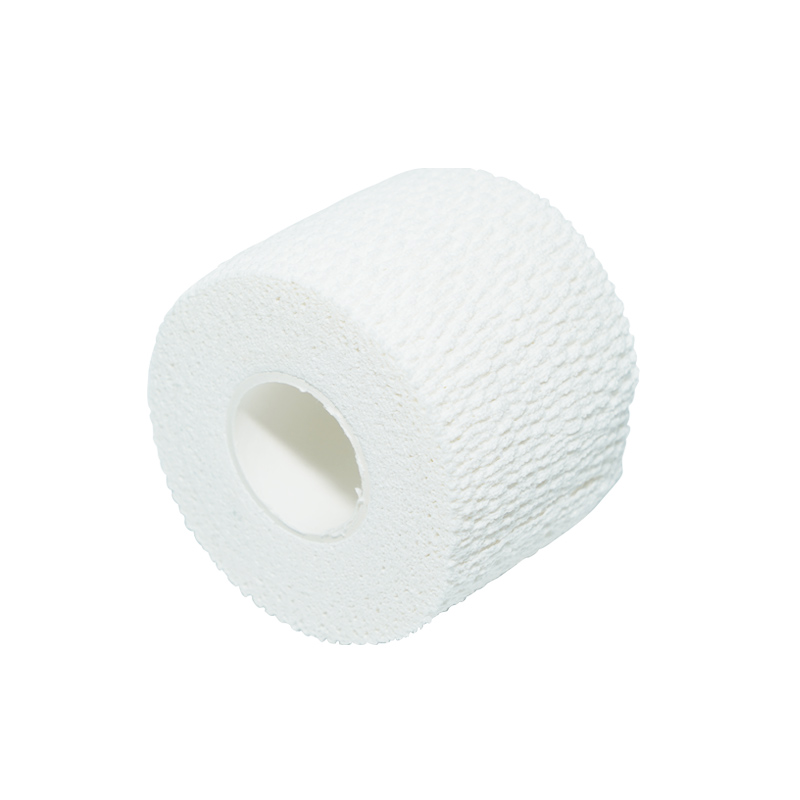 Light Elastic Adhesive Bandage with Cotton Fabric and Custom SizesThis hand-tearable adhesive bandage offers gentle hold for daily training, with cotton elastic fabric and a latex-free adhesive layer. Its clip-free design suits wrist straps or knee wraps that need frequent removal.View Product →
The adhesive layer avoids the need for clips, which can be a deciding factor for wrist straps and knee wraps that are removed several times a day.
A self-adhesive bandage sticks only to itself, not to hair or skin. It can be torn by hand, wrapped with light tension, and removed without pulling out skin hair. This makes it a fast option for securing a folded gauze pad, supporting a finger, or providing a light layer over a compression bandage. It is also quieter to unwrap than woven elastic bandage, which explains its popularity in clinics and sports bags.
Application technique matters as much as the bandage itself. Too tight and you risk restricting blood flow; too loose and it slips. Start with clean, dry skin. Wrap from the far end of the limb toward the heart, with each layer overlapping about half the width of the bandage. Keep tension even but not painful.
For a reusable woven bandage, regular steel clips are the simplest way to lock the final layer. If you use bandages frequently, keeping a few clips in your first-aid kit prevents the awkward situation of wrapping the whole ankle and then discovering you have nothing to fasten it with.
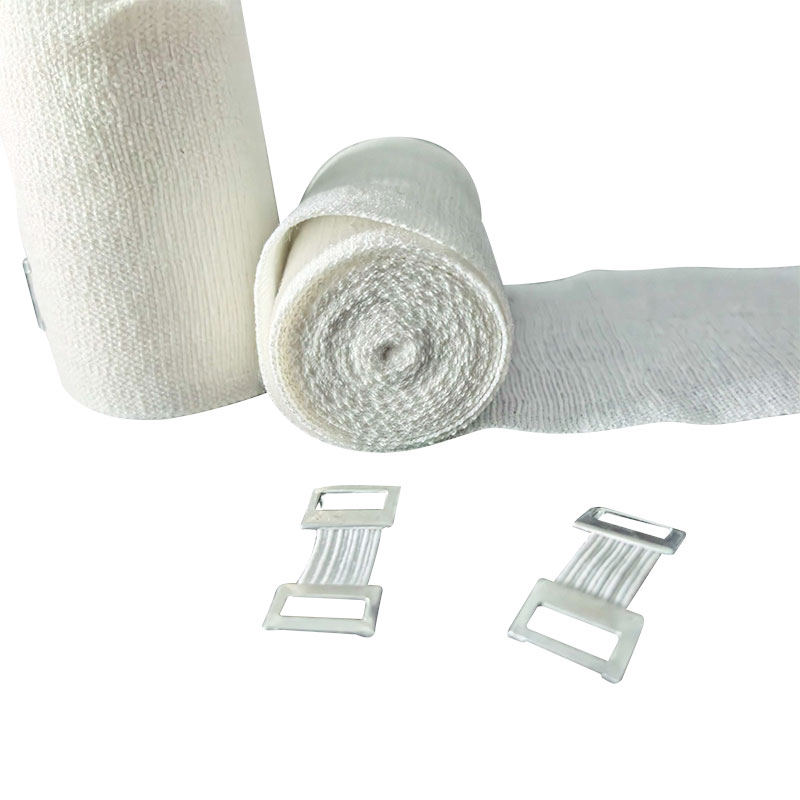 Reusable Four-Way Stretch Elastic Bandage with Snap-In ClipsEngineered for easy repositioning, this breathable four-way stretch bandage uses secure snap-in clips to maintain snug support on wrists, knees, or ankles. It balances compression and comfort during recovery or activity, with production capacity for bulk orders.View Product →
Choose a width that matches the body part. A 2-inch bandage suits fingers and hands, while the knee and thigh usually call for 4- or 6-inch widths. In between, 3-inch rolls work well for ankles and wrists. The type of injury, the level of activity, and the bandage's fabric all play a role.
| Bandage Width | Best For | Typical Setting |
|---|---|---|
| 2 in / 5 cm | Fingers, toes, small hands | First-aid kits, finger injuries |
| 3 in / 7.5 cm | Wrists, ankles, forearms | Sports training, home care |
| 4 in / 10 cm | Knees, elbows, calf | Clinics, athletic facilities |
| 6 in / 15 cm | Thigh, torso, large dressings | Hospitals, long-term care |
Beyond width, check how much stretch the fabric returns. A cheap elastic bandage can feel stretchy at first but loses memory after a few uses. A quality wrap springs back to its original length, which maintains consistent compression. For applications where you need to reposition or remove the bandage often, a self-adhesive version offers a clean solution without extra clips. That is why many users keep a roll of self-adhesive bandage in their gym bag as a versatile backup.
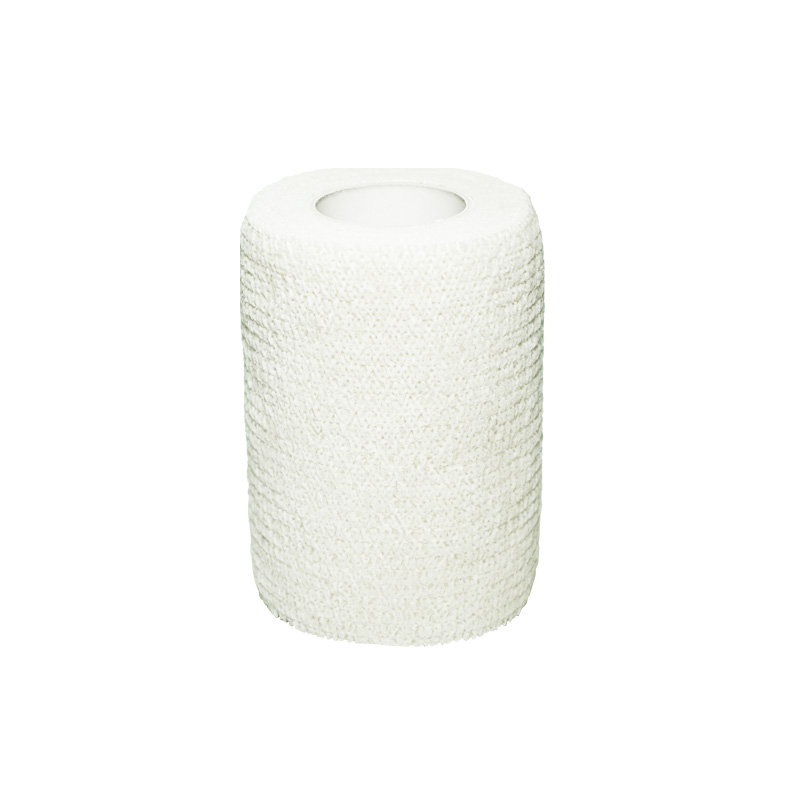 Self-Adhesive Cohesive Elastic Bandage with Non-Woven FabricThis cohesive bandage sticks to itself but not to skin or hair, making it a clean, clip-free option for repeated wrapping. Its breathable non-woven material provides consistent stretch and is a practical backup for gym or first-aid use.View Product →
Also consider skin sensitivity. Woven and adhesive bandages generally need tape or direct skin contact, and some of the elastic materials used in the past contained latex. If latex-free materials are important, check the product specification or ask your supplier for a non-latex option.
If you are buying elastic bandages for a shop, a sports brand, or a medical supply company, the visible details are only part of the story. The production process determines whether the edge stays straight, whether the adhesive spreads evenly, and whether each roll has the same tension. A reliable manufacturer tests samples, offers consistent packaging, and supports private-label requirements.
Colors and packaging matter more than they seem. Physical therapy clinics often prefer neutral skin tones, while retail customers respond to bright colors for self-adhesive rolls. Custom options, such as a specific width, printed packaging, or a boxed set for first-aid kits, allow you to differentiate your product without redesigning the bandage itself.
For B2B buyers, lead time and minimum quantities are practical concerns. Our factory supplies wholesalers, Amazon sellers, and small business owners, and we accept small-batch customization. The most successful projects start with a clear specification, a physical sample, and a written quality checklist. That kind of process avoids surprises in stretch recovery, adhesive strength, and color consistency.
An elastic bandage feels simple, but it solves a real medical problem: applying controlled compression. Whether you choose a traditional woven roll, an adhesive elastic bandage, or a self-adhesive wrap, match the product to the body part and the level of activity. Pay attention to width, stretch recovery, and closure method, and you will get far better results from the same roll. If you are sourcing for a brand, work with a manufacturer that treats edge quality, packaging, and batch consistency as seriously as the elastic fabric itself.
 NO.89 Duanshu Road, Xinggong Road, Pinghu City, Zhejiang Province, China
 [email protected]
 +86-(0)573-8507 6991
Copyright © hero-medical.com. All Rights Reserved
 Wholesale Sport Tape Manufacturers
China Sport Tape Suppliers
Wholesale Sport Tape Manufacturers
China Sport Tape Suppliers
The information provided on this website is intended for use only in countries and jurisdictions outside of the People's Republic of China.
 English
 Espana
 Français
 Deutsch